







BRISTOL, CT – In a specialized 28-story testing tower nestled within suburban Bristol, Connecticut, engineers at Otis, the world’s largest elevator company, meticulously subject their elevator components to extreme conditions. Dust chambers, humidity cells, and saltwater fog machines are just a few of the tools used to simulate the harshest global environments, from arid deserts to the frigid Arctic.
“[Elevators] are supposed to work in the extreme conditions of the world,” explained Haran Vela, Senior Vice President of Engineering for Otis. “We try to simulate all of those conditions in this facility so that we know that our designs will work in the real environment.”
Otis, operating in over 200 countries, generated more than $14 billion in revenue in 2025, marking a roughly 13% increase since its spin-off from United Technologies in 2020. The company’s investment appeal has long rested on its promise of consistent, long-term growth, particularly attractive in today’s increasingly volatile market.
However, despite its robust global presence, Otis’s stock has faced headwinds, declining approximately 15% year-to-date and underperforming both the broader market and the industrial sector.
Robert Wertheimer, a global machinery analyst at Melius Research, attributes part of this underperformance to a market shift. “There’s definitely a wave of money that’s been following along or chasing… the [artificial intelligence] plays,” he noted. Compounding this, Otis’s core business experienced a setback.
“Otis, as a service-led business, had a setback in service,” Wertheimer stated. “And they’re fixing it. It’ll get fixed. But that was kind of a stumble at the right time for flow of funds to go in the other direction.”

Otis vs. Industrial sector
The Service Engine: Driving Otis’s Profitability
The construction and installation of new elevators, while essential, is not Otis’s primary profit driver. In 2025, the operating profit margin on new equipment stood at a modest 4.8%. The true engine of the business, and its most lucrative segment, lies in the ongoing service of these elevators.
This service encompasses everything from routine maintenance and repairs to “modernization” – a comprehensive overhaul or partial replacement of parts typically occurring after two decades of operation. “That’s the engine that allows us to generate over 90% of our profits,” stated Judy Marks, Otis CEO and Chair.
Otis currently services approximately 2.5 million elevators globally, a significant increase from over 2 million units in 2020. This expansive service network has historically bolstered the company’s profit margins, reaching 25.5% by the end of 2025. However, the first quarter of 2026 saw a decline in service margins by 250 basis points.
This margin contraction is linked to a broader challenge Otis has been addressing since early last year: a drop in its service contract retention rate as it entered 2025. “They started calling out cost actions they were going to do to fix it, which is simply hiring more people, focusing more on maintenance; less revenue-producing but more customer-pleasing,” explained Wertheimer. “It’s been an issue that has coincided with a lot of noise around tariffs and some China programs to stimulate growth. … There’s just been a little bit more uncertainty around what is normally a very stable earnings stream.”
Getting Back on Track: Strategic Investments and Long-Term Vision
In response to these challenges, Otis has committed to a substantial $50 million in incremental investments into its service business throughout 2026. While service sales rose by 11% year-over-year in the most recent quarter, Marks acknowledged in the earnings call that a significant improvement in retention was not yet visible, leading the company to cut its profit guidance for the year.
Wertheimer, in a July analyst note, expressed optimism that these investments in the service division will ultimately reduce customer outages, thereby enhancing retention. He succinctly put it: “Renewals are somewhat automatic if no one is unhappy.”
Otis now faces the crucial task of demonstrating that these multi-million dollar investments will yield tangible results. The company is banking on its inherent long-term predictability to regain investor confidence. “Urbanization, digitalization, aging people who need mobility and infrastructure modernization is not only going to be attractive in the near term, the next few years, versus all the data center expansion that’s happening,” Marks articulated, “but this has decadelong runs in it.”
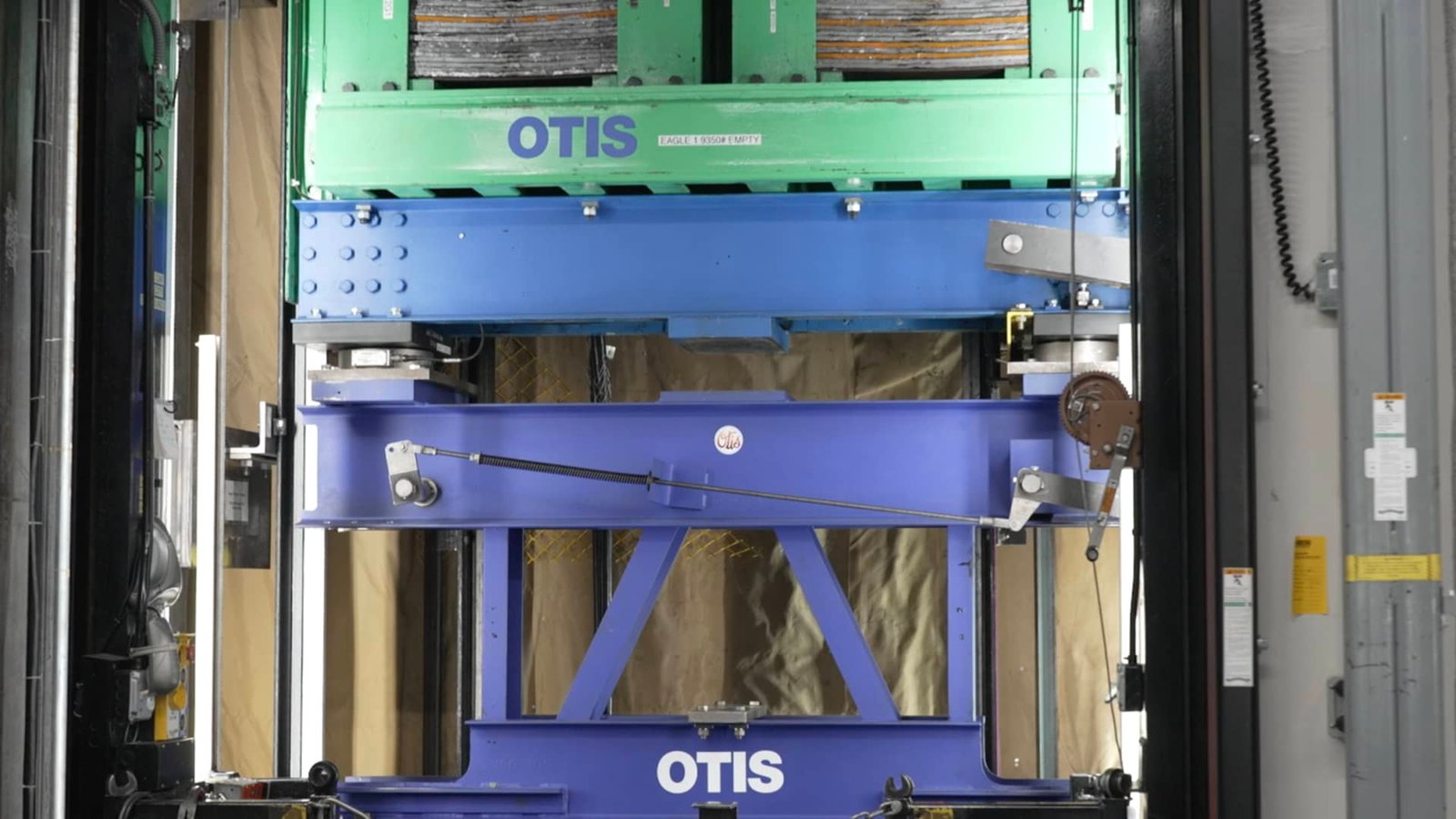
Elevator shaft where safety breaks are tested.
CNBC
Competitive Landscape: Anticipating Industry Shifts
The global elevator market could soon undergo a significant transformation with potential mergers and acquisitions on the horizon. Finland’s Kone has agreed to acquire Germany’s TK Elevator in a deal valued at nearly $35 billion, announced in April.
Wolfe Research senior analyst Nigel Coe suggests this merger could indirectly benefit Otis by reducing the number of major competitors bidding for elevator contracts from four to three. However, the proposed deal is not without its challenges. Schindler, the second-largest elevator company, has publicly stated its intent to challenge the merger on antitrust grounds.
When questioned about the evolving competitive landscape, Marks indicated that Otis would defer to regulators and allow customers to make their own informed decisions.