







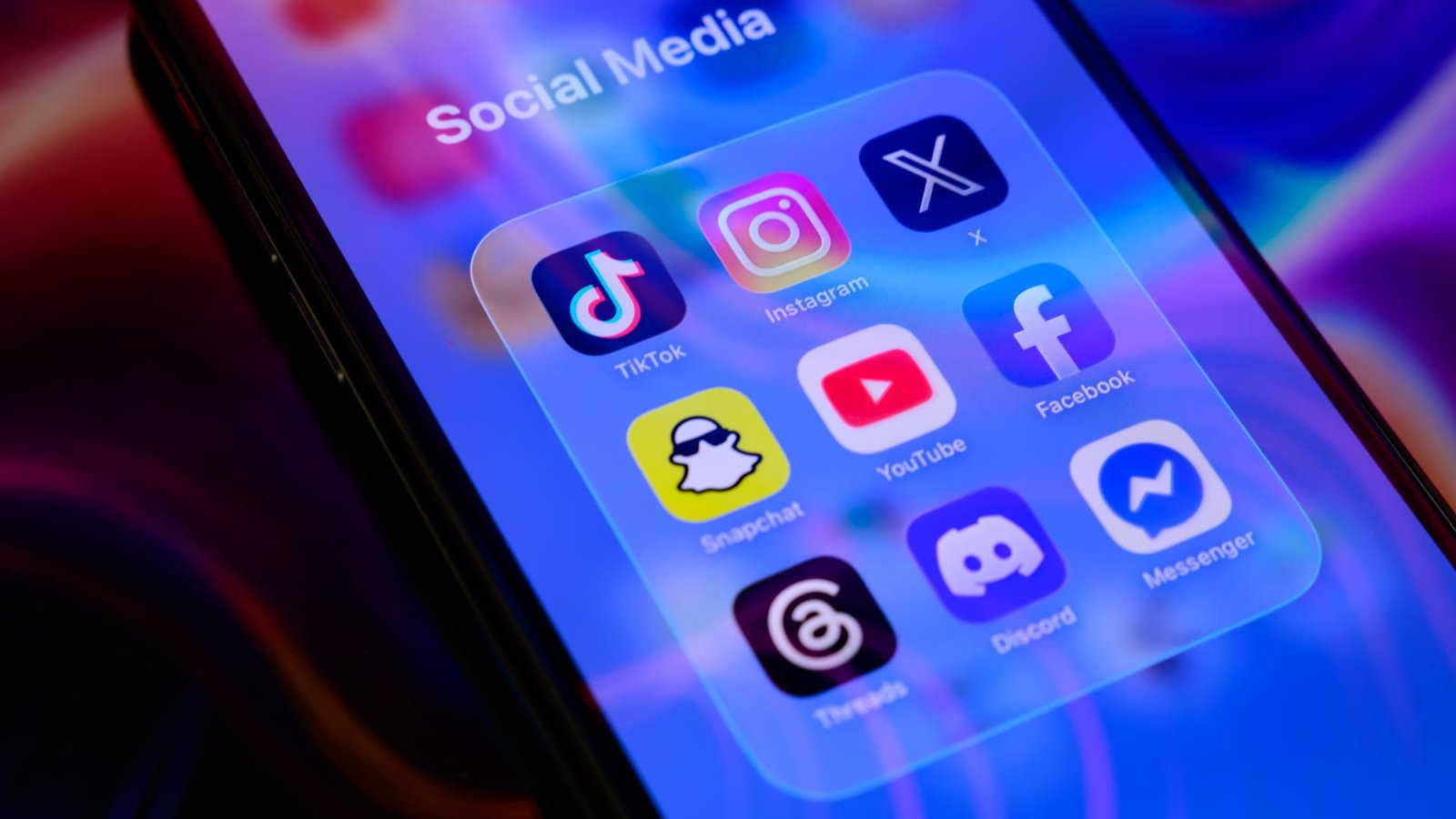
A folder of social media applications, including TikTok, Instagram, X (formerly Twitter), Snapchat, YouTube, Facebook, Threads, Discord, and Messenger.
Nurphoto | Nurphoto | Getty Images
Myspace Eyes Return Amidst Social Media Fatigue: A Risky Bet or Nostalgic Resurgence?
The ghost of social media past, Myspace, is reportedly gearing up for another “relaunch,” igniting a mix of nostalgia and skepticism among industry analysts. Owned by Tim and Chris Vanderhook, co-founders of Viant Technology, the platform’s potential return was hinted at in the recent documentary, “Myspace,” directed by Tommy Avalone.
“We still own Myspace. We are stewards of the Myspace brand at this point, and we are going to relaunch Myspace. We’re just waiting for the right time to do it,” the brothers stated in the documentary. “And if that one doesn’t work, we’ll do it again.”
For millennials, Myspace evokes memories of customizable profiles, glittering layouts, and the iconic “Tom” as everyone’s first friend. Co-founded in 2003 by Tom Anderson and Chris DeWolfe, the platform peaked in 2008 with 115 million monthly visitors, only to be swiftly eclipsed by Facebook. The Vanderhooks acquired Myspace in 2011, attempting a modernization that ultimately failed to stem significant financial losses. “It just became an onslaught of losses,” Tim Vanderhook admitted, with Chris adding, “We lost a little over $150 million.” A definitive timeline for the proposed relaunch remains undisclosed.
The social media landscape Myspace aims to re-enter is vastly different from its glory days. Dominated by giants like Meta’s Instagram, TikTok, Snapchat, YouTube, and Reddit, this market is characterized by algorithm-driven feeds, legal battles, and increasing digital fatigue among users.
“Excitement about Myspace’s relaunch reflects nostalgia for a more analog time, when algorithms were less dominant in our lives,” Kate Winick, a principal analyst at Forrester, told CNBC. She added that consumers are increasingly seeking “smaller, more private social experiences that feel less built for the algorithm and more personal to the individual user, like the explosion of growth on Substack and private communities on Discord.”
This sentiment aligns with a growing trend of millennials and Gen Zers opting out of mainstream social media due to concerns over mental health and addiction. Many are embracing analog technologies and a yearning for the simpler times of the 90s and early 2000s.
‘The Smallest Game in Town’
Myspace’s potential success hinges on its ability to reconcile user nostalgia with modern expectations of sleek interfaces and seamless content delivery. “If Myspace follows the traditional playbook, they’re simply the smallest game in town; if they lean too hard into old Myspace, they’ll struggle to meet the expectations of a generation who are used to a much cleaner and simpler user experience,” Winick cautioned.
The “labor-intensive” interface of early Myspace may not appeal to younger generations accustomed to TikTok’s and Instagram’s user-friendly designs. Winick emphasized the need for a carefully threaded needle: “It’s unlikely that anyone who actually wants to spend less time online is going to decide to spend more time online to achieve an ‘offline’ aesthetic.”
Despite these challenges, Myspace boasts massive brand recognition, giving it an advantage over many smaller startups. The key demographic for a successful relaunch will be critical. Winick suggests that the original user base, now “busy midlife adults with careers and families,” may not be the primary target. Instead, Myspace must build a “meaningfully different product” to attract Gen Z and Gen Alpha.
“One of the reasons Myspace lost out to Facebook years ago was the failure to appeal to older users, and one of the things that cemented TikTok’s success on the business side was the fast growth it saw in millennial and older demographics,” she noted. With looming regulations potentially restricting teen social media use, a strategy inclusive of older users, who are also primary spenders, becomes even more vital.
Can Myspace Succeed with Commercialization and Advertising?
Attracting advertisers will be a significant hurdle. Enders Senior Research Analyst Jamie MacEwan highlighted that Myspace would need to work harder to prove its value compared to established platforms with robust metrics. “The question for Myspace isn’t will it eat Facebook’s lunch twenty years later, but can it relaunch as a small ads platform and still be profitable,” MacEwan stated.
He explained that mid-sized platforms often struggle with lower revenues, making them easier for advertisers to overlook. “SMEs are more likely to spend on platforms they already have a presence on.” While profitability doesn’t necessitate being the largest platform, it does require incentivizing users to create engaging content to generate advertising revenue.
Winick added that businesses typically wait for proven user activity before allocating advertising budgets. She cited examples like Noplace and Bluesky, which saw initial surges in popularity but struggled with sustained user engagement. Bluesky, a Twitter rival, raised $100 million in Series B funding in April 2025, but experienced a 40% drop in daily mobile active users by October of the same year. Similarly, BeReal, a photosharing app that gained traction during the pandemic, saw its monthly active users decline from 20 million to around 16 million.

Selling an ‘Antidote’
MacEwan suggests that Myspace’s best path forward might be to differentiate itself by leaning into the growing fatigue surrounding algorithm-driven feeds and addictive design. “I wouldn’t necessarily see the smaller launches as a direct challenge to incumbent networks,” MacEwan noted. “It’s more about counter-programming, identifying where the big platforms have gone too far and trying to sell something as an antidote to user fatigue.”

This strategy implies that Myspace shouldn’t aim to compete directly with the behemoths but rather focus on cultivating a niche audience and sustaining user growth through a unique, perhaps more personal and less algorithm-driven, experience.