







NEWYou can now listen to Fox News articles!
Florida Business Owners Face Felony Charges for Allegedly Spreading Mothballs to Deter Endangered Birds
ST. PETERSBURG, Fla. – Two Florida business owners are facing serious legal repercussions after being charged with third-degree felonies. The charges stem from allegations that they intentionally dispersed approximately 1,500 “toxic” mothballs across a St. Pete Beach shoreline, reportedly to prevent an “imperiled” bird species from nesting in the area.
If convicted, Christopher Monroe, owner and manager of Chris’s Beachside Bar, and Robert Czyszczon, owner of the Plaza Beach Hotel, could each face up to five years in prison, fines reaching $5,000, and up to five years of probation.
The unsettling incident first came to light in late April when beachgoers discovered a significant number of mothballs scattered on the pristine, white sands of St. Pete Beach. This alarming discovery prompted a swift response from officers with the Florida Fish and Wildlife Conservation Commission (FWC) and dedicated volunteers from the Audubon Society. Initial efforts led to the removal of about 1,000 of the small, white orbs from the sand directly behind the Plaza Beach Hotel.
MASSACHUSETTS HOMEOWNERS STUNNED AFTER TOWN WARNS JULY 4 FLAGS THREATEN ENDANGERED BIRDS
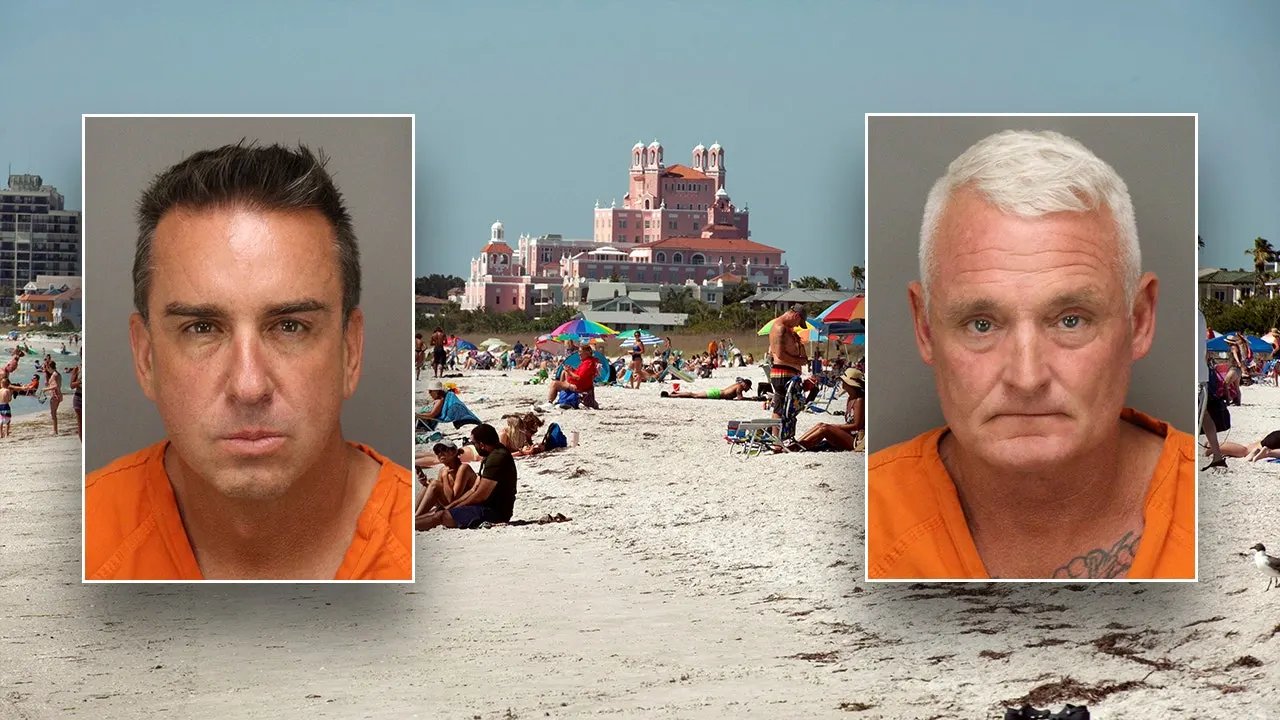
Robert Czyszczon, left, and Christopher Monroe, right, were charged with third-degree felonies for allegedly scattering mothballs on a beach behind their businesses in St. Petersburg, Fla. (Pinellas County Sheriff’s Office)
However, the issue escalated when an additional 500 mothballs reappeared overnight, indicating a deliberate and sustained effort.
According to FWC officials, these pungent, pesticide-laden spheres were strategically placed in an area where endangered shorebirds, specifically black skimmers, were “attempting to establish a nesting colony.” The presence of these toxic chemicals also raised concerns for other local wildlife and even children who “could easily come in contact with them,” posing a significant health risk. Authorities quickly surmised that the birds were likely being deliberately targeted.
“Crying Fowl” – The Investigation Unfolds
The discovery of the mothballs sparked considerable “public outcry” within the community, expressing deep concern for the imperiled bird species. FWC investigators launched a comprehensive probe, serving search warrants and sifting through “terabytes” of digital data. This extensive work eventually led them to seize cellphones belonging to the suspects, ultimately identifying Christopher Monroe and Robert Czyszczon as the individuals behind the operation.
Investigators allege that Monroe and Czyszczon orchestrated a plan to deter the black skimmers from nesting on the beach behind their businesses, driven by fears of lost revenue. Black skimmers are unique in their nesting habits, creating shallow depressions in the sand near the surf to lay their eggs and raise their young, rather than nesting in trees.
HIKERS FACE $25,000 FINE AFTER OFF-LEASH DOG BARKED AT GRIZZLY BEAR ON BANFF NATIONAL PARK TRAIL
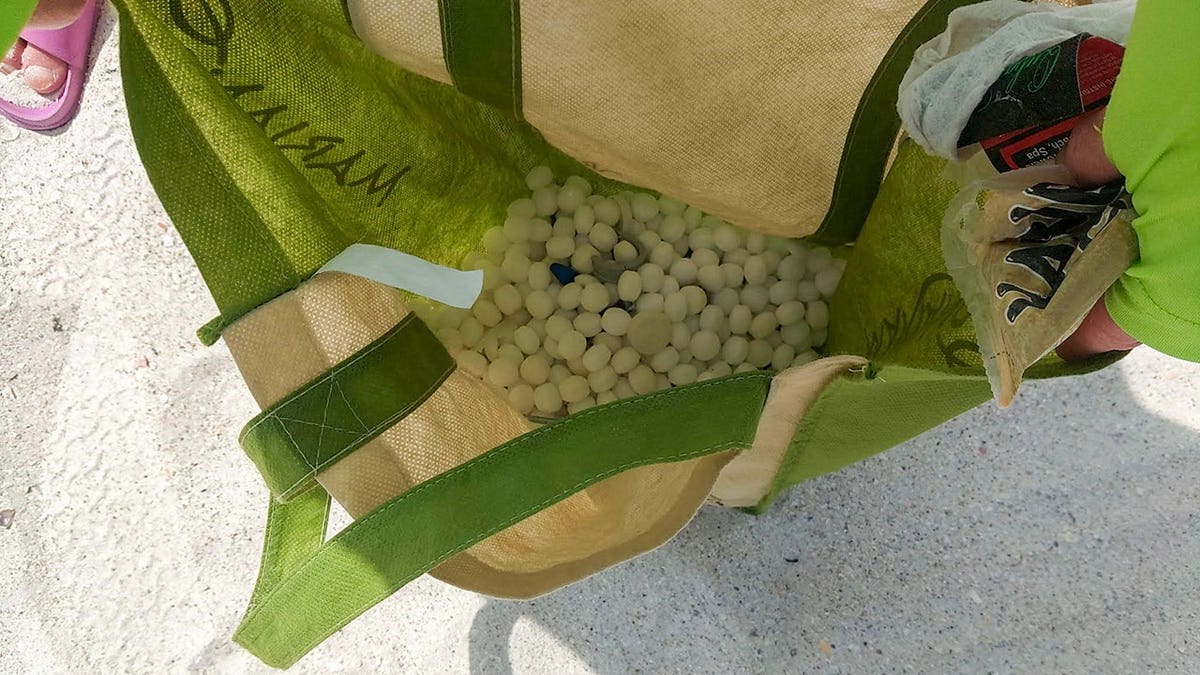
Officers with FWC worked with Audubon Society volunteers to remove mothballs from St. Pete Beach when they appeared in April. (FWC)
Evidence obtained through video surveillance and receipt records showed Czyszczon purchasing a “large quantity” of mothballs at a Walmart the day before the first discovery on the beach. Subsequent examination of his phone revealed “incriminating” text messages exchanged with Monroe, discussing their dissatisfaction with the native fowl. These conversations allegedly detailed plans for the mothballs’ placement on the beach and how they “were going to do something” to prevent nesting.
One text message attributed to one of the men allegedly stated, “They’re the worst birds,” in anticipation of the nesting season. Another indicated concern about the potential impact on beach access: “The bird people will put up fence around the area, and then the beach people will not be able to get to and from because they will fence around that space.”
Cellphone tower data further corroborated the allegations, showing Monroe’s phone at the same location as Czyszczon’s on both nights the mothballs appeared. The men’s primary motivation, authorities believe, was a perceived financial threat, with one text allegedly asking, “Why didn’t you tell me we lose $25,000 to $50,000?”
Legal Ramifications and Environmental Impact
Monroe and Czyszczon have been charged with illegal dumping, a third-degree felony, according to Pinellas County court records. Additionally, they face misdemeanor charges for the “attempted take of a state-listed imperiled species by harassment,” as confirmed by FWC officials. Both individuals have since been released on bond.
MASSACHUSETTS HOMEOWNERS STUNNED AFTER TOWN WARNS JULY 4 FLAGS THREATEN ENDANGERED BIRDS
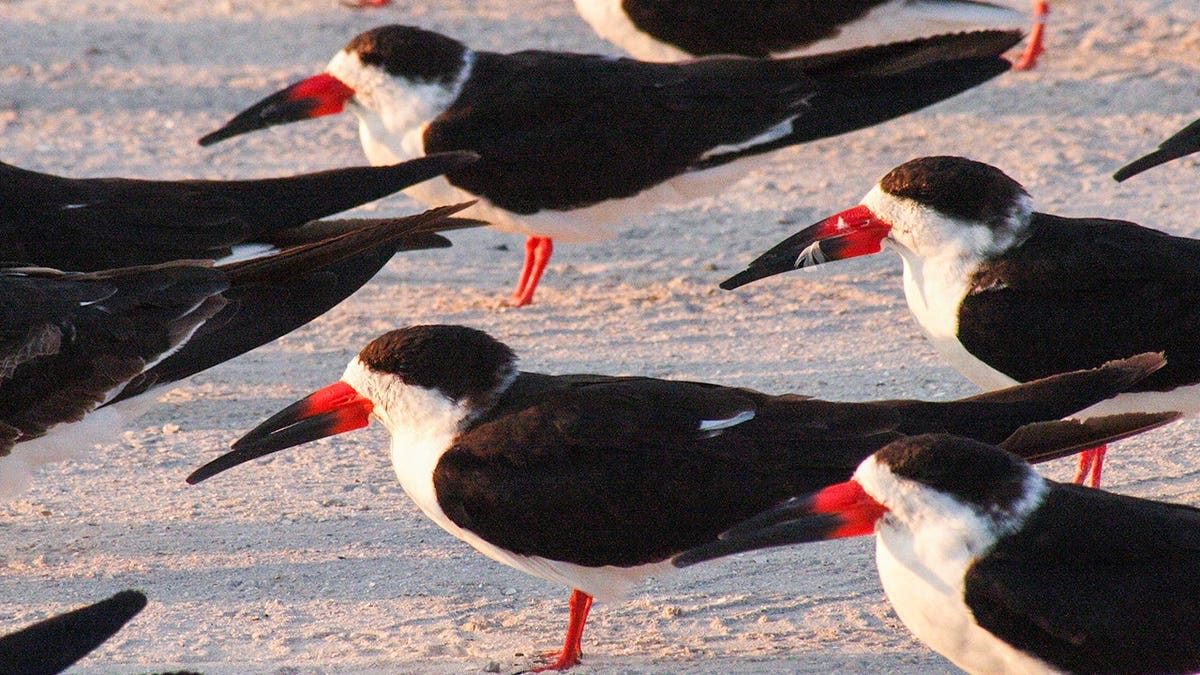
Black skimmers lay eggs in depressions they make in beach sand. (FWC)
Approximately 6,800 black skimmers reside in Florida, with several hundred estimated to inhabit the beaches of Pinellas County. The pesticide found in mothballs poses a significant threat to both humans and wildlife through vapor exposure, as highlighted by the University of Florida Institute of Food and Agricultural Sciences (IFAS). Brett W. Bultemeier, director of the UF/IFAS Pesticide Information Office, emphasized in a 2021 publication that “The label language is not simply a set of directions. Rather, they are requirements that are legally enforceable.”
LIKE WHAT YOU’RE READING? CLICK HERE FOR MORE
While FWC officials believe the “harassment” may not have directly harmed the adult birds, it did cause a delay in their nesting cycle. This delay pushes back the time when young birds can fledge from the nest, potentially exposing them to increased danger, particularly from late-season storms during hurricane season, which concludes on November 30. An FWC official warned that “a big storm at the end of hurricane season… can wipe out a colony if those young birds haven’t fledged yet.”
An attorney for Czyszczon has not yet responded to requests for comment from Fox News Digital. Monroe currently does not have an attorney listed in court records and could not be reached for comment.