








India’s Bullet Train Project Picks Up Pace: Railway Minister Unveils Progress on Landmark Corridor
India’s vision for high-speed rail travel is rapidly transforming into a tangible reality. Union Railway Minister Ashwini Vaishnaw took to social media on Tuesday to offer a compelling look at the ongoing construction of the country’s first bullet train project, describing the rapid development as “a whole new vibe.”
The project, which is set to revolutionize connectivity between Mumbai and Ahmedabad, is seeing significant momentum across the districts of Thane and Palghar. According to an official update from the National High Speed Rail Corporation Limited (NHSRCL), the 135.45-km elevated section—stretching from Shilphata in Thane to Zaroli village on the Maharashtra-Gujarat border—is currently a hive of engineering activity.
A Masterclass in Engineering
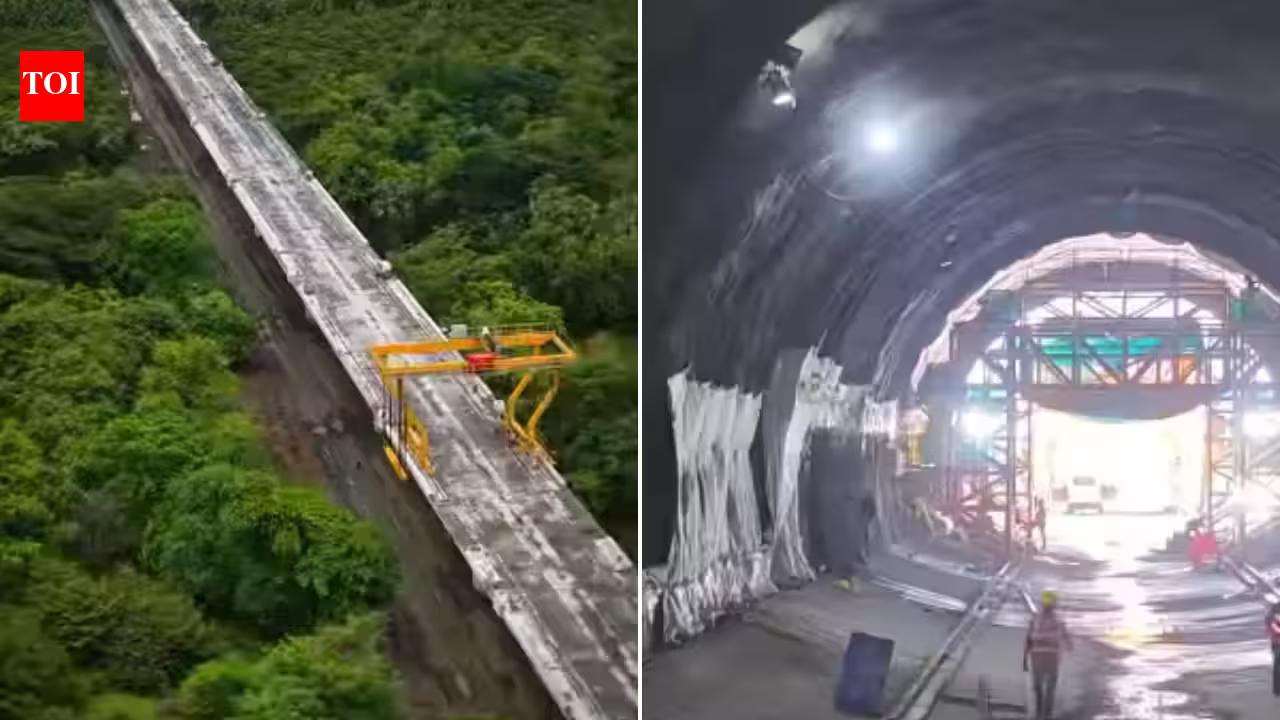
The sheer scale of the project is reflected in its technical complexity. The 135.45-km stretch is predominantly elevated, featuring 124.027 km of viaducts and bridges. Construction is proceeding at an impressive clip; pier work is currently active across more than 100 km of the route, with nearly 74 km of these piers already completed and primed to receive viaduct girders.
To support this massive undertaking, the NHSRCL has deployed nine operational casting yards, seven full-span launching gantries, and eight segment-by-segment (SBS) launching gantries across Maharashtra.
Infrastructure and Sustainability
The corridor will be served by three key elevated stations: Thane, Virar, and Boisar. Notably, the design of the Thane station reflects a commitment to environmental stewardship. With a concourse level situated approximately 12 meters above the ground, the station design was meticulously planned to preserve local mangroves within the eco-sensitive zone.
The project also involves navigating challenging topography. Of the seven mountain tunnels planned for this section, three have already achieved breakthrough, with teams currently focused on critical drainage, waterproofing, and lining works. Furthermore, the route will feature 36 bridges and crossings, including a 460-meter bridge over the Ulhas River, a 510-meter bridge over the Jagani River, and a sprawling 2.32-km bridge spanning the Vaitarna River. Among these are 12 specialized steel bridges designed to traverse major railway lines and highway networks.
Vision for the Future
The bullet train project stands as a testament to the government’s commitment to modernizing India’s transport infrastructure. By integrating cutting-edge technology with sustainable engineering practices, the project is moving steadily toward its goal of delivering a next-generation travel experience that aligns with Prime Minister Narendra Modi’s vision for a developed and connected India.
As construction continues to advance, the high-speed rail corridor promises to shrink travel times and foster greater economic integration between the two industrial hubs of Maharashtra and Gujarat.