








Breaking the Cycle: How One Mentor is Healing Los Angeles’ Next Generation
By [Your Name/Journalism Staff]
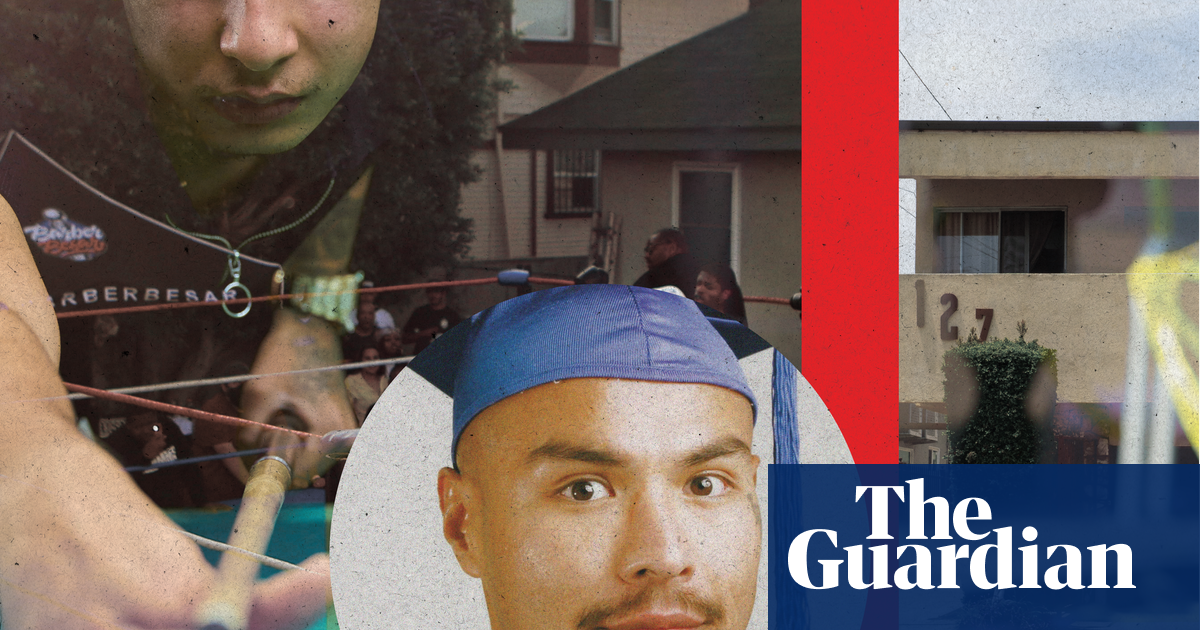
In a sun-drenched Los Angeles park, 40-year-old Francisco Villarruel and 19-year-old Gustavo Galvez trade rhythmic blows against boxing pads. While the sport provides the structure, the workout is merely a vehicle for something far more profound: a lifeline. For Villarruel, a trained social worker and former gang member, mentoring young men like Galvez is a mission to disrupt the persistent, deadly cycle of gun violence that has haunted his community for generations.
The urgency of this work is underscored by stark data. Thousands of Hispanic residents in California are injured by firearms annually, and last year alone, half of the state’s 1,374 homicide victims were Hispanic. For those living in marginalized census tracts, the proximity to death is a daily reality.
“Every day I think it’s my last day,” Galvez admits. Despite his efforts to pursue education and self-improvement, the specter of gang-related violence remains a constant, suffocating shadow.
The Anatomy of Trauma
Villarruel understands this fear intimately. His own life was shaped by it long before his birth. His father, a witness to the 1965 Watts rebellion, taught him that the world was a battlefield where one had to be armed to survive. At nine years old, a robbery at gunpoint confirmed that worldview; at twelve, the murder of his brother-in-law by gang rivals solidified his path.
“A child isn’t born to commit gun violence,” Villarruel says. “They turn to it out of a lack of safety, belonging, and self-esteem.”
His journey into the gang lifestyle led to two years in juvenile hall and, eventually, a 17-year prison sentence. It was only while serving time that he reached a breaking point, eventually turning toward faith, therapy, and education. Today, he holds a master’s degree in social work from UCLA, using his experience to reach young men who are currently where he once was.
The Academic Perspective
Experts agree that interventions must go beyond addressing immediate neighborhood disputes. Alein Haro-Ramos, an associate professor at UC Irvine, highlights that trauma is frequently passed down through parenting under conditions of systemic neglect and economic distress.
Jorja Leap, a prominent UCLA anthropologist who has studied gang violence for three decades, notes that “intergenerational trauma”—the inheritance of unresolved mental and physical abuse—is a primary engine of the crisis.
“Guns were power,” Leap explains, noting the influence of machismo and the need for control in environments where safety is not guaranteed. “The most effective strategy… is replacing the gang structure in someone’s life with long-term community support.”
Building a New Legacy
The mentorship between Villarruel and Galvez exemplifies this approach. While Villarruel acknowledges that he cannot single-handedly fix the systemic issues of poverty and segregation, he believes that providing a safe space to unpack “ancestral” hurt is the only way to heal the community.
Galvez, now studying nursing with the goal of becoming a mental health professional, credits this bond with keeping him grounded. By replacing the dysfunctional relationships of his past with the steady support of a mentor, he is finding a way to rewrite his own narrative.
For Villarruel, the ultimate goal is not just to save one individual, but to shift the trajectory of the entire community. “I feel like to end one cycle, I have to start a new one,” he says. “And this new cycle is leading individuals in the right direction.”