







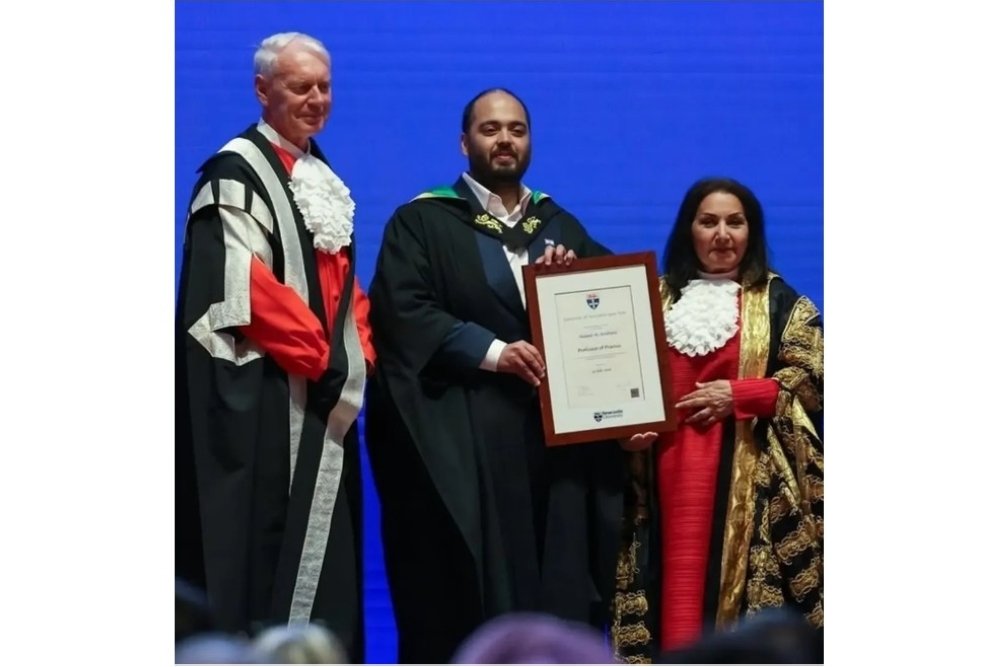
Newcastle University Faces Backlash Over Professorship for Anant Ambani
The decision by Britain’s Newcastle University to appoint Anant Ambani, the son of Asia’s wealthiest individual, Mukesh Ambani, as a Professor of Practice in sustainability has ignited a firestorm of criticism within the academic and conservationist communities. The appointment, announced by the university on September 14, was intended to honor what the institution described as his “significant contributions to advancing a more sustainable future.”
However, the move has drawn sharp rebukes from experts who argue that the university is undermining its own academic integrity by aligning with the billionaire heir, whose family-led conglomerate, Reliance Industries, is heavily rooted in fossil fuel and retail sectors.
Contested Legacy of Vantara
The central point of contention involves Vantara, a sprawling 3,500-acre animal welfare facility in India that is championed by Anant Ambani. While Vantara markets itself as the world’s largest wildlife rescue and rehabilitation center, it has recently undergone a major procedural overhaul following widespread public and regulatory scrutiny regarding its rapid acquisition of animals, including various endangered species.
Critics have been quick to challenge the university’s endorsement of the project. Prominent wildlife conservationist Prerna Singh Bindra emphasized that the facility functions primarily as a zoo rather than a center for genuine conservation. Bindra warned that by platforming such facilities, academic institutions are distorting the fundamental principles of environmental protection.
“It’s a captive facility,” Bindra noted in comments to media. “We need to protect wild animals in their natural habitats, not zoos. You are changing the entire paradigm of conservation from protecting them in the wild to one that suggests accumulating animals in enclosures is conservation.”
Academic Integrity Under Fire
The controversy has sparked a broader debate about the role of universities in an era of corporate influence. Academic figures have expressed alarm that Newcastle University is appearing to trade its prestige for proximity to extreme wealth. Lyla Mehta, a prominent researcher affiliated with the Institute of Development Studies, did not mince words, stating on social media that the university was “stooping low” and effectively “making a mockery of sustainability.”
Mehta argued that the core mission of higher education is to serve as a check on corporate power and to challenge the status quo, rather than granting academic legitimacy to the scions of global conglomerates. The critique highlights a growing discomfort with the trend of universities courting large donors and influential figures, suggesting that such partnerships can obscure the rigorous, often critical, inquiry required in the field of climate and conservation studies.
In its defense, Newcastle University maintained that the work being done at Vantara aligns with its own institutional goals regarding biodiversity and global conservation research. The university pointed to the scale of the operation and Ambani’s executive role at Reliance Industries as evidence of his impact.
Despite these defenses, Vantara and the Ambani family continue to face questions regarding their operations. While the organization has consistently denied any allegations of wrongdoing, the international academic pushback suggests that the university’s attempt to bridge the gap between billionaire-funded initiatives and formal academia has failed to win over those most deeply invested in the ethics of wildlife conservation. As the debate continues, the incident serves as a flashpoint for larger questions regarding whether corporate-led ecological projects can or should be categorized alongside traditional scientific conservation efforts.
Disclaimer: This content is auto-generated for informational purposes only.
Source: Read Original News