






India’s Tennis Renaissance: Grand Slam Popularity Meets a Growing Grassroots Movement
The landscape of tennis in India is undergoing a dramatic transformation. While the country has long cherished the individual heroics of legends like Leander Paes, Mahesh Bhupathi, and Sania Mirza, the sport is currently witnessing an unprecedented surge in domestic viewership and a renewed competitive spirit on the international stage.
A Massive Spike in Viewership
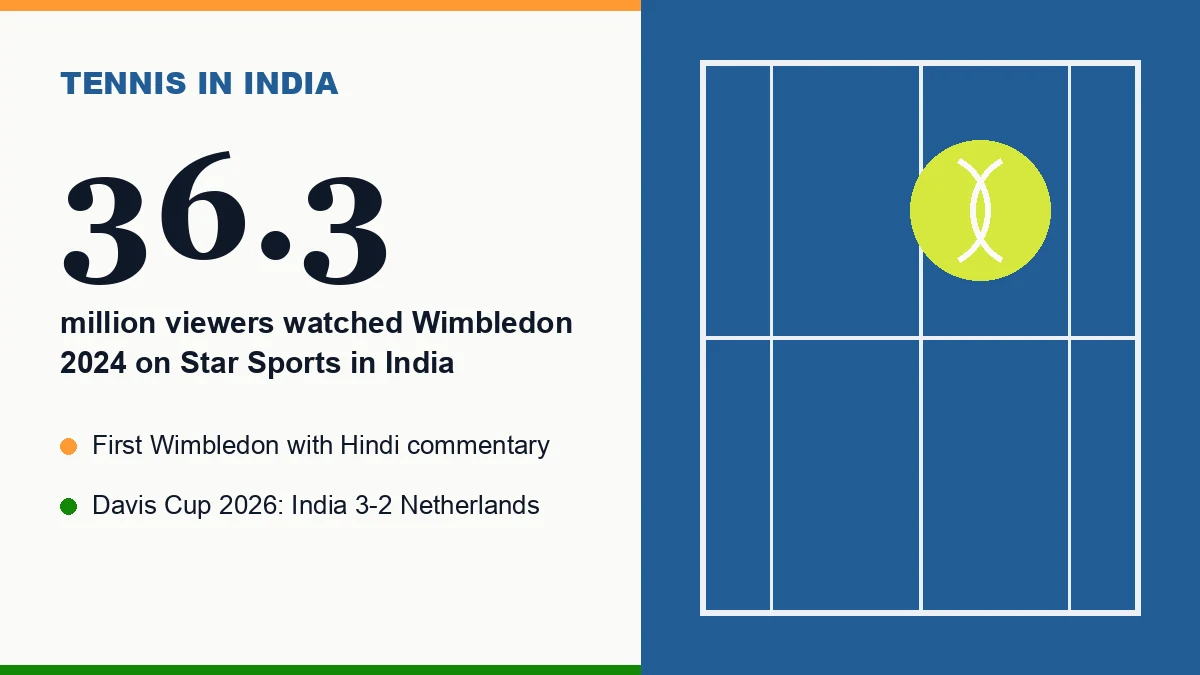
Tennis has shed its image as a niche sport in India, fueled largely by localized broadcasting. Data from BARC reveals that Wimbledon 2024 was the most-watched Grand Slam in the nation’s history. The strategic decision to introduce Hindi, Tamil, and Kannada commentary expanded the reach of the Championships, drawing in over 14 million new viewers who sampled the sport for the first time.
The appeal extends across the digital divide as well. With the shift to JioStar, Wimbledon saw a 77 percent increase in streaming engagement, while the US Open solidified its status as a premier event, racking up a record-breaking 388 million minutes of viewing time on linear television in 2025. According to Usama Al-Qassab, the All England Club’s commercial and marketing director, this growth is reflected in everything from rising social media interactions to an uptick in ballot entries from Indian fans.
The Challenge of Infrastructure and Support
Despite the broadcasting success, the path for aspiring Indian players remains difficult. For years, the lack of robust institutional backing from the All India Tennis Association (AITA) has forced many athletes to self-fund their careers. Historically, the loss of major ATP events—most notably the transition of the Pune-based tournament to Hong Kong—has left a void in local high-level competition.
Former India No. 1 Somdev Devvarman has frequently highlighted the “trust deficit” between the governing body and the players, noting that the financial burden often falls entirely on the individual. This systemic hurdle is evidenced by a lingering gap in the singles rankings, as India continues to struggle to produce consistent top-100 performers despite its deep-rooted tennis history.
New Heroes and Davis Cup Hope
Change is bubbling at the surface, driven by figures like Rohan Bopanna and Sumit Nagal. Bopanna’s 2024 Australian Open title served as a historic milestone, confirming his status as the oldest player to reach world No. 1 in doubles and proving that Indian tennis can still compete for the most prestigious trophies.
Meanwhile, Sumit Nagal has become the face of a new generation. From his early training at the Mahesh Bhupathi academy to his gutsy performances at the Olympic level, Nagal has kept the Indian flag flying. His leadership was particularly evident during India’s recent Davis Cup campaigns. The 2025 victory over Switzerland—India’s first European triumph on foreign soil in decades—and the thrilling 3-2 comeback against the Netherlands in Bengaluru in 2026, showcased the potential of a team that thrives on grit.
International observers are taking note. Andrew Moss of the International Tennis Federation (ITF) recently lauded the facilities in Bengaluru, emphasizing that hosting more world-tour events is the essential catalyst needed to bridge the gap between junior talent and the professional circuit. As the country prepares for the 2027 Davis Cup qualifiers, the combination of high-octane broadcasting, rising fan interest, and emerging domestic talent suggests that Indian tennis is not just watching from the sidelines—it is finding its way back to the center court.
Disclaimer: This content is auto-generated for informational purposes only.
Source: Read Original News