!['Jana Nayagan' box office collection day 22 [Live]: Vijay and Pooja Hegde starrer nears Rs 195 crore India net as the film enters fourth week](https://dailysamchar.in/wp-content/uploads/2026/08/1786609742_photo.jpg "‘Jana Nayagan’ box office collection day 22 [Live]: Vijay and Pooja Hegde starrer nears Rs 195 crore India net as the film enters fourth week")








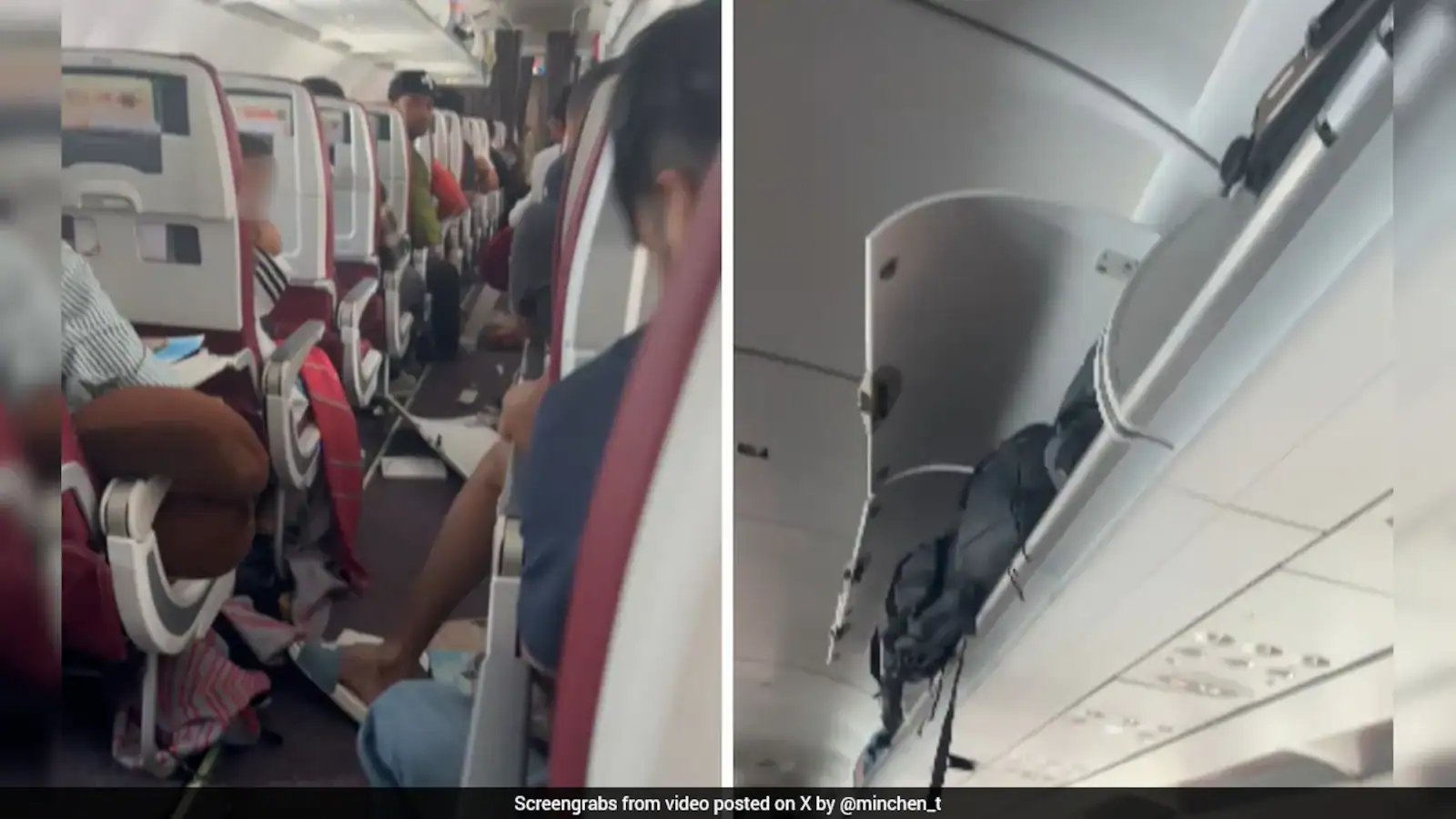
New Delhi — An Air India flight from Phuket to Delhi experienced a sudden loss of altitude of 300 feet during its cruise phase, injuring several passengers and crew members, according to a maintenance report printed in the cockpit. The report, published at 11:14 am on August 4th after the flight landed in Delhi, indicates the aircraft suffered a series of hydraulic faults.
Two hours later, at 1:14 pm, Air India issued a statement attributing the incident to a “brief in-flight turbulence-related event during cruise, resulting in a momentary change in altitude.” The airline claimed there were no serious injuries and only a small number of passengers and crew with minor injuries were taken to a medical facility for precautionary examinations.
However, five hours later, at 6:55 pm, Air India updated its statement, removing the word “turbulence” but still downplaying the severity of the event. The revised statement read, “Earlier today, Air India flight AI2379 operating from Phuket to Delhi experienced a sudden loss of altitude during cruise. After the momentary event, the aircraft continued normally and landed safely in Delhi at 11:07 hrs IST. The Airbus A-320 NEO aircraft was carrying 137 passengers and eight crew members,” notably omitting any mention of hydraulic failures.
Contrary to the airline’s initial statements, the civil aviation ministry reported that at least 20 passengers and four crew members sustained injuries.
The maintenance report reveals critical technical issues. An A-320 NEO aircraft typically operates with three independent hydraulic systems, providing redundancy for flight controls, landing gear, and brakes. However, warnings appeared at 9:32 am indicating low pressure across all three systems, coupled with low fluid levels in two of the reservoirs. The report also noted that the autopilot disengaged around the same time, and faults were flagged in both the left and right elevator controls, which are crucial for controlling the aircraft’s pitch.
Adding to the concerns, two emergency exit door warnings were triggered: one for the right front door at 9:33 am and another for the right rear door at 9:35 am. Later, at 10:16 am, Engine 1’s anti-ice system reported a fault related to a valve pressure issue, and the autopilot disconnected again at 10:52 am.
While a “warning” on such a report does not always signify total system failure due to modern aircraft’s built-in redundancies, a cluster of hydraulic and flight-control warnings occurring simultaneously warrants a thorough investigation by maintenance and safety teams. Air India’s public statements have not acknowledged these serious technical issues.
Further compounding the incident, sources indicate that the pilot in command, Sudeep Vashistha, tested positive for psychoactive substances during post-flight screening in Delhi. A subsequent test also reportedly confirmed the pilot had smoked marijuana. According to the airline’s internal flight safety report, Vashistha was also on medication for “sleep difficulty” related to personal circumstances.
The report also states that Captain Vashistha was not in his seat, with the co-pilot in command, when the aircraft abruptly descended 300 feet. Passengers and objects in the cockpit reportedly floated, leading to serious injuries for those not securely strapped in. Both pilots have been grounded pending an inquiry.