








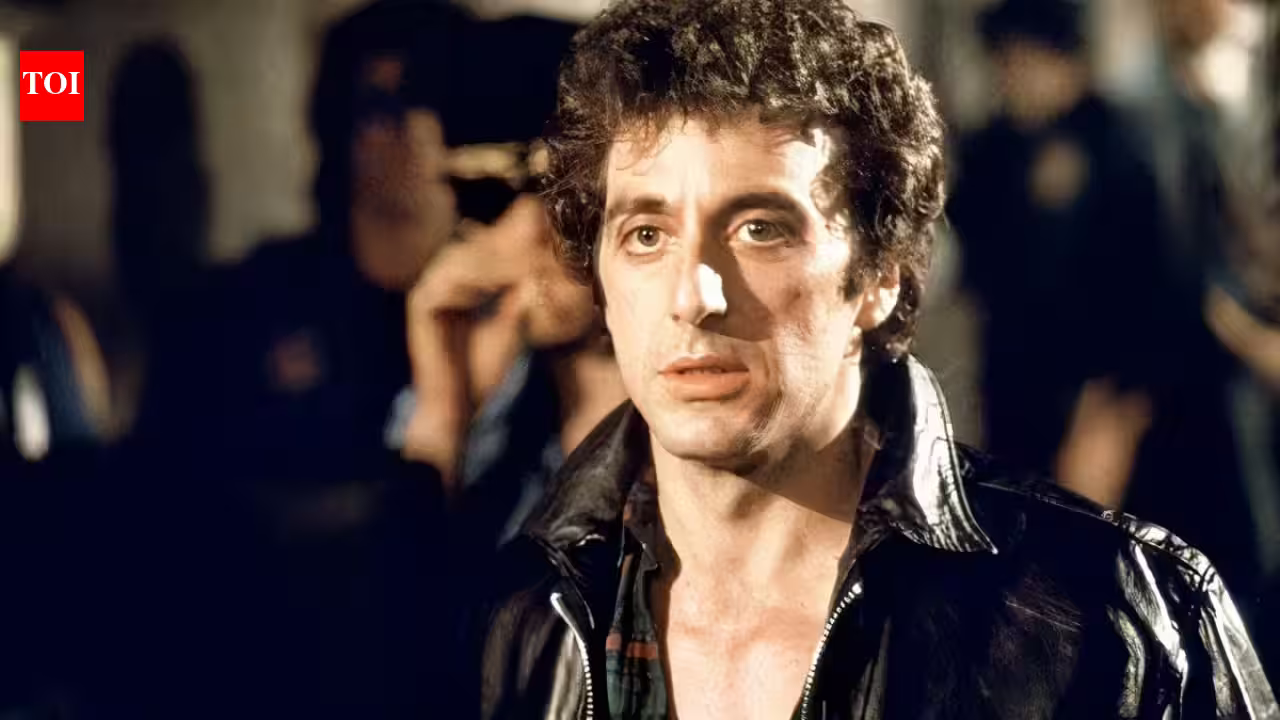
In the pantheon of Hollywood legends, few names carry the gravitas of Al Pacino. From the operatic violence of The Godfather to the frayed nerves of Dog Day Afternoon, Pacino has built a career defined by risk-taking. Yet, even the most seasoned actors have chapters they would rather leave in the cutting room. For decades, the 1980 erotic thriller Cruising has sat at the center of a storm, a polarizing relic of an era when cinema felt free to push boundaries regardless of the fallout. Now, in his 2024 memoir Sonny Boy, Pacino has pulled back the curtain, revealing a decision that transforms a tale of professional controversy into one of quiet, personal atonement.
A Career Defined by ‘Pushing the Envelope’
When Al Pacino signed on to star as Steve Burns in Cruising, he wasn’t looking for a paycheck; he was looking for an edge. Directed by William Friedkin—the visionary behind The Exorcist—the project promised to be a gritty, neo-noir deep dive into the darkest corners of New York City. For an actor who thrived on the psychological complexity of his characters, the premise of an undercover cop infiltrating the underground queer bar scene to hunt a serial killer was, on paper, an exercise in high-stakes dramatic tension.
“I’m always looking to push the envelope,” Pacino writes in his memoir. However, the production quickly morphed from an artistic endeavor into a lightning rod for social friction. As filming began, the set was besieged by protesters. The streets of Manhattan, which were supposed to be just a backdrop, became a battlefield. The LGBTQ+ community, rightfully concerned that the film painted their culture as a monolithic site of deviancy and violence, organized mass boycotts. For the cast and crew, it was a baptism by fire. Pacino recalls the sensation of being caught in the crosshairs of a societal shift, witnessing firsthand how a film could become a catalyst for cultural unrest before it even hit the theaters.
The Weight of Moral Dissonance
As the production wore on, the dissonance between Pacino’s artistic intentions and the film’s increasingly exploitative final cut became impossible to ignore. Pacino admits with refreshing candor that his discomfort grew in tandem with the public outcry. He acknowledges that the finished product was “exploitative,” a realization that weighed heavily on him even as he fulfilled his professional obligations.
In the film industry, actors are often shackled by contracts. When you’ve been paid a substantial sum to deliver a performance, you don’t simply walk away. Pacino was aware of his obligations, yet he found himself in a state of moral paralysis. He felt the sting of the protests and understood the validity of the anger directed at the film, yet he was bound by the machinery of the studio system. It is a rare admission for an A-lister to make—the recognition that, despite his massive influence, he was still an employee in a project he eventually came to despise.
An Irrevocable Act of Atonement
The most shocking revelation in Sonny Boy isn’t that Pacino disliked the film; it’s what he did with the money. While the press at the time was focused on the box office numbers and the controversy, Pacino was making a move that would remain a secret for nearly half a century.
Upon receiving his compensation for Cruising—a significant payout given his status at the time—Pacino chose not to spend a dime of it. Instead, he channeled the entire sum into an irrevocable trust. This wasn’t a PR stunt designed to generate positive headlines; in fact, he made it a point to stay silent. “I just wanted one positive thing to come out of that whole experience,” he wrote. By placing the funds in an irrevocable trust, he ensured that he could never reclaim the money, effectively turning his “blood money” into a donation intended to serve a purpose far removed from the controversial celluloid that birthed it. It was a private penance, a way to cleanse his conscience by ensuring the transaction served a purpose that wasn’t tied to the film’s legacy.
The Director’s Regret
Pacino is not the only one to look back on Cruising with a complicated lens. William Friedkin, who passed away in 2023, spent the latter years of his life addressing the film’s checkered history. In an interview with The Wrap, the director admitted that the film was “not the best foot forward for the gay rights movement.”
Friedkin, known for his abrasive and uncompromising style, defended his artistic process while simultaneously conceding that he had missed the mark regarding the film’s social impact. He maintained that he never intended the film to be a critique of the gay community, yet he understood why it was perceived that way. The distance between the director’s intent and the audience’s reception remains one of the most studied gaps in cinema history. It underscores the danger of filmmakers venturing into subcultures they do not fully understand, a lesson that Cruising continues to serve as a stark reminder of today.
A Legacy Re-evaluated
Decades later, Cruising remains a haunting entry in the filmography of a titan. It is a movie that stands as a time capsule—a reflection of New York in the late 70s, a testament to the technical prowess of Friedkin, and a source of profound regret for its lead actor. By coming clean about his internal struggle and his decision to surrender his earnings, Pacino has added a layer of human depth to the story of the film.
It reminds us that even icons grapple with the ethics of their craft. In an industry where success is measured by awards and box office records, Pacino’s decision to quietly divest from his own work serves as a reminder that personal integrity is often found in the choices we make when the cameras stop rolling. For a man who has lived his life on the big screen, the most compelling scene in Cruising might not be one found in the film at all, but the one Pacino wrote in the privacy of his own life: the choice to walk away from the profit and leave the moral baggage behind.
Disclaimer: This content is auto-generated for informational purposes only.
Source: Read Original News