







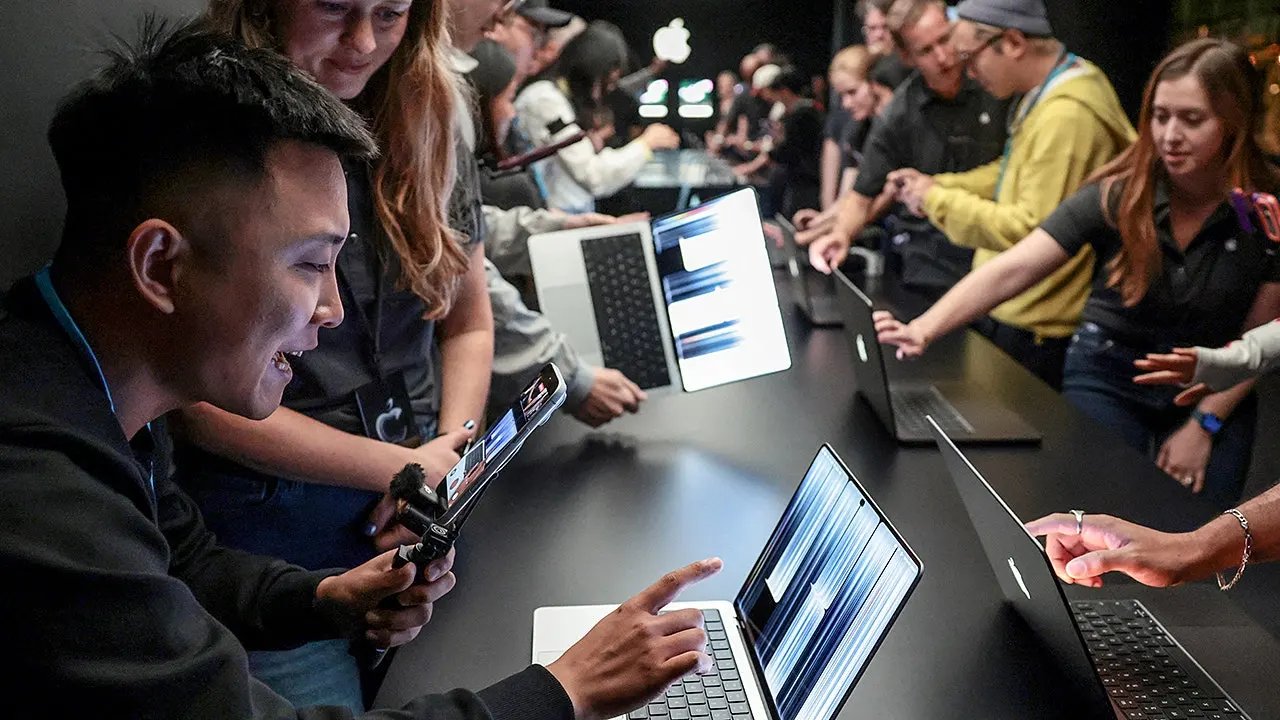
Apple Finally Integrates Touch Functionality into the MacBook Pro
For years, the industry debated whether the traditional laptop form factor required a touchscreen, with Apple long maintaining that the keyboard and trackpad offered the most precise interface for macOS. While Windows-based laptops embraced touch displays for over a decade, Apple steered clear, experimenting instead with the short-lived Touch Bar. This stance shifted on October 28, 2026, when the company unveiled its first touchscreen-enabled MacBook Pro.
The new iteration allows users to interact directly with the interface, utilizing familiar iPhone and iPad gestures such as scrolling, pinching to zoom, and dragging content between windows. To support this physical interaction, Apple engineers redesigned the display hinge to minimize wobbling during use. Despite these changes, the device remains a traditional laptop, eschewing a folding tablet design or Apple Pencil support, which ensures the focus remains on standard computing workflows rather than conversion.
The Advanced PROLED XDR Display Technology
While the touchscreen is the headline feature, the introduction of the PROLED XDR Display may prove more impactful for professional users. Utilizing tandem OLED technology, the screen eliminates the need for a traditional backlight. Because each individual pixel generates its own light, the display delivers deeper, true-black levels and superior contrast ratios, reaching up to 10,000,000:1.
Apple claims the display achieves 2,000 nits of peak brightness for both HDR and SDR content, ensuring visibility even in challenging lighting conditions. The screen also supports a 120Hz refresh rate, providing fluid motion during scrolling and animation. For professionals who operate in environments with high ambient light, the company has introduced an optional nano-texture finish that significantly reduces glare. These technical advancements target creative professionals, such as photographers and video editors, who require precise color reproduction and high-fidelity visuals.
Processing Power and Performance Architecture
Apple continues to push the envelope on internal performance by equipping these models with the M5 Pro or M5 Max processors. These chips are architected for demanding workflows, including high-resolution video production, complex 3D rendering, and the management of massive media libraries. The platform supports up to 128GB of unified memory and an expansive 16TB of internal storage, positioning the device at the extreme end of the mobile computing spectrum.
Running on macOS 27, the new MacBook Pro integrates Apple Intelligence and an upgraded Siri AI to assist with task automation and data processing. A notable inclusion is the Dynamic Island, appearing on the Mac for the first time to provide users with quick access to system notifications and active background processes. Furthermore, the inclusion of Thunderbolt 5 connectivity ensures that external peripherals and high-speed storage devices are not bottlenecked by the internal hardware.
Physical Design Improvements and Portability
Despite the inclusion of touch-layer hardware and more robust processing components, Apple has achieved a reduction in the physical footprint of the devices. The 14-inch model now weighs approximately three pounds, while the 16-inch model comes in at four pounds, representing a weight decrease of 0.5 and 0.7 pounds respectively from previous versions.
Battery efficiency remains a critical metric for a device of this tier. Apple reports a battery life of up to 24 hours under specific usage conditions. The architecture also incorporates a refined six-speaker system designed for improved bass response, alongside a 12-megapixel Center Stage camera for high-quality video conferencing. These refinements underscore an effort to balance performance with the mobility expected of a professional-grade laptop.
Pricing Considerations and Market Positioning
The touchscreen MacBook Pro enters the market at a significant price point. The 14-inch base model starts at $2,899, while the 16-inch version begins at $3,399. Configurations featuring the M5 Max processor command a premium, with the top-tier 16-inch model starting at $4,799 before additional memory or storage upgrades.
This pricing structure creates a distinct divide between the touchscreen lineup and the entry-level M6-equipped MacBook Pro, which retails for $1,999. The $900 price difference reflects the inclusion of the OLED display, the higher-end M5 architecture, and the touch-capacitive glass. For consumers, this suggests that the value proposition is tied less to the touch functionality itself and more to the broader professional specifications package that accompanies it.
Practical Usage and Developer Integration
Software compatibility is managed through the macOS system, which translates finger taps into precise mouse-click inputs. This allows for immediate functionality across a wide range of existing applications. However, Apple is working with third-party developers to optimize specific interfaces for touch. Software such as Final Cut Pro and Logic Pro has already been updated to leverage direct screen manipulation, allowing editors and musicians to manage timelines and virtual instruments with increased efficiency.
While early assessments indicate that general navigation is fluid, the physical constraints of a laptop screen mean that some dense, desktop-oriented interfaces may require further refinement to avoid precision errors. As with any new interface paradigm, the long-term utility of the touchscreen will depend on how frequently users incorporate it into their existing muscle memory and how effectively third-party developers adapt their menus to touch-friendly design patterns.
Disclaimer: This content is auto-generated for informational purposes only.
Source: Read Original News