









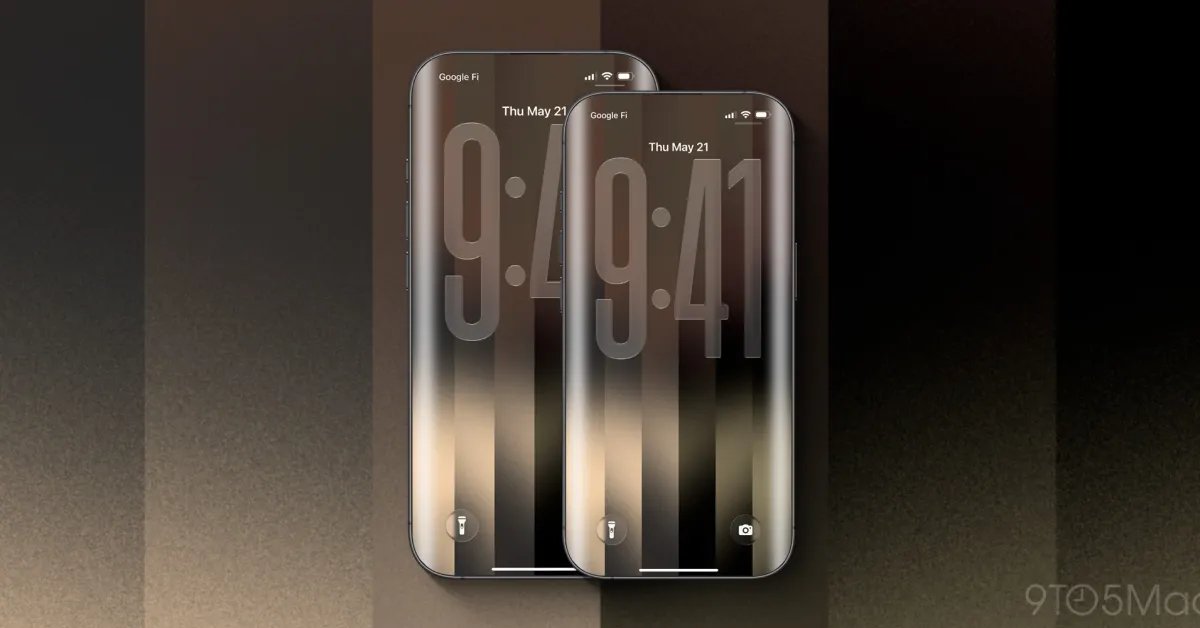
The landscape of smartphone development is shifting as industry analysts and supply chain leaks begin to coalesce around the upcoming fall lineup for Apple. As the twentieth anniversary of the iPhone approaches, reports suggest the company is preparing a significant hardware pivot, focusing on both the evolution of its flagship Pro series and the expansion of its foldable form factor, the iPhone Duo 2.
The Return of Titanium and Curvature
Recent intelligence regarding the iPhone 20 Pro suggests a return to design aesthetics that prioritize ergonomic comfort and high-end material science. Leaks from sources familiar with the development cycle indicate that the iPhone 20 Pro will move away from the flat-edged industrial design that has defined the last few iterations of the device. Instead, the upcoming model is expected to feature a curved architecture, aligning it with the design language seen in the ultra-thin iPhone Air.
Perhaps the most significant material change is the reported reintroduction of a titanium frame. While Apple initially adopted titanium for the iPhone 15 and 16 Pro models to address weight concerns, the material was notably absent in the 17 and 18 Pro cycles. The reintroduction of titanium—renowned for its superior strength-to-weight ratio—suggests a focus on durability without the bulk often associated with stainless steel. This move appears to be part of a broader consolidation of design, where the flagship Pro models borrow structural cues from the lightweight, high-performance Air lineup.
Advancements in Display Technology
Display innovation continues to be a central pillar of the iPhone 20 Pro development. According to reports from technical observers, the Pro series is trending toward larger screen sizes accompanied by a bezel-free, quad-curved display. This configuration aims to maximize screen-to-body ratio, providing a seamless visual interface that wraps slightly around all four edges of the device. By eliminating traditional bezels, Apple intends to deliver an immersive viewing experience that highlights the quality of the OLED panel technology.
The focus on quad-curved glass requires significant manufacturing precision, particularly in ensuring touch sensitivity and structural integrity near the edge of the screen. If these specifications hold, the iPhone 20 Pro would represent the most significant display evolution in recent years, shifting from the traditional flat surface toward a more fluid, integrated glass design that physically merges with the metal chassis.
Refining the iPhone Duo 2
While the Pro series undergoes a radical transformation, the second iteration of the foldable iPhone Duo appears to prioritize refinement over architectural overhaul. Data indicates that the iPhone Duo 2 will likely retain the established dimensions of its predecessor, featuring a 7.6-inch internal foldable display and a 5.4-inch external screen. By maintaining this form factor, Apple appears to be focusing on software optimization and internal hardware efficiency rather than experimenting with entirely new folding mechanics.
One of the most persistent questions regarding the Duo series is the inclusion of sophisticated biometric hardware. Current reports suggest that the implementation of Face ID on the foldable model remains complex. Technical constraints, specifically the limited space available for the TrueDepth camera array within a foldable chassis, mean that integrated Touch ID in the side-mounted power button remains the most viable security solution for this specific model.
Internal Engineering and System Integration
The internal components of both the iPhone 20 Pro and the Duo 2 are expected to push the boundaries of current system-on-chip (SoC) capabilities. To support the demands of a quad-curved, bezel-free display, the underlying processing architecture must manage advanced display drivers and image processing pipelines with high efficiency. For the Duo 2, the challenge lies in power management; balancing the active usage of two distinct displays while maintaining a competitive battery life requires a high degree of thermal management and energy-efficient silicon.
While specifics on the next-generation processor are still emerging, it is highly probable that both models will feature an upgraded neural engine to support localized artificial intelligence tasks. As Apple continues to integrate more complex machine learning models directly into the iOS environment, the hardware must be capable of executing these tasks with minimal latency. The combination of the new titanium chassis in the Pro model and the continued evolution of the foldable internal structure represents a dual-track strategy designed to address both the professional user and the early-adopter market.
Strategic Industry Impact
The move to integrate professional-grade materials and edge-to-edge display tech signals a shift in how Apple positions its hardware. By aligning the aesthetics of the Pro models with the engineering standards of the Air, the company is attempting to create a unified design identity that feels both high-end and technologically advanced. Meanwhile, the incremental update approach for the iPhone Duo 2 suggests a long-term commitment to perfecting the foldable user experience, ensuring that usability and reliability take precedence over rapid, unproven hardware changes.
Ultimately, the upcoming cycle will define whether these design choices satisfy the demands of the modern consumer. Whether through the structural lightness of titanium or the visual continuity of a quad-curved display, the focus is clearly on bridging the gap between high-performance computing and everyday utility. As the fall release date approaches, industry observers will be watching closely to see how these prototypes translate into mass-market manufacturing and whether these refinements will set a new standard for the next generation of mobile devices.
Disclaimer: This content is auto-generated for informational purposes only.
Source: Read Original News