








The Architecture of a Delayed Debut
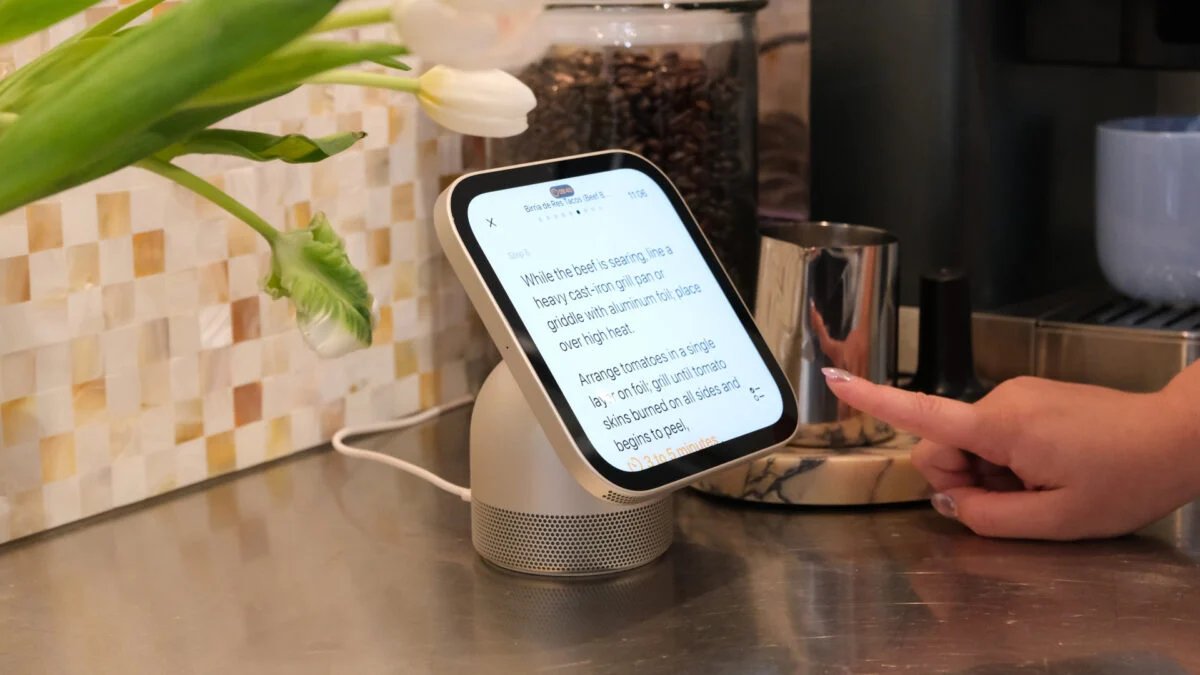
The Apple HomeView represents a unique intersection of long-term planning and hardware obsolescence. As the device nears its consumer release, industry analysts have noted that the unit arriving in customers’ homes is fundamentally a product conceived during an earlier phase of the smart home market. By design, the HomeView carries an aesthetic that leans heavily into retro-industrial motifs, drawing inspiration from the iconic iMac G4. However, the implementation of thick bezels and hardware proportions reminiscent of entry-level tablets from a decade ago suggests that the physical product was finalized well before its actual release date.
Internal reports indicate that thousands of these units have been sitting in storage facilities for nearly a year. The prolonged gap between the hardware’s manufacturing and its current market launch is a direct result of the software challenges Apple faced during the development cycle of its integrated AI-powered interface.
The AI Bottleneck and Software Integration
The primary force behind the HomeView’s delayed rollout was the struggle to reconcile Apple’s privacy standards with the rapidly evolving field of generative AI. While the hardware was positioned to compete with established smart home displays, the software layer—the brain intended to drive the device—remained incomplete for years. During the period when Siri was undergoing a significant architectural overhaul, the HomeView project was effectively frozen.
Reports suggest that the necessity of a functioning, AI-augmented Siri was non-negotiable for the device’s market position. The engineering pressure became so significant that Apple eventually sought external support, utilizing AI models licensed from Google to stabilize the user interface. This reliance on external models marked a departure from Apple’s typical vertical integration strategy, highlighting the extent of the technical hurdles the company faced in bringing a reliable, voice-responsive smart home hub to fruition.
Hardware Specifications in a Modern Context
The HomeView is powered by the A18 processor, a chip that was considered the state-of-the-art benchmark at the time of its initial design cycle two years ago. While still capable of handling standard smart home tasks, the inclusion of only 8GB of memory marks a constraint that contrasts with current expectations for AI-intensive hardware.
The reliance on this specific processor and memory configuration reinforces the narrative that the HomeView was, in many ways, finalized during the early stages of the generative AI boom. For power users expecting the peak efficiency of modern silicon, the A18 may present limitations, particularly as third-party smart home applications become more sophisticated and resource-heavy. The engineering trade-offs made during the long development phase reflect a period where the priority was ensuring baseline functionality rather than chasing the latest hardware specifications.
Design and Manufacturing Partnerships
Part of the broader strategy for the HomeView involves its integration into the “Apple Home Collection,” a collaborative initiative that includes hardware partnerships with LG and Schneider Electric. This ecosystem approach is intended to position the HomeView as a central hub for home automation, interoperability, and environmental control.
However, this partnership strategy has encountered unexpected friction. The synchronization with LG, while theoretically sound for integrating display technology, has coincided with significant public relations challenges regarding data privacy. Allegations that ambient audio monitoring could be occurring on associated smart appliances have complicated the launch environment. Although these claims have been formally denied by the partner companies, the association with such controversies during the HomeView’s arrival creates a complex landscape for Apple’s broader smart home messaging.
The Future of the HomeView
As the device hits the market, the discussion surrounding the HomeView is less about its ability to disrupt the current landscape and more about the historical narrative of its creation. Former engineers involved in the project have noted the extreme attention to detail applied to even the most minor hardware components, such as the calibration of LED diffusers to ensure optimal light dispersion.
For the end user, the HomeView serves as a bridge between the classic Apple design philosophy and the modern era of ambient computing. Its success will likely depend not on its internal specifications—which are admittedly reflective of a previous technological era—but on the fluid performance of its AI software and its utility as a central control point within the Apple ecosystem. As software updates continue to refine the user experience post-launch, the HomeView will represent a curious case study in how long-term product incubation can lead to a device that is simultaneously a product of the past and a gateway for future automation.
Disclaimer: This content is auto-generated for informational purposes only.
Source: Read Original News