








Standardizing the Foldable Experience
Apple has introduced a strategic update to its App Store ecosystem, specifically designed to address the unique hardware requirements of the newly announced iPhone Duo. As consumers transition to foldable technology, software interfaces must adapt to accommodate varying aspect ratios, screen transitions, and the physical mechanics of a folding device. To provide clarity for users, Apple is implementing the “Made for iPhone Duo” badge. This visual indicator serves as a certification that a particular application or game has been architected to leverage the expanded display area and specific multi-screen functionality of the hardware.
The primary purpose of this badge is to guide user expectations. While standard apps will function on the iPhone Duo via backward compatibility, those bearing the new label have undergone rigorous optimization. Developers have adjusted their code to handle the transition between the outer screen and the unfolded inner display without data loss or interface clipping. By identifying these optimized experiences, Apple aims to eliminate the friction that often accompanies early adoption of new form factors.
Leveraging Multitasking and Screen Real Estate
The iPhone Duo represents a shift in mobile interaction, and the software ecosystem is responding by rethinking how content is presented across multiple surfaces. Unlike traditional handsets, the Duo features a dual-display environment that allows for simultaneous, multi-purpose computing. Applications are utilizing this by moving beyond the constraints of a single-pane interface.
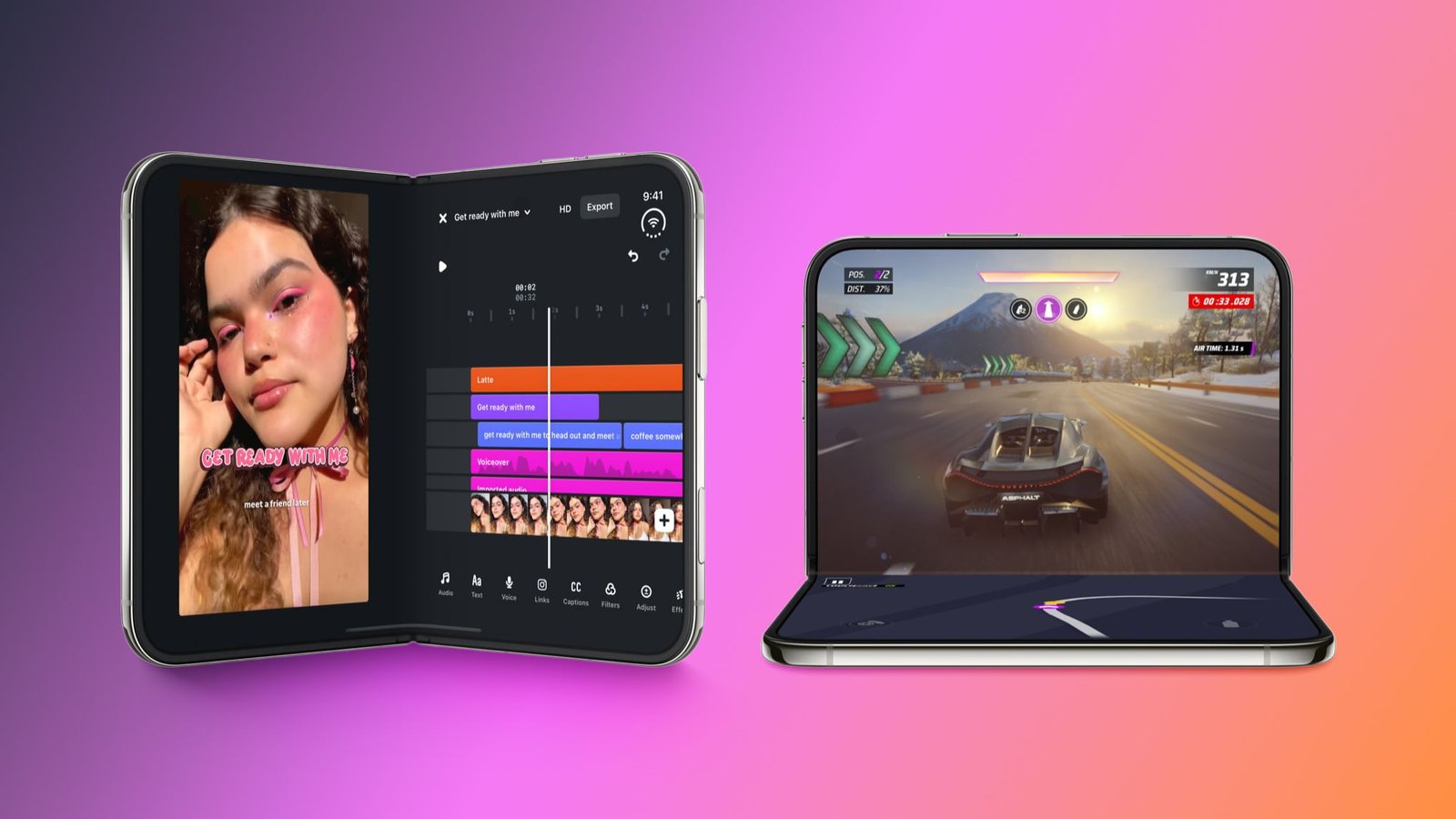
For media consumption, platforms like Netflix have implemented dual-mode display logic. Users can engage with short-form video feeds on the outer screen for quick interaction, then seamlessly unfold the device to allow cinematic content to fill the entire internal display. This creates a fluid transition between browsing and viewing. Furthermore, applications like Amazon Prime Video utilize the device’s physical hinge to enable “Flex” or “Laptop” modes. By partially folding the device, the screen is bisected into a functional landscape, placing the video playback on the upper portion while the lower half displays cast information or playback controls, essentially treating the device as its own mini-workstation.
Desktop-Class Productivity on a Mobile Platform
One of the most significant impacts of the iPhone Duo is the potential for increased mobile productivity. Apple has highlighted that key applications from the Microsoft Office suite—specifically Word and Outlook—are being updated to provide a desktop-class experience. On a standard smartphone, formatting menus often require nested sub-menus or overlays that obscure the document. On the iPhone Duo, these applications have been rewritten to utilize the extra width of the unfolded display.
By placing formatting toolbars permanently alongside the active document, Word removes the need for constant menu switching, mirroring the workflow typically found on a traditional computer. Similarly, the Outlook interface has been optimized to offer a side-by-side view where the inbox list remains on one panel while the active email occupies the other. This dual-pane approach is critical for high-efficiency tasks, allowing users to cross-reference data or navigate communications without losing their place in the primary workspace. The implementation of this layout is a clear signal that Apple envisions the iPhone Duo as a legitimate replacement for a tablet or a laptop in professional settings.
Communication and Collaborative Utility
Collaboration tools are also receiving extensive overhauls to match the capabilities of the Duo. The Zoom integration is perhaps the most notable example of functional optimization. During a video conference, the application can now partition the internal display to show both the active video stream and shared content, such as a presentation deck or spreadsheet, simultaneously. This removes the “switching cost” often associated with mobile meetings, where a user must toggle between the participants and the shared material.
Other services, including Lyft, United Airlines, and Yelp, are adjusting their interface layouts to present more data at a single glance. By utilizing a wider canvas, these apps can display maps, booking details, and status updates in a way that remains legible and actionable. These updates are essential for maintaining the utility of the hardware, ensuring that the device does not simply become a larger phone, but rather a more functional tool for data-heavy tasks.
The Current Landscape of Software Optimization
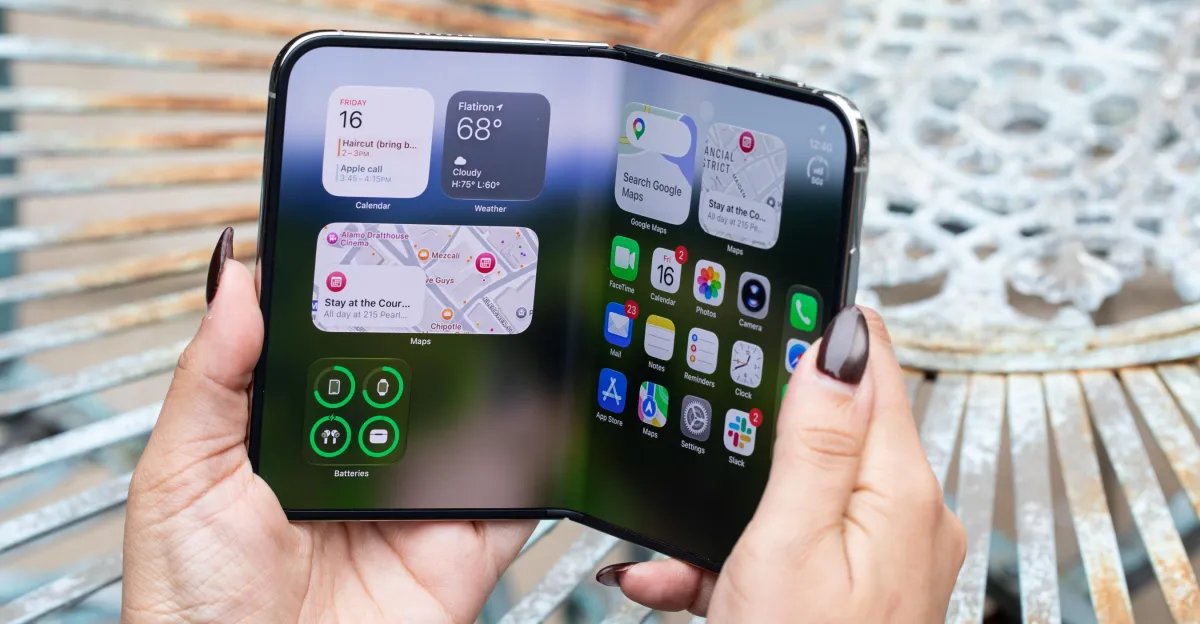
Despite the momentum behind the “Made for iPhone Duo” initiative, the ecosystem is still in its infancy. As observed during initial testing, there remain inconsistencies in how third-party applications handle the transition between screen states. While many apps are launching with specific features for the Duo, others are still in a “legacy” state, where the software attempts to scale existing phone layouts to fit the larger display.
Instances of minor UI bugs, such as improper scaling or navigation elements appearing in unexpected areas, illustrate the technical challenges developers face when creating software that must work perfectly in both folded and unfolded configurations. Apple has stated that additional app updates will roll out throughout the year, suggesting that the initial launch is merely the first phase of a broader commitment to refining the foldable experience.
Market Availability and Future Trajectory
The launch of the iPhone Duo, priced at $1,999, marks a premium entry point into the foldable market. With units available in limited quantities on a walk-in basis, Apple is positioning the device as a high-end, specialized tool for early adopters and power users. This limited rollout serves as a controlled test of both the hardware and the software-optimization strategy.
Starting this Friday, the App Store will feature curated editorial collections specifically highlighting apps that bear the “Made for iPhone Duo” badge. This editorial push is intended to provide immediate value to new owners by surfacing the best examples of optimized software. As the year progresses, the success of this device will depend heavily on the continuous support of third-party developers. If the software ecosystem can maintain the “desktop-class” standard set by Microsoft and others, the iPhone Duo may well establish a new paradigm for mobile productivity. Success, however, remains contingent on the company’s ability to resolve remaining interface bugs and ensure that the “Made for iPhone Duo” badge continues to represent a high level of functional polish.
Disclaimer: This content is auto-generated for informational purposes only.
Source: Read Original News