









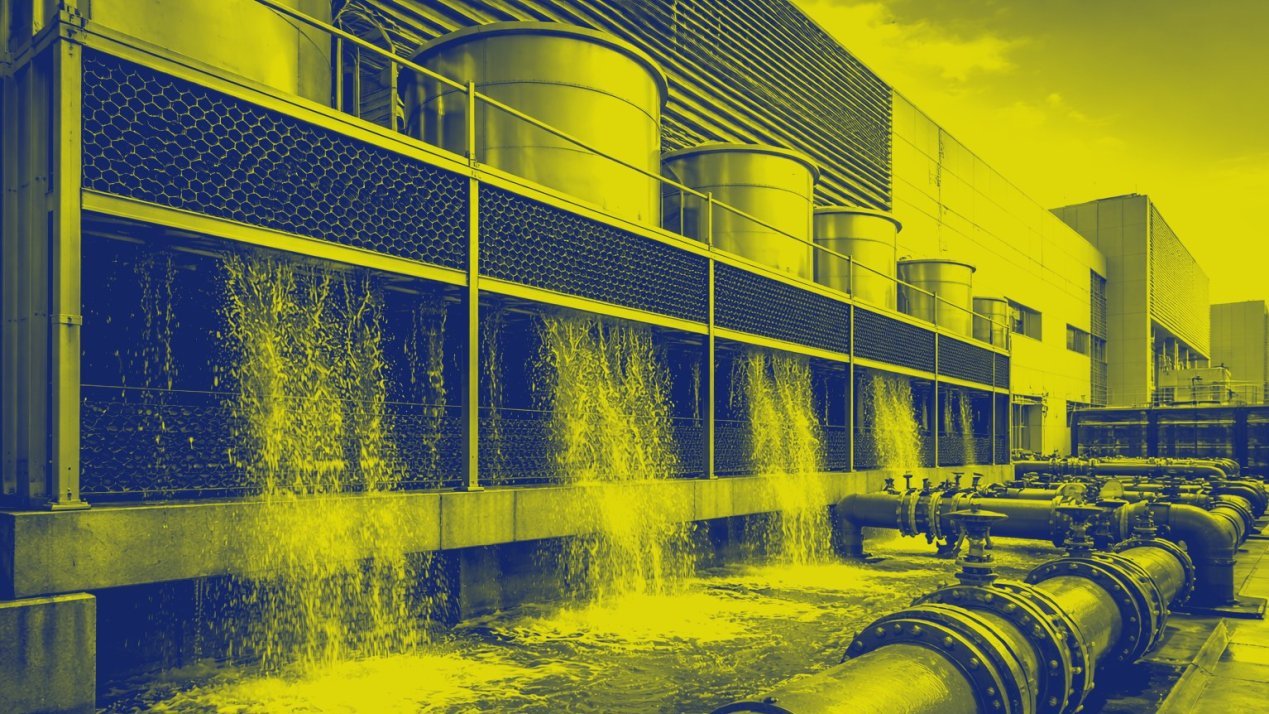
Mexico’s rapidly expanding data center sector is facing a growing clash between the insatiable demands of artificial intelligence and the reality of local water scarcity. As the nation consolidates its position as a regional technology hub, industry experts and government officials are raising alarms over the lack of transparency regarding how much water these facilities consume.
Queretaro, which serves as the heart of Mexico’s digital infrastructure, currently hosts roughly 72% of the country’s installed data center capacity. With 279MW of operational power and another 205MW currently under construction, the resource-intensive nature of these facilities has put local water utilities on edge. Experts warn that the current regulatory landscape fails to capture the long-term impact of these massive, power-hungry projects on community water access.
The Transparency Crisis in AI Infrastructure
The core of the issue lies in the predictive gap between initial facility construction and long-term operational scaling. Patricia Hernández, Director General of ANEAS, notes that while tech companies often disclose their water needs at the time of permit approval, they rarely provide detailed projections for their expansion over the next decade.
This lack of foresight creates a planning nightmare for municipal water providers, who must balance the needs of booming industrial hubs against the rising consumption of a growing local population. As AI infrastructure continues to evolve, the energy—and consequently the water required for cooling—is projected to climb significantly. Specialists are now pushing for mandatory, public-facing disclosures to ensure that water management agencies have the data required to forecast regional sustainability accurately.
Regulatory Shifts and Future Oversight
In response to these mounting pressures, Queretaro has launched a pilot program in coordination with the state water commission (CEA). This initiative aims to establish clear metrics for “first-use” water consumption. Officials, including Minister of Sustainable Development Marco Antonio Del Prete Tercero, have confirmed that the first public reports on water usage for these facilities are slated for release by 2027.
On a federal level, the National Water Commission (Conagua) is working on updated regulations following the late-2025 water reform. While specific mandates for data centers are still being ironed out, there is a clear shift toward requiring more accountability. Officials are particularly interested in leveraging AI—ironically, the same technology driving the need for data centers—to better monitor leaks, analyze consumption patterns, and improve the efficiency of existing distribution networks.
Economic Incentives for Sustainable Growth
Sustainability advocates, including representatives from WWF Mexico and environmental groups, are calling for a more holistic view of the “water footprint.” Critics point out that without proper economic incentives, companies are likely to stick with cheaper, conventional water sources rather than investing in more expensive, reclaimed water systems or advanced closed-loop cooling technologies.
“We need a framework that leads to action,” says Bernardo Villa of Ecolab, noting that the electricity needed to power these data centers also incurs a heavy water cost during the generation process. As the industry moves forward, the pressure to adopt European-style rating systems—which grade facilities on both energy and water efficiency—is gaining momentum in Mexico.
For the time being, the standoff between the necessity of digital progress and the necessity of resource conservation remains a critical challenge. Whether authorities can create a regulatory environment that forces tech giants to prioritize efficiency before the water tables reach a breaking point will likely define the future of Mexico’s digital, climate-conscious economy. As environmental groups demand a pause on new developments until a full cumulative impact study is completed, the tech industry must prove that it can grow responsibly in a water-stressed landscape.
Disclaimer: This content is auto-generated for informational purposes only.
Source: Read Original News