








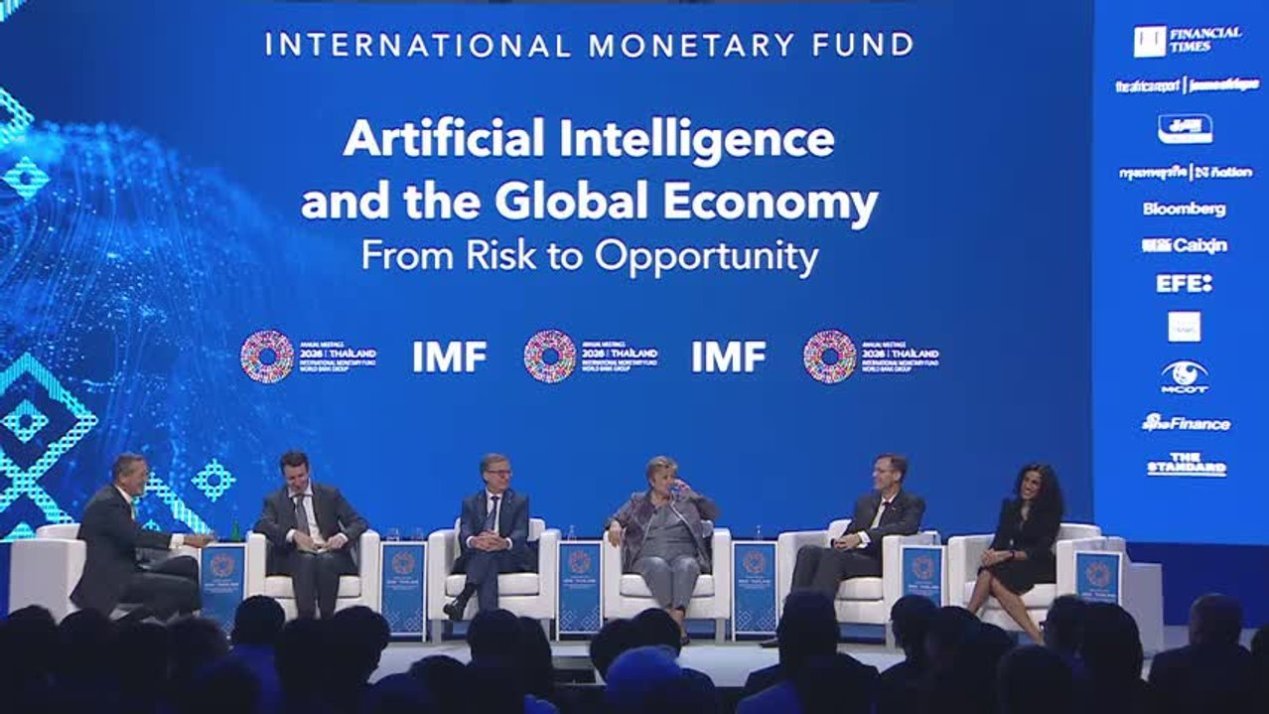
The rapid proliferation of artificial intelligence is creating a paradox for the global economy. While the technology is attracting massive investment—driving stock markets to record highs—economic leaders at the International Monetary Fund (IMF) and the Organization for Economic Co-operation and Development (OECD) warn that its benefits could be unevenly distributed. Without systemic changes, AI may exacerbate the divide between wealthy, technologically advanced nations and developing economies.
## A Stalled Translation from Investment to Growth
Although AI is projected to contribute up to 0.5% to annual global economic growth, experts are increasingly highlighting the gap between capital expenditure and actual output. While hardware giants and cloud providers report high spending on AI infrastructure, there is a visible delay in how these investments are filtering down to productivity gains.
“There is a large gap between exposure and actual use,” explains Stefano Scarpetta, chief economist at the OECD. While consumers have been quick to interact with AI-driven chatbots and apps, businesses have been more methodical, often struggling to weave these tools into the core of their daily operations. For the IMF, the central concern remains whether developing nations can overcome the lack of reliable power grids, stable digital infrastructure, and a workforce trained in AI-literate roles. Without these foundational elements, the potential for an “AI dividend” may remain locked within the borders of already digitized, affluent markets.
## The Risks of Labor Market Disruption
The labor market faces a turbulent transition as firms look to AI to trim costs and improve margins. Major corporations, including Barclays, eBay, and Qualcomm, have initiated workforce reductions this year, citing a need for leaner operations. These layoffs often coincide with strategic pivots toward automation, raising concerns about the long-term displacement of human labor.
Perhaps most concerning is the impact on the next generation of professionals. Traditionally, entry-level positions have served as the “training ground” for employees to gain institutional knowledge and professional intuition. If firms prioritize automating these foundational roles to boost efficiency, they inadvertently jeopardize the career pipeline for younger workers. Without a deliberate strategy to create alternative training pathways, employers risk a future skills drought, where the workforce lacks the practical experience necessary to manage the very systems they are meant to oversee.
## Bridging the Widening Divide
The threat of increased inequality is not new, but it is taking a more urgent form as AI investment scales. The IMF’s modeling suggests that without investment in human capital and digital accessibility, advanced economies will continue to hoard the rewards of automation. Because developed nations already possess the necessary complementary capital, they are better positioned to adopt AI at speed, leaving developing countries to deal with the potential loss of their traditional comparative advantages, such as an abundant, lower-cost labor force.
To prevent a scenario where AI serves as a wedge between nations, international policy experts argue that developing countries must pivot toward broad-based productivity improvements. This requires more than just access to software; it demands a focus on universal digital literacy and infrastructure development. If the global community fails to ensure that these technologies are accessible to smaller businesses and emerging economies, the promise of AI—a rising tide that lifts all boats—may instead turn into a force that accelerates existing global disparities, leaving the most vulnerable populations further behind in a rapidly shifting digital landscape.
Disclaimer: This content is auto-generated for informational purposes only.
Source: Read Original News