









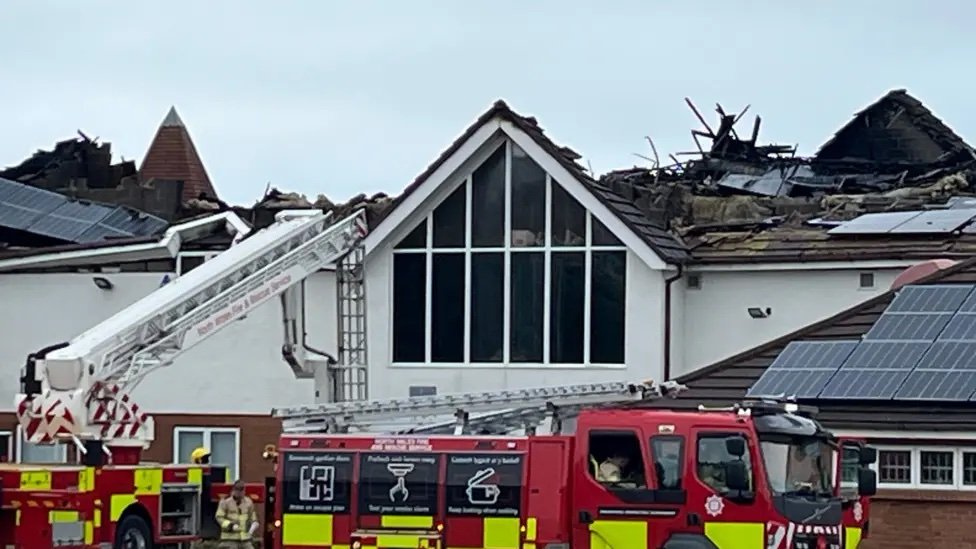
A significant fire broke out at the historic Conwy Golf Club in North Wales, causing substantial damage to the roof of the iconic clubhouse. The club, which gained global recognition as the host of the 2021 Curtis Cup, is now assessing the long-term impact of the blaze while emergency services work to secure the site.
While the golf course itself remains physically untouched, the incident has highlighted the vulnerabilities of heritage sporting venues in an era where digital preservation and smart-site management are becoming increasingly vital for infrastructure protection.
## Integrating AI and Smart Monitoring in Venue Security
The fire at Conwy—a venue renowned for its coastal beauty and historical significance—serves as a somber reminder of why many sports clubs are turning toward advanced technological solutions for disaster prevention. Modern venue management is shifting away from reactive measures toward predictive maintenance.
Large-scale property management firms are increasingly utilizing AI-driven thermal imaging and IoT (Internet of Things) sensor arrays to detect heat anomalies within historic wooden structures. By leveraging platforms like Google Cloud’s IoT Core and advanced data analytics, clubs can now monitor electrical currents and temperature fluctuations in real-time. Had such systems been integrated into the clubhouse’s aging roof structure, early warning signals could have potentially alerted local authorities before the fire spread to the rafters. As the golf industry modernizes, the integration of these sophisticated tech stacks is expected to become a standard requirement for insurance compliance and heritage conservation.
## The Role of Google Earth and Digital Twins in Restoration
As Conwy Golf Club begins the arduous process of reconstruction, architectural teams are looking toward Google’s mapping ecosystem to aid in the recovery effort. High-resolution imagery provided by Google Earth Pro allows planners to assess the roof’s footprint and surrounding landscape with millimeter-level precision, which is essential for architects tasked with rebuilding a structure that must comply with modern safety standards while maintaining its original aesthetic integrity.
Furthermore, the concept of “Digital Twins”—virtual replicas of physical buildings—is becoming the gold standard for restoration projects. By utilizing machine learning algorithms to analyze historic photographs and satellite data, planners can reconstruct damaged areas digitally before a single hammer is swung. This tech-forward approach ensures that the new roof is not only fire-resistant but also perfectly aligned with the original architectural plans, preserving the identity of a venue that hosted some of the world’s most talented amateur golfers.
## Future-Proofing Historic Sports Infrastructure
The loss at Conwy arrives at a time when the broader golf and tourism industry is pivoting toward “Smart Tourism.” Google’s recent updates to its Search and Maps platforms, which emphasize detailed venue accessibility and safety information, are playing a key role in how these clubs communicate with the public during crises.
For historic venues like Conwy, the path forward involves a blend of traditional craftsmanship and modern technology. The club is currently working with emergency responders to conduct a post-fire forensic investigation, likely utilizing 3D scanning drones and data processing tools to map the extent of the structural fatigue. By embracing these tech-driven insights, the club aims to reopen its doors to the public and the global golfing community as quickly as possible.
While the community mourns the damage to a structure that served as a backdrop for the historic 2021 Curtis Cup, there is optimism that the restoration process will serve as a pilot program for how historic sporting estates can protect their assets using modern digital infrastructure. As the industry learns from this event, the focus is shifting toward an “intelligent” approach to historic preservation, where AI-monitored fire prevention and digital architectural planning become as essential to the sport as the grass on the fairways.
Disclaimer: This content is auto-generated for informational purposes only.
Source: Read Original News