









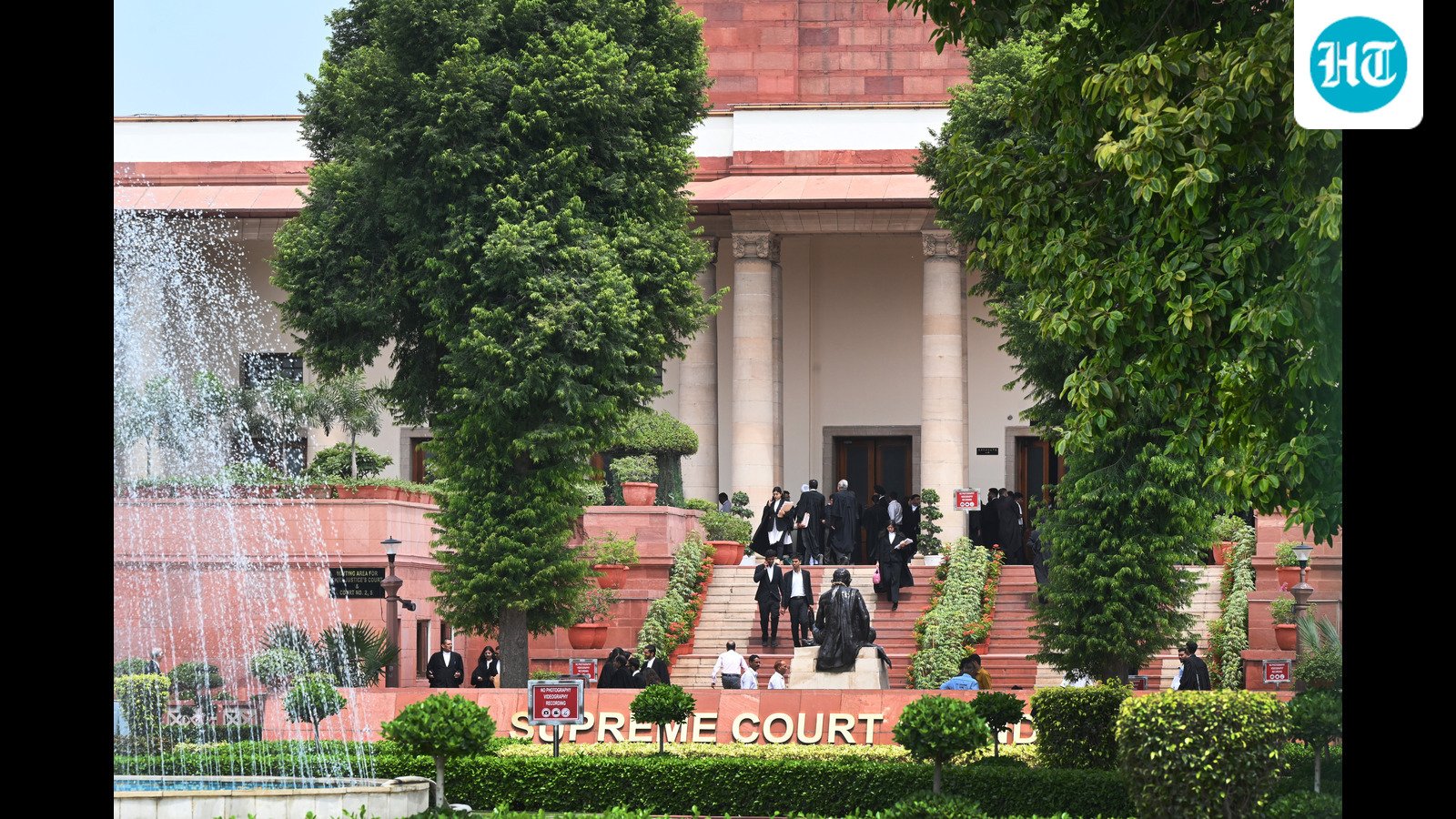
Supreme Court Reprimands Centre Over $99 Million Arbitration Battle
In a significant blow to the Union government’s litigation strategy, the Supreme Court of India on Monday dismissed an appeal against a Delhi High Court order that cleared the way for Vedanta Ltd and Ravva Oil (Singapore) Pvt Ltd to enforce foreign arbitration awards valued at $99 million. The apex court expressed deep frustration over the government’s persistent efforts to stall the execution of awards dating back over two decades, warning that such legal maneuvering threatens the sanctity of India’s arbitration framework.
A Question of Institutional Credibility
The bench, comprising Justices JB Pardiwala and Manmohan, delivered a sharp critique of the Centre’s approach, questioning the utility of fighting arbitral outcomes that have already been vetted and upheld by foreign courts. The judges noted that the government’s continued resistance undermines its own stated mission to position India as a global hub for arbitration and dispute resolution.
“What are these arguments? You are frustrating an arbitral award like this? At the stage of enforcement?” the court remarked during the proceedings. Addressing the wider implications for foreign investment, the bench cautioned that such conduct damages international confidence in the Indian legal system, noting, “And we talk about all of this arbitration and seat… nobody will trust you.”
The Supreme Court ultimately found no legal error in the Delhi High Court’s judgment from July 1, 2026, which had rejected the Centre’s various objections to the enforcement of awards passed in 2004 and 2016 by a tribunal seated in Kuala Lumpur.
Decades of Legal Friction
The roots of the dispute lie in a 1994 production-sharing contract concerning the Ravva oilfield in the Krishna-Godavari basin. The consortium involved included the state-owned ONGC, alongside Videocon Petroleum, Ravva Oil, and Cairn Energy—the latter’s interest eventually shifting to Vedanta.
The core conflict, known as the “ONGC Carry” dispute, involved disagreements over how historical costs incurred by ONGC were accounted for when calculating the revenue shares of the other partners. While the contract mandated that disputes be settled via UNCITRAL arbitration in Kuala Lumpur, the path to resolution proved arduous.
A partial award delivered in 2004 was subjected to extensive litigation in Malaysian courts, with the matter bouncing between high courts and appellate bodies until the Malaysian Federal Court finally upheld the award in 2011. Despite this, the Centre issued show-cause notices in 2014, demanding $64 million from Vedanta and $35 million from Ravva Oil. When the companies returned to the tribunal for a final determination in 2016, the government challenged that award as well, only to see it upheld by the Malaysian Federal Court in 2019.
The End of the Road for Enforcement Challenges
When Vedanta and Ravva Oil moved to the Delhi High Court to enforce the awards in India, the government cited technical arguments, including claims of limitation, public policy violations, and the doctrine of functus officio—the idea that the tribunal had exhausted its authority.
The High Court dismissed these objections, asserting that an enforcement court is not an appellate forum and cannot reopen the merits of an arbitral decision simply because the government disagrees with the outcome. With the Supreme Court now refusing to interfere with that ruling, the government’s attempt to bypass the international awards has effectively reached its conclusion, marking a victory for the companies and a stern reminder to the state regarding the finality of arbitration.
Disclaimer: This content is auto-generated for informational purposes only.
Source: Read Original News