








Exquisite 12th-Century Chola Bronzes Unearthed in Nagapattinam
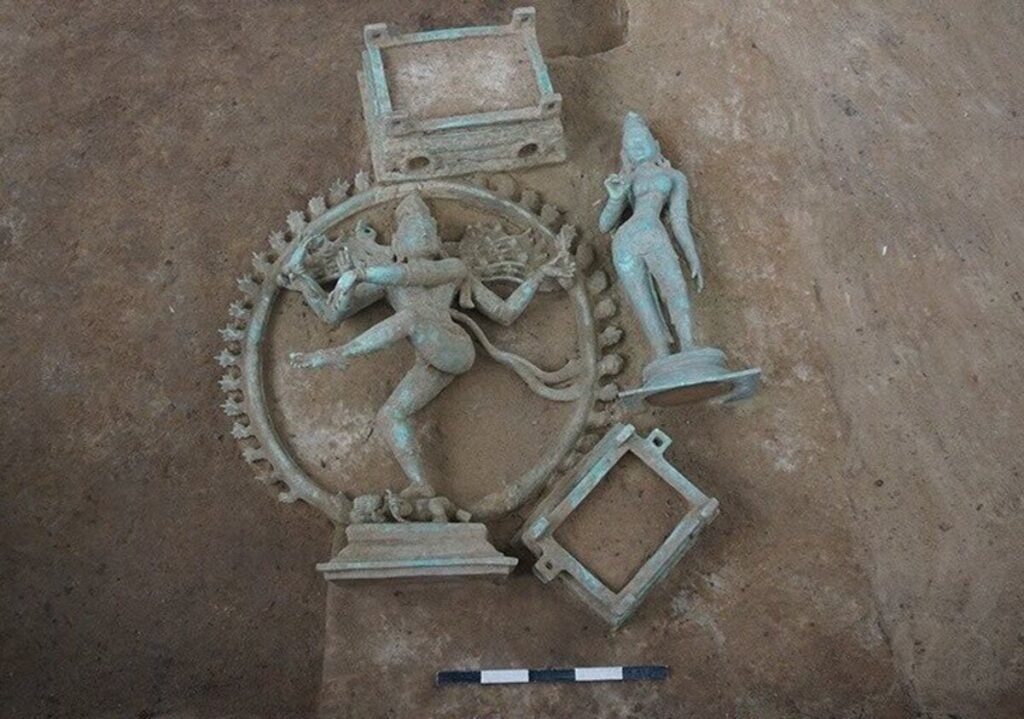
New Delhi: In a significant archaeological breakthrough, experts from the Tamil Nadu State Department of Archaeology have recovered two remarkably preserved bronze statues from a dig site in the coastal district of Nagapattinam. The artifacts, which provide a window into the zenith of southern India’s medieval artistic mastery, are believed to date back to the 12th century, placing them firmly within the later era of the illustrious Chola dynasty.
The discovery occurred during routine excavations, with the statues found buried approximately one meter beneath the surface. The precision of the craftsmanship and the preservation of the intricate metalwork suggest that the site may have served as a repository for sacred items, likely hidden or buried to protect them during times of historical upheaval.
Iconic Depictions of Divine Forms
The collection features two central figures of Hindu iconography. The larger of the two is a classic depiction of Lord Shiva in the form of Nataraja—the Lord of the Dance. Standing at 110 centimeters in height and spanning 100 centimeters in width, the statue captures the dynamic pose associated with the cosmic dance of creation and destruction. The fluidity of the limbs and the precise geometry of the figure highlight the unparalleled skill of 12th-century Chola metalworkers.
Accompanying the Nataraja is a figure of the goddess Sivakami, measuring 82 centimeters tall and 23 centimeters wide. Both statues were recovered alongside their original pedestals, a rare occurrence that provides researchers with a more complete understanding of how these idols were mounted and displayed within temples centuries ago.
Insights into Chola-Era Craftsmanship
The Chola dynasty, which reigned over expansive territories in southern India between the 9th and 13th centuries, is world-renowned for its “lost-wax” casting technique. During this period, the kingdom fostered a golden age of architecture and bronze casting, producing images that are today considered some of the finest examples of metal art in human history.
Archaeologists involved in the project noted that the decorative flourishes, the balanced proportions, and the fine detailing of the clothing and jewelry on these figures are diagnostic of the late Chola aesthetic. These artifacts are not merely religious objects; they are primary source documents that reveal the economic prosperity, commercial reach, and sophisticated religious life that defined the Tamil region during the medieval period.
Preservation and Scientific Analysis
Following their extraction from the soil, the statues have been carefully transported to a specialized conservation facility in Chennai. Conservationists are currently tasked with the delicate process of cleaning and stabilizing the metal, which has weathered centuries of burial.
Once the physical conservation is complete, the items will undergo rigorous metallurgical testing. Researchers aim to determine the precise alloy composition of the bronze, which could offer insights into the trade routes and mineral resources available to the artisans of the time.
This discovery serves as a poignant reminder of the rich cultural heritage buried beneath the modern landscape of Tamil Nadu. As studies continue, experts hope that these two masterpieces will provide a deeper understanding of the religious practices and the enduring legacy of the Chola Empire, confirming Nagapattinam’s historical significance as a hub of artistry and spiritual devotion.
Disclaimer: This content is auto-generated for informational purposes only.
Source: Read Original News