








The Return of a Cult Classic
The legacy of Godzilla in North America has traveled a complex path, shifting from obscure dubbed television broadcasts to the modern era of cinematic universes. For many, a formative pillar of this obsession was the 2002 release of Godzilla: Destroy All Monsters Melee. Developed by Pipeworks, the game successfully captured the essence of tokusatsu—the Japanese genre of live-action films featuring giant monsters—by blending professional wrestling mechanics with high-stakes urban destruction. After more than two decades, the title has returned in the form of Godzilla: Destroy All Monsters Melee Remastered, proving that the foundation of the original remains as functional and entertaining as it was during the era of couch-based multiplayer gaming.
Gameplay Mechanics and Environmental Strategy
At its core, the game operates as a 3D brawler where players select from a roster of 12 iconic kaiju, including Godzilla, Gigan, and King Ghidorah. The objective is straightforward: defeat opposing monsters in destructible arenas based on real-world locations or legendary film sites. However, the depth of the combat system often surprises newcomers. Beyond simple mashing, players must master punch, kick, and fierce attack strings, while managing an energy bar used for projectile beam attacks.
Strategic depth is further enhanced by environmental interaction. The arenas are not static backgrounds; they are resources. Players can rip skyscrapers from the ground to use as projectiles, knock opponents into volcanic pits, or break through barriers to access new zones. Because the environment degrades over time, the map changes throughout the fight, forcing players to adapt their tactics as cover vanishes and power-ups like the Mothra Airstrike or Rage boosts become the focal points of conflict.
Refined Systems and Character Variety
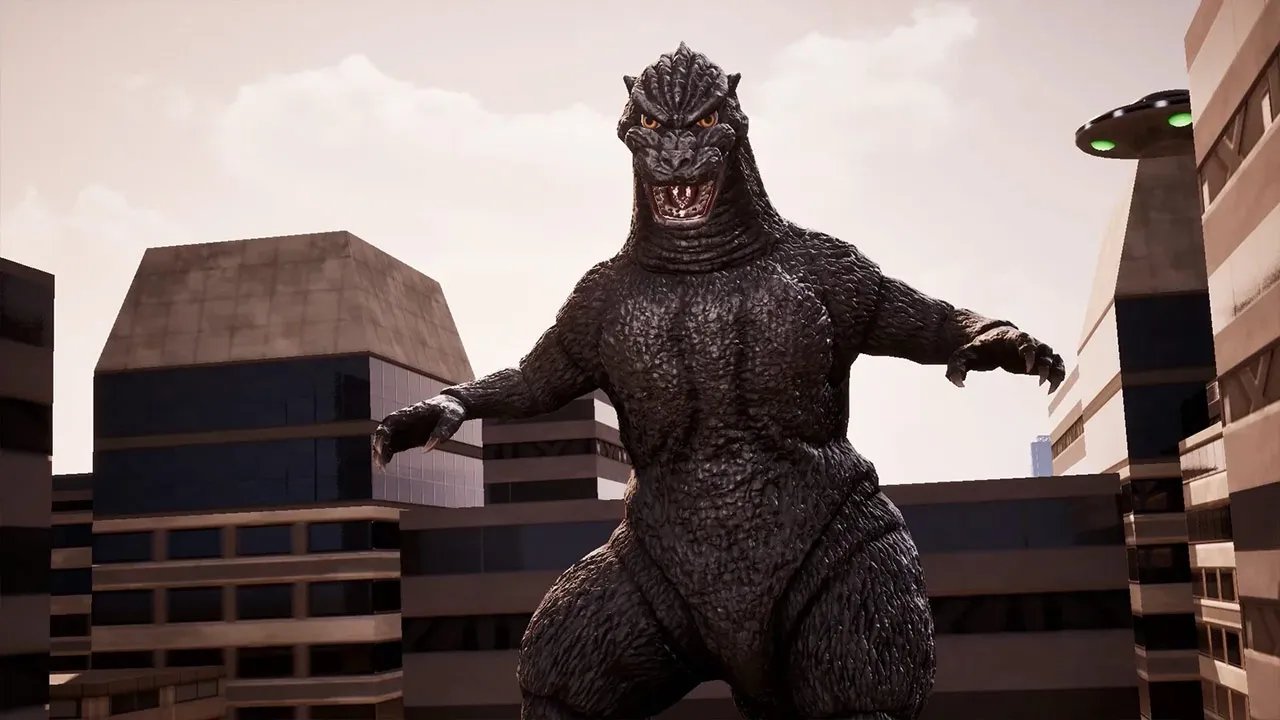
The remaster maintains the aesthetic of the original, preserving the look of actors in rubber suits while sharpening the visuals for modern displays. Audio quality is a significant highlight, featuring the distinct, bone-shaking roars of the monsters and an authoritative soundtrack that captures the scale of a cinematic production.
Each character brings a unique profile to the match. For instance, Anguirus possesses a defensive advantage due to his spiked shell, which punishes attackers from behind, while faster characters like Godzilla 2000 are better suited for sustained pressure. Understanding these variables—and knowing when to duck a projectile or punish a recovery animation—separates high-level players from those relying on luck. The game rewards technical knowledge, such as distinguishing between blunt and edge attacks, providing a surprisingly high skill ceiling for a title that appears accessible on the surface.
Single-Player Content and Progression
The remaster features several modes designed to test different playstyles. Adventure mode provides a narrative framework involving an alien race called the Vortaak, who seek to control the kaiju population. While the plot serves primarily as an excuse for combat, it functions well enough to keep the action moving. Other modes, such as Destruction and Survival, cater to those focused on score chasing or enduring waves of increasingly difficult opponents.
Pipeworks has implemented a flexible progression system that allows players to unlock the roster in a non-linear fashion. By fulfilling specific requirements through various game modes, users can prioritize the monsters they wish to access first. This creates a loop of discovery, though some players may find the initial restriction of the roster frustrating when compared to the desire for immediate, unrestricted multiplayer matches.
The Impact of Online Integration
Perhaps the most significant addition to the remaster is the inclusion of online multiplayer. While local play remains a staple of the genre, the ability to battle opponents globally is a vital update. The netcode supports smooth matches, allowing for competitive play that was previously confined to local hardware. Despite this success, the lack of a robust tutorial system remains a notable drawback. Players are expected to learn complex defensive maneuvers and timing windows through trial and error or external research, which can be a barrier to entry for those unfamiliar with fighting game fundamentals.
Reflecting on a Time Capsule
Godzilla: Destroy All Monsters Melee Remastered serves as a reminder of an era when gaming focused on immediate, peer-to-peer competition rather than the engagement-driven loops of modern titles. By stripping away contemporary trends like battle passes and daily quests, the game highlights the intrinsic value of its mechanics. It is a rare example of a remaster that honors its source material while making necessary technical improvements to ensure it remains playable in a modern context. For those interested in the history of licensed games or the spectacle of giant monsters leveling a city, this title offers a focused, energetic experience that values the core loop of combat above all else.
Disclaimer: This content is auto-generated for informational purposes only.
Source: Read Original News