








The Australian defence sector’s promise of a long-term manufacturing resurgence has reached a significant milestone this week as Henderson-based shipbuilder Austal announced a massive recruitment drive. The company is set to add 500 new employees to its roster over the next 12 months, marking a major escalation in the production capacity required for Australia’s latest Landing Craft shipbuilding programs.
As the nation looks to solidify its sovereign naval capabilities, Austal’s workforce expansion is being positioned as a cornerstone of the Commonwealth’s objective for continuous shipbuilding in Western Australia.
Bridging the Skills Gap Across Trades and Tech
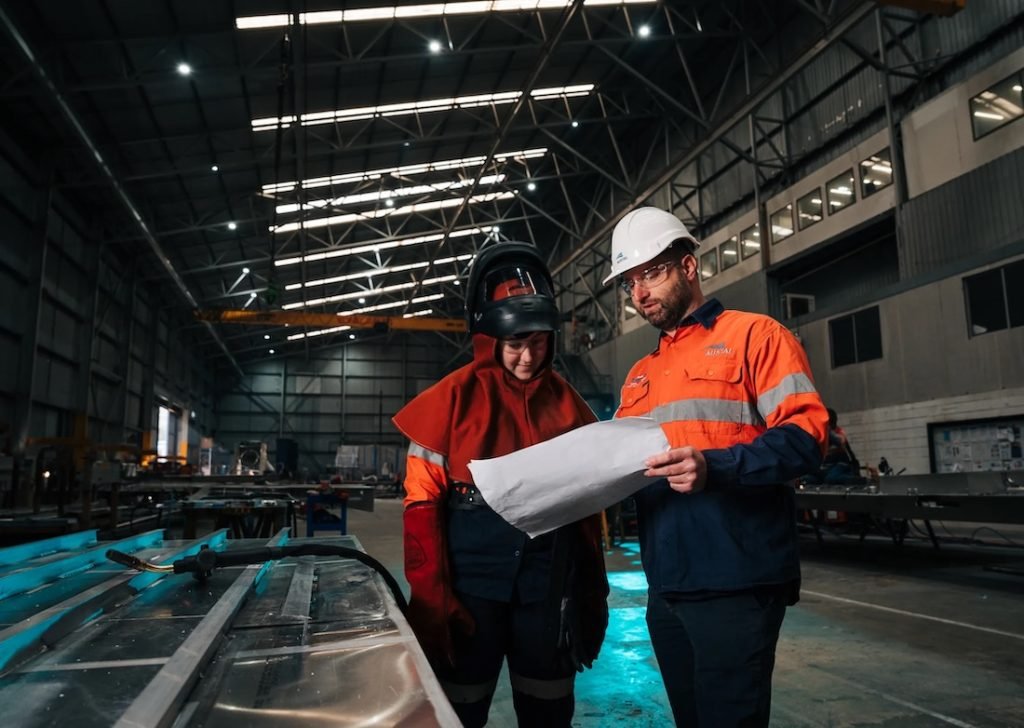
The recruitment campaign is expansive, targeting both blue-collar trades and office-based professionals. Austal is actively seeking fabricators, pipe fitters, welders, electricians, mechanical fitters, and cabinet makers. Importantly, the company is widening its net, inviting applicants with relevant trade backgrounds even if they lack prior experience specifically in the shipbuilding industry.
On the corporate and technical side, Austal is looking to bolster its administrative and specialist ranks. Available roles include positions in project management, procurement, quality assurance, and engineering. This focus on engineering and project management aligns with broader trends in the Australian industrial sector, where digital transformation and precision manufacturing are increasingly reliant on robust software infrastructure and sophisticated data management. While Austal’s focus remains on physical vessel construction, the project management tools and supply chain software required to track these assets mirror the high-tech operational efficiencies seen in major tech firms.
Modernizing the Workforce Culture
In an increasingly competitive job market, Austal is leaning into contemporary workforce preferences to attract talent. To stay competitive against other industrial and tech-forward sectors, the company has implemented flexible working arrangements. Production teams are now offered a four-day work week, while office-based staff can utilize a nine-day fortnight.
These policies reflect a broader shift in the Australian labor market, where traditional manufacturing is borrowing retention strategies—such as flexible scheduling and professional development—typically associated with the software and startup industries. By offering these benefits, Austal aims to ensure that its Henderson facility remains an employer of choice as it embarks on a multi-decade project to modernize the Australian Defence Force’s (ADF) maritime fleet.
Sovereign Shipbuilding and Long-Term Stability
Austal CEO Paddy Gregg emphasized that this hiring surge is not merely a short-term project but a commitment to the long-term stability of the Western Australian economy. “The new roles will contribute to the delivery of Australia’s future defence fleet from our Henderson shipyard, supporting the Commonwealth’s objective of continuous naval shipbuilding,” Gregg stated.
The company is also doubling down on the next generation of workers by maintaining its apprenticeship and graduate programs. These initiatives are designed to act as a career pipeline for both young entrants and experienced professionals looking to transition into the maritime sector.
The Henderson Precinct, situated within the Australian Marine Complex, continues to serve as the heartbeat of Australia’s naval strategy. With a history spanning more than 30 years of building and maintaining vessels, the shipyard is now entering a new era of growth. As the company continues to deliver advanced vessels for the Navy, Border Force, and Army, the injection of 500 new staff members will be vital to ensuring these assets are delivered on time and to the exacting standards required by modern defence requirements.
For those interested in joining the project, Austal has directed potential applicants to its dedicated career portal, austaljobs.com/australia, where the full list of open positions is being updated regularly. As these roles are filled, the expansion serves as a clear indicator that Australia’s investment in domestic defence manufacturing is moving rapidly from policy on paper to tangible industrial reality.
Disclaimer: This content is auto-generated for informational purposes only.
Source: Read Original News