






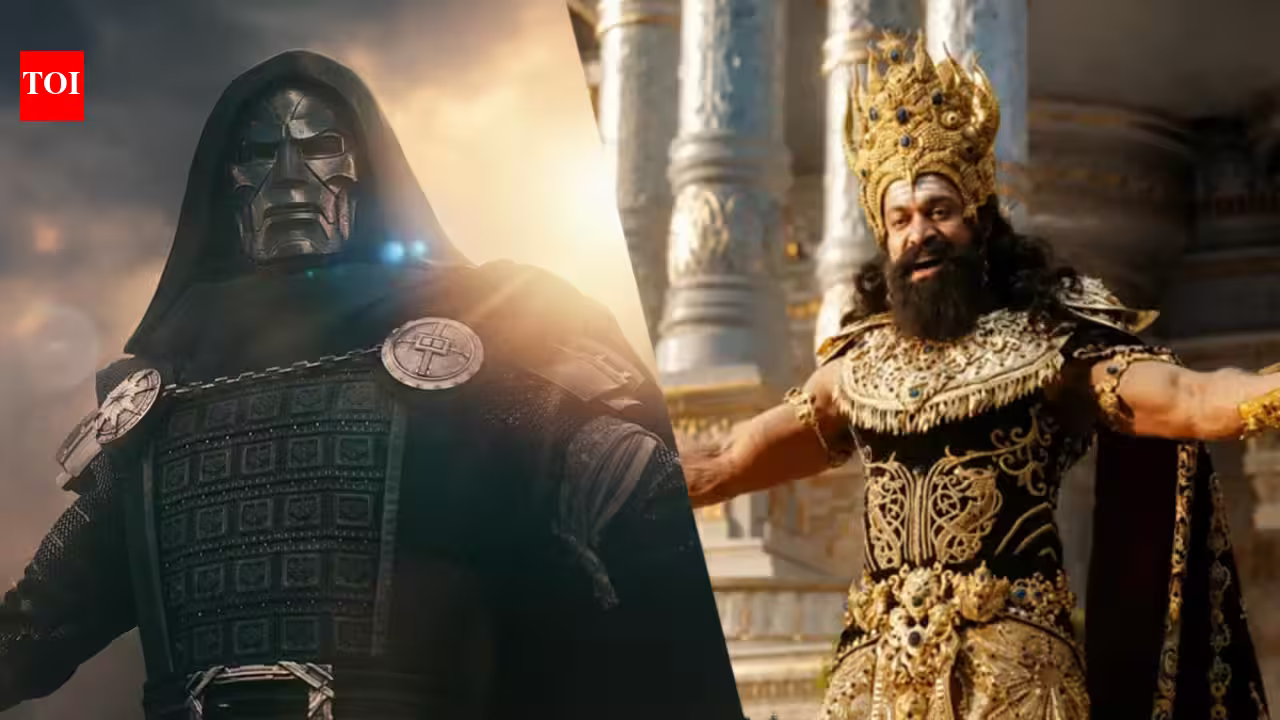
The recent unveiling of the “Avengers: Doomsday” trailer by the Russo Brothers, offering a glimpse into the backstory of the MCU’s forthcoming major antagonist, has ignited a considerable discussion among fans. While many have lauded Robert Downey Jr.’s anticipated portrayal of Victor Von Doom and his memorable declaration, “Hell answers to me, for I am Doom,” a significant segment of the audience has voiced criticism. This criticism primarily stems from comparisons between the Marvel film’s visual effects and those of Nitesh Tiwari and Namit Malhotra’s “Ramayana.”
Indian audiences, in particular, have taken to various platforms to express their views, contending that the visual effects in “Avengers: Doomsday” lack the refinement observed in “Ramayana.” The latter, a two-part epic featuring Ranbir Kapoor as Lord Rama and Yash as Ravana, benefits from the expertise of the Oscar-winning visual effects company DNEG, which is responsible for its extensive CGI work. Beyond aesthetic preferences, the colossal budgets allocated to both productions have also become a point of interest. Reports suggest that “Ramayana” boasts a combined budget of approximately USD 500 million for its two installments, while “Doomsday” is rumored to have a production expenditure ranging from USD 500 million to USD 700 million.
Following the “Doomsday” trailer’s release, Indian viewers initiated a direct comparison of specific visual effects sequences from the Marvel film with footage from both “Ramayana” and even the much-debated “Adipurush.” One commentator observed, despite a tenfold budget increase, a particular shot from “Doomsday” appeared inferior to a similar one in “Adipurush,” thus invalidating comparisons with “Ramayana.” Another user unequivocally stated that “Ramayana looks way better than Doomsday.” A third admirer of Indian cinema extolled the grandeur of the Indian epic, asserting that “The world’s biggest films still can’t touch India’s BIGGEST Ramayana’s trailer VFX. The Ramayana VFX/CGI looks far more polished, detailed & cinematic than Doomsday.” The prevailing sentiment was further encapsulated by a query: “Why does Avengers: Doomsday have such poor VFX in the new trailer that even Ramayana looks better?” The substantial expenditure on the Marvel project also drew scrutiny, with one viewer lamenting, “Avengers Doomsday’s VFX WORK is So Damm BAD !!!! You Have $400 mn Budget …. Hope they will improve from here, it’s Very Difficult …. But Let’s Hope.”
Intriguingly, this debate has also rekindled discussions surrounding “Adipurush,” Om Raut’s 2023 mythological epic starring Prabhas and Kriti Sanon. Despite facing considerable backlash for its visual effects and character designs upon its trailer release and subsequent theatrical run, some social media users now argue that “Adipurush” stands favorably against the footage presented in the latest “Doomsday” trailer. One post highlighted, “Om Raut literally showed New York City in Adipurush with USD 70M budget, which is better than the USD 700M budget Doomsday.” Another user declared, “Even adipurush look way better than doomday,” while a third expressed, “My respect for Adipurush has increased by 100x fold after watching DoomsDay trailer.”
This widespread comparison has also brought to light a perceived “double standard” in how Indian and Hollywood productions are scrutinized. Many netizens argue that Indian films, particularly those within the mythological and fantasy genres, often face more rigorous examination compared to Hollywood blockbusters, which sometimes receive greater leniency despite comparable visual effects or CGI outcomes.
“Ramayana,” envisioned as a two-part saga, is poised to be one of India’s most ambitious cinematic undertakings. With DNEG spearheading its visual effects, the film aims to vividly re-create the epic battles from ancient Indian texts. The first installment of “Ramayana” is slated for an 8 November, 2026 release in Indian cinemas, with the second part scheduled to continue the grand narrative on Diwali 2027. Conversely, “Avengers: Doomsday” is set to premiere on December 18, followed by its sequel, “Avengers: Secret Wars,” in December 2027. This juxtaposition of release schedules and the ongoing comparative analysis of their visual effects underscores a dynamic and evolving landscape in global entertainment.