








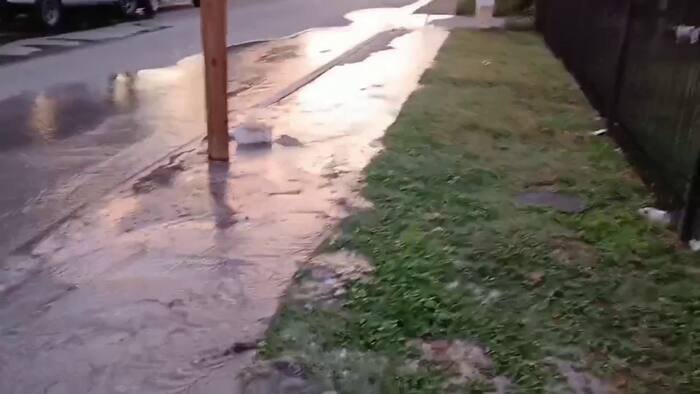
SAN ANTONIO – For residents of Loy Drive, the sound of rushing water is not a sign of a localized storm, but a recurring signal of infrastructure failure. Jovonne Gonzales, a long-time homeowner on the street, says that checking for water main breaks has become a grim, non-negotiable part of her daily morning routine.
Since 2021, the short, half-mile stretch of road has been the site of six major water main breaks. The most recent incident occurred over the weekend, when a rupture directly in front of Gonzales’ residence sent water rushing toward her home’s foundation. For Gonzales, the frequency of these events—roughly once a year for the past six years—is symptomatic of a systemic problem that the San Antonio Water System (SAWS) has yet to adequately address.
“Every morning I go out and look for water main breaks; that’s part of my normal routine,” Gonzales said. “Our street is not even a half-mile long, so I feel like that’s an excessive amount.”
The frustration reached a breaking point when Gonzales filed a public records request with SAWS to determine why the area continues to suffer from repeated failures. However, she was left dissatisfied with the utility’s response, which characterized the frequency of the breaks as within an acceptable range rather than an indication of a “troubled area.”
“I don’t think they’re doing anything on it,” Gonzales said, noting the personal toll the disruptions take on her daily life. “The biggest inconvenience was I had to change all my plans for the day.”
When questioned regarding the cluster of failures on Loy Drive, SAWS officials pointed to the unique geological challenges inherent to the area. According to the utility, the soil composition in the Hillcrest Drive and Loy Drive corridor consists largely of expansive clay. As moisture levels fluctuate, the clay expands and contracts, placing significant stress on underground pipes and creating a challenging environment for aging water infrastructure.
SAWS also linked the uptick in ruptures to the extreme weather patterns the region has experienced recently, noting that the area has seen a higher frequency of breaks during consecutive years of intense drought. When soil becomes excessively dry, it shifts significantly, often leading to subterranean pipe movement and fractures.
Despite these explanations, residents like Gonzales remain skeptical of the long-term plan. While SAWS has pointed to a map of future water main projects as evidence of its commitment to infrastructure health, the implementation of these repairs remains contingent on fiscal approvals. The utility stated that moving forward with these specific improvement projects depends on the San Antonio City Council approving its budget and water rates this coming October.
For now, the residents of Loy Drive must wait for the outcome of those budget deliberations, hoping that the city recognizes their street as a priority rather than a series of isolated, geological accidents. As climate change continues to increase the severity of droughts in Texas, the stability of infrastructure buried in volatile clay soil remains an escalating concern for municipalities across the region. Until a permanent solution is implemented, the morning ritual of checking for water on the pavement will likely continue for those living on Loy Drive.
Disclaimer: This content is auto-generated for informational purposes only.
Source: Read Original News