








Modern Warfare Extends to Digital Frontiers: PM Modi Urges Robust Cyber Defense for India’s Banking Sector
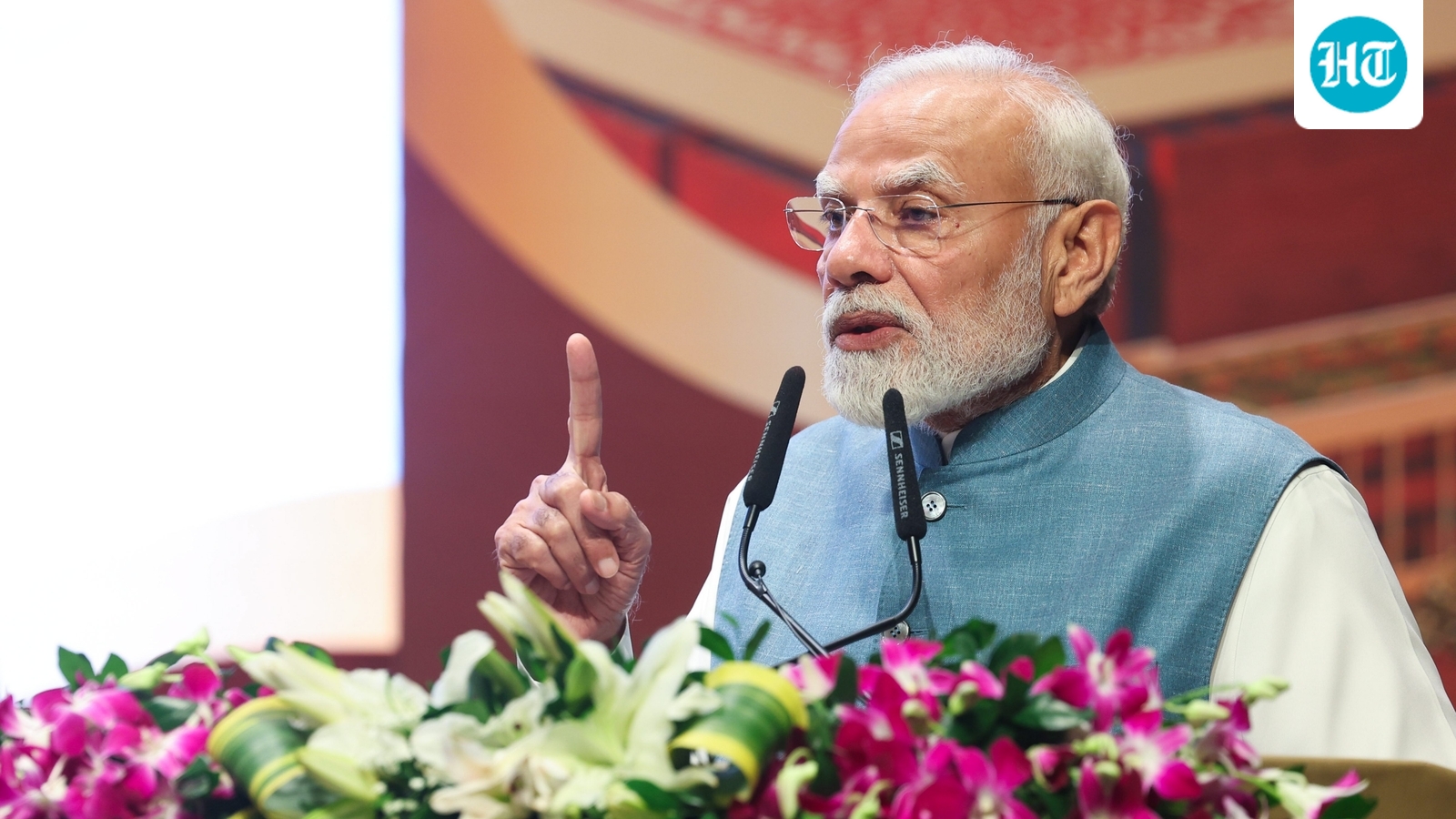
BHUBANESWAR: Prime Minister Narendra Modi issued a stern warning on Sunday regarding the evolving nature of global conflicts, asserting that modern warfare is no longer confined to traditional weaponry. During his visit to Bhubaneswar, the Prime Minister highlighted that nations can now be destabilized through targeted attacks on their economic foundations, emphasizing that safeguarding India’s banking system from cybercriminals and state-sponsored cyberterrorists has become a national security imperative.
The Prime Minister’s remarks came as he inaugurated the Reserve Bank of India’s (RBI) state-of-the-art data centre and a dedicated Cybersecurity Training Institute, a project worth ₹169 crore. Addressing the gathering, Modi underscored that as India’s economy continues its rapid ascent on the global stage, the digital infrastructure supporting it must be shielded by cutting-edge technology and a highly skilled workforce. He cautioned that relying on legacy systems and outdated training modules would leave the country vulnerable to sophisticated, emerging digital threats.
From Financial Exclusion to Digital Empowerment
Reflecting on the evolution of India’s economic governance, the Prime Minister contrasted his administration’s “pro-people” approach with the policies of the past. He pointedly criticized the era of “phone banking,” alleging that previous regimes facilitated the distribution of massive loans to a privileged few based on political connections rather than merit or economic viability.
Modi noted that despite the nationalization of banks in the 1960s and 70s, a staggering portion of the population remained entirely excluded from the formal financial system until 2014. Since then, the government has prioritized inclusion, successfully opening nearly 60 crore Jan Dhan accounts. This expansion, he argued, has been instrumental in dismantling systemic corruption. Referring to a historical admission by a former prime minister—who once lamented that only 15 paise of every rupee sent from Delhi actually reached the poor—Modi declared that those days are over. “Today, when one rupee leaves Delhi, the entire one rupee reaches the bank account of the intended beneficiary,” he stated, attributing this transparency to the power of Direct Benefit Transfer (DBT) and digital banking.
A New Growth Engine for Eastern India
Looking toward the future, the Prime Minister outlined his vision for the next decade, which he described as a period focused on enhancing the efficiency and reliability of India’s banking infrastructure. He framed the inauguration of the Bhubaneswar facility as a symbol of decentralized development, ensuring that the fruits of technology and progress reach smaller towns and remote regions, rather than being concentrated solely in major metropolitan hubs.
He specifically highlighted the potential of Odisha, describing the state as a critical “growth engine” for a developed India. By integrating its rich mineral resources with the new focus on advanced computing and data management, the state is undergoing a significant transition.
“Odisha is poised to write a new chapter in its future, moving from mines to microchips,” the Prime Minister remarked. He added that such investments in digital infrastructure would generate lucrative opportunities for the youth of Odisha, ensuring they are at the forefront of the nation’s technological advancement in the years to come.
Disclaimer: This content is auto-generated for informational purposes only.
Source: Read Original News