








A Strategic Handshake: Analyzing the Modi-Xi Reset at the New Delhi BRICS Summit
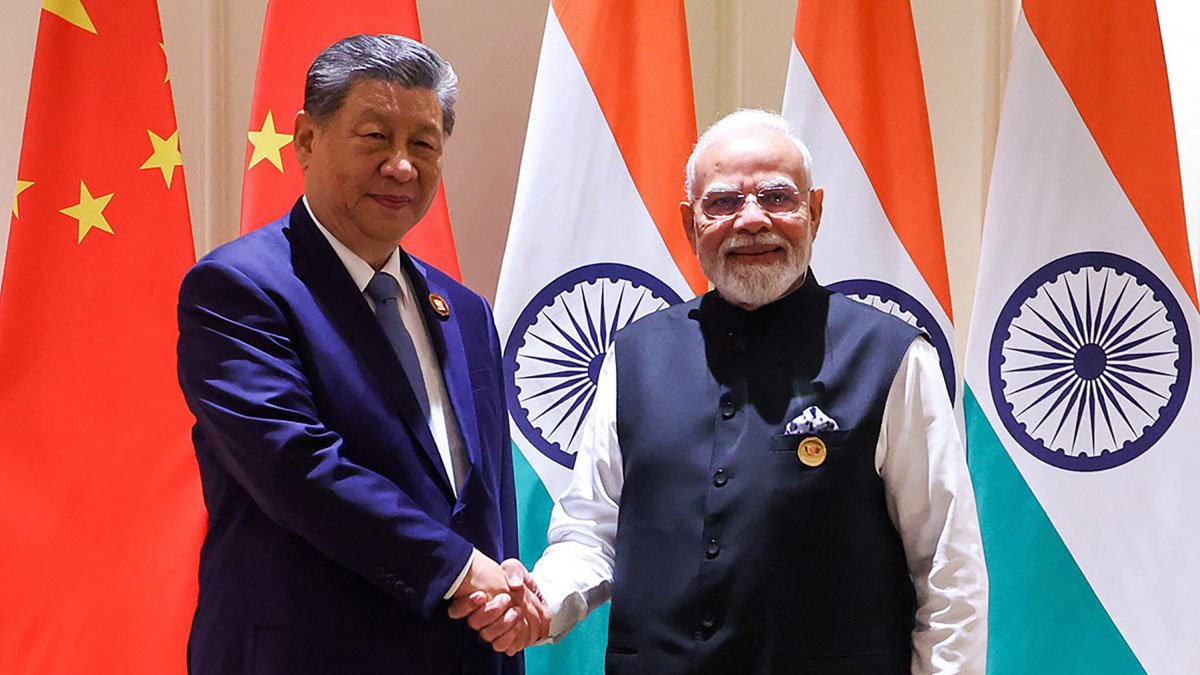
NEW DELHI – A 20-second handshake between Prime Minister Narendra Modi and Chinese President Xi Jinping has become the defining image of the BRICS summit, which concluded in the Indian capital on September 13. While the gesture was primarily symbolic, its warmth marked a distinct shift in tone for two neighbors whose diplomatic channels have been frozen for years.
President Xi’s arrival in New Delhi—his first visit in nearly seven years—was punctuated by a bilateral meeting on September 12. The encounter, while brief, offered a rare glimpse of diplomatic pragmatism that many observers hope will steer the two Asian giants away from perpetual friction.
Navigating a Frosty Foundation
The relationship between India and China has remained in a state of suspended animation since the tragic border skirmishes of June 2020. However, the period since 2024 has seen a cautious effort toward normalization. Resumed military dialogues, the reopening of direct flight paths, and a modest loosening of investment restrictions suggest that both New Delhi and Beijing are seeking a way to manage their coexistence without escalating regional tensions.
Despite the diplomatic optics, the shadow of history looms large. India remains wary of China’s long-term geopolitical ambitions, while Beijing often views New Delhi through the prism of its strategic partnerships with the West. Reports of Chinese encroachment in Arunachal Pradesh and India’s recent denial of digital payment integration for Chinese firms like Alipay highlight that underlying systemic mistrust remains the primary obstacle to a full-scale thaw.
The Pragmatic Necessity of Dialogue
Experts argue that the importance of this summit lies in the necessity of top-level communication. Alka Acharya, director of the Institute of Chinese Studies, emphasizes that it is the leadership’s responsibility to set the trajectory. “The border dispute is a long-standing issue that won’t be resolved overnight, but it cannot be allowed to hold the entire bilateral relationship hostage,” she noted.
For New Delhi, the challenge is balancing national security with the economic realities of the modern world. China remains India’s largest trading partner, with bilateral trade reaching a staggering $151.1 billion in the fiscal year ending March 2026. This dependency creates a paradox: while India seeks to build its own manufacturing self-sufficiency, it remains heavily reliant on Chinese imports to sustain its industrial growth.
Strategic Outlook in a Shifting World
The geopolitical landscape is shifting rapidly. With the United States under a protectionist “America First” policy, many analysts see an opening for a more independent Indian foreign policy. Some believe that China may attempt to leverage India’s current diplomatic distance from Washington, though deep-seated suspicions regarding China’s military backing of Pakistan continue to color India’s strategic calculations.
Jabin T. Jacob, director of the Centre of Excellence for Himalayan Studies, suggests that Beijing views the global order as a competitive space where it must manage India as a potential rival. Yet, as global supply chains evolve and traditional alliances face pressure, the pressure to “decouple” is being replaced by a more nuanced “de-risking” approach.
Ultimately, the consensus among observers is that the New Delhi summit provided a necessary, albeit fragile, framework for stability. As Dylan Loh of Nanyang Technological University suggests, the success of this reset will depend on institutionalizing military and functional dialogues. Without routine follow-up mechanisms, the optimism generated by a brief, smiling handshake could easily dissipate. For now, both nations seem to acknowledge that while they may not be partners, they cannot afford to be permanent antagonists.
Disclaimer: This content is auto-generated for informational purposes only.
Source: Read Original News