








Beyond the Market: German Industry Sees India as a Strategic Growth Partner
In a significant shift for international industrial relations, German corporations are moving away from viewing India solely as a lucrative consumer market. According to Union Minister for Commerce and Industry Piyush Goyal, India is now being repositioned by top-tier German firms as a vital hub for global manufacturing, cutting-edge research, and collaborative innovation.
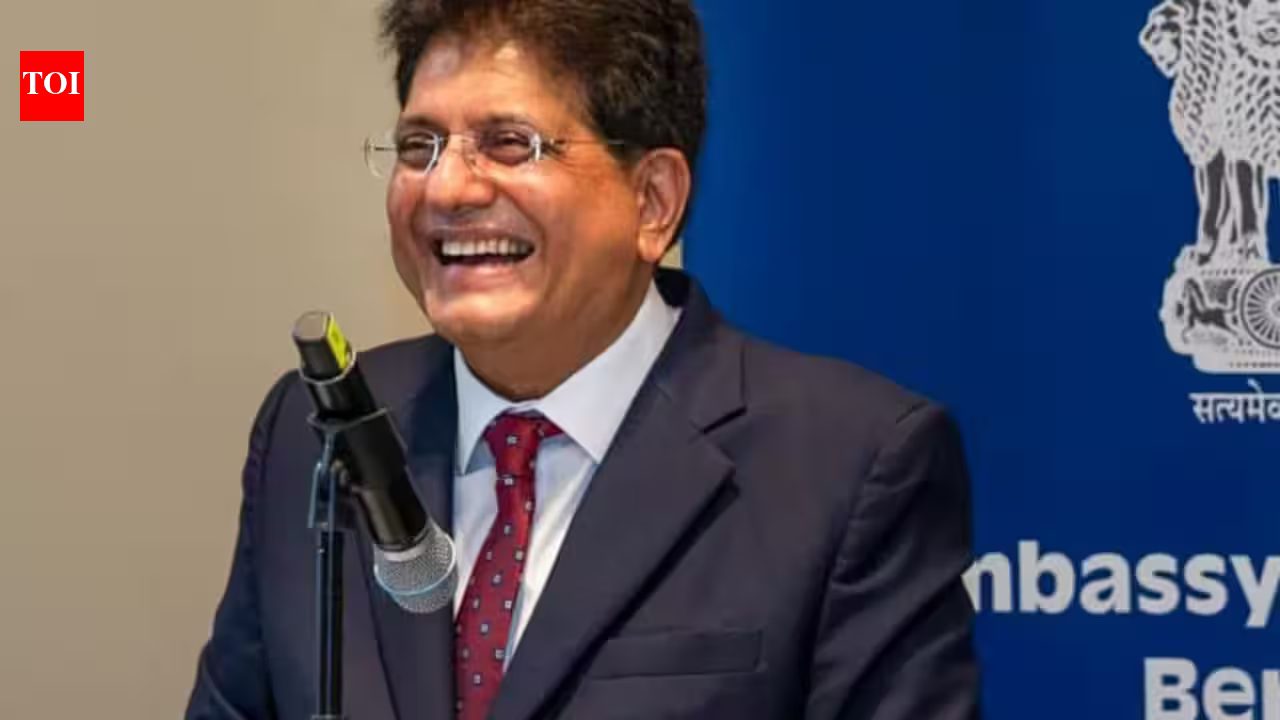
Following a productive two-day visit to Germany, where he engaged with leadership from industrial giants like Siemens Healthcare, Volkswagen, Skoda, and Bertelsmann, Minister Goyal emphasized a newfound synergy. “The CEOs echoed one message—German companies no longer see India only as a market, but as their partner,” he remarked, noting that the goal is to integrate India into the very core of German production and design strategies.
Scaling Up Manufacturing and Innovation
The Minister noted that the primary driver for this pivot is the German industry’s urgent need to optimize costs and enhance competitiveness in a volatile global market. By leveraging India’s vast pool of skilled talent and its established manufacturing ecosystem, German firms are looking to fortify their supply chains.
Currently, approximately 2,000 German companies maintain a footprint in India. However, these numbers are set to rise. During his discussions, the Minister gathered that most of these firms are planning aggressive expansion strategies, with many aiming to double or even triple their operational capacity over the next two to five years. This scaling effort is particularly visible in the growth of Global Capability Centres (GCCs). With over 2,100 such centres already operating in India, German companies are increasingly shifting their R&D and high-end design activities to Indian soil, tapping into the country’s growing expertise in technology and engineering.
A Vision for Future Synergy
The bilateral roadmap discussed by Minister Goyal moves beyond traditional trade. The objective is to foster “co-creation and co-development,” where Indian and German expertise blend to produce products designed for both local and global consumption. He specifically invited German research institutions to deepen their engagement, proposing a future defined by joint scientific ventures and shared intellectual property.
The optimism surrounding this partnership is further buoyed by the anticipated India-European Union Free Trade Agreement (FTA). With negotiations concluded early this year, the pact is expected to be finalized and implemented by next year. Officials believe this agreement will act as a force multiplier, driving investment, technology transfers, and streamlined business operations.
Addressing Global Challenges
While the tone of the visit was one of cooperation, the minister was candid about broader geopolitical and environmental issues. During the Berlin Global Dialogue, Goyal addressed the contentious issue of the EU’s Carbon Border Adjustment Mechanism (CBAM).
Maintaining his firm stance on historical climate responsibility, the Minister challenged the narrative surrounding carbon-heavy trade barriers. He reiterated that India—a nation representing 17% of the global population while contributing less than 3% of total carbon emissions—is leading one of the world’s most aggressive green energy transitions. He cautioned that while Europe seeks to regulate emissions, it must honor the promises made under the Paris Agreement to support developing nations with climate finance rather than imposing restrictive trade policies that could hinder growth.
As the relationship between New Delhi and Berlin matures, the focus remains clear: transforming a buyer-seller dynamic into a robust, innovation-led industrial partnership that is capable of navigating the complex demands of the modern global economy.
Disclaimer: This content is auto-generated for informational purposes only.
Source: Read Original News