







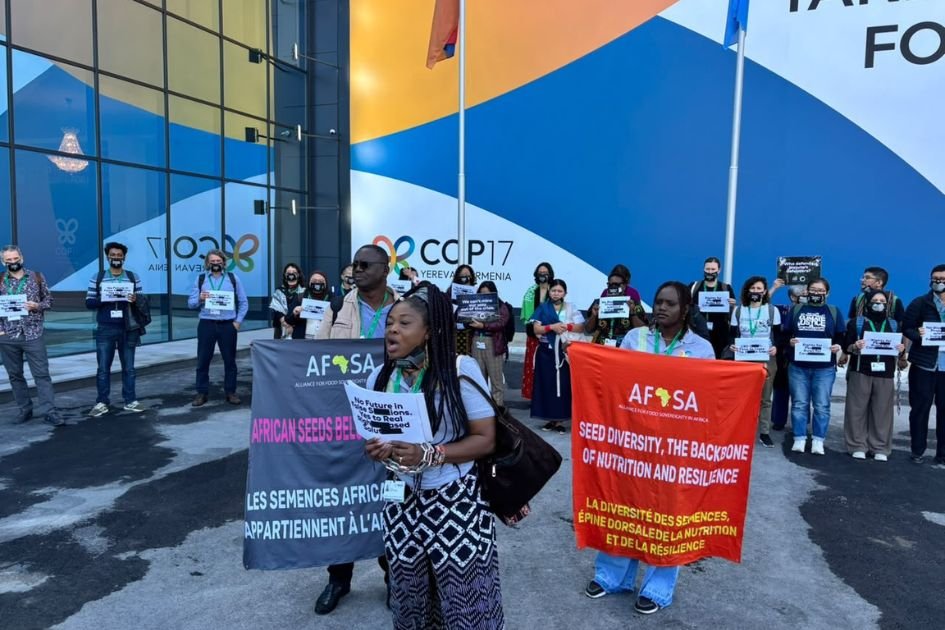
YEREVAN — Indigenous representatives and environmental human rights defenders staged a powerful silent protest at the United Nations biodiversity conference (COP17) on Friday, turning the spotlight on the mounting dangers faced by those on the front lines of global conservation efforts. Organized by Friends of the Earth International and a coalition of civil society networks, the demonstration, titled “Time to Face the Justice Gap,” served as a sobering reminder that the quest to protect nature is increasingly becoming a life-threatening pursuit.
The march began at the IUCN Pavilion at 10 a.m., with participants moving in solemn formation through the conference’s main lobby before concluding at the entrance to the venue. The protest was a direct response to what campaigners describe as a systemic failure within international biodiversity negotiations: the lack of adequate safeguards for the activists, Indigenous leaders, and local community members who are frequently subjected to harassment, intimidation, and criminalization for their defense of forests, land, and water.
Md. Muzaffar Faisal, an awareness and campaign officer at the Bangladesh Environmental Lawyers Association (BELA), participated in the demonstration alongside colleague Rysul Hasan. “Environmental defenders must be protected,” Faisal stated, emphasizing that the current climate of hostility threatens not only individual lives but the very ecosystems that these defenders strive to preserve.
At the heart of the campaigners’ grievances is the issue of Free, Prior and Informed Consent (FPIC). The Legal Rights and Natural Resources Center (LRC) highlighted that despite existing international frameworks, there remains a concerning gap between rhetoric and reality. FPIC dictates that Indigenous Peoples have the right to provide or withhold consent for projects that affect their ancestral lands, yet this right is frequently circumvented by competing economic and financial interests, particularly in the extractive and mining sectors.
“The progress on FPIC, effective grievance mechanisms, and real accountability for human rights violations remains insufficient,” representatives from the LRC noted. The protest demanded that governments move beyond high-level pledges and implement concrete, enforceable safeguards that allow for meaningful community participation in decision-making processes.
The demonstration also took on a local resonance, with protesters expressing solidarity with members of Armenia’s “My Heart Is in the Highlands” initiative. Members of this local group have reported facing persistent harassment and intimidation linked to their opposition to mining projects. The protesters utilized the global platform of COP17 to demand that the host nation and international delegates prioritize the safety of those resisting environmental degradation, arguing that no conservation policy can be considered successful if it is built on the suppression of local voices.
Beyond the specific cases of intimidation, the participants called for a broader commitment to the protection of fundamental freedoms, including the rights to peaceful assembly and free expression. They warned that without such protections, the global biodiversity agenda risks becoming disconnected from the people who hold the traditional knowledge necessary to protect the world’s most vulnerable ecosystems.
As negotiations continue, the message from the protest is clear: conservation cannot be viewed solely as a technical or financial endeavor. It is deeply political and inextricably linked to human rights. Campaigners are now urging governments to match their ambitious nature-recovery commitments with practical, transparent, and legally binding protections for the people who serve as the planet’s frontline guardians. Until those “justice gaps” are bridged, they argue, the integrity of the entire biodiversity process remains in question.
Disclaimer: This content is auto-generated for informational purposes only.
Source: Read Original News