







The Foldable Shift in Hardware Design
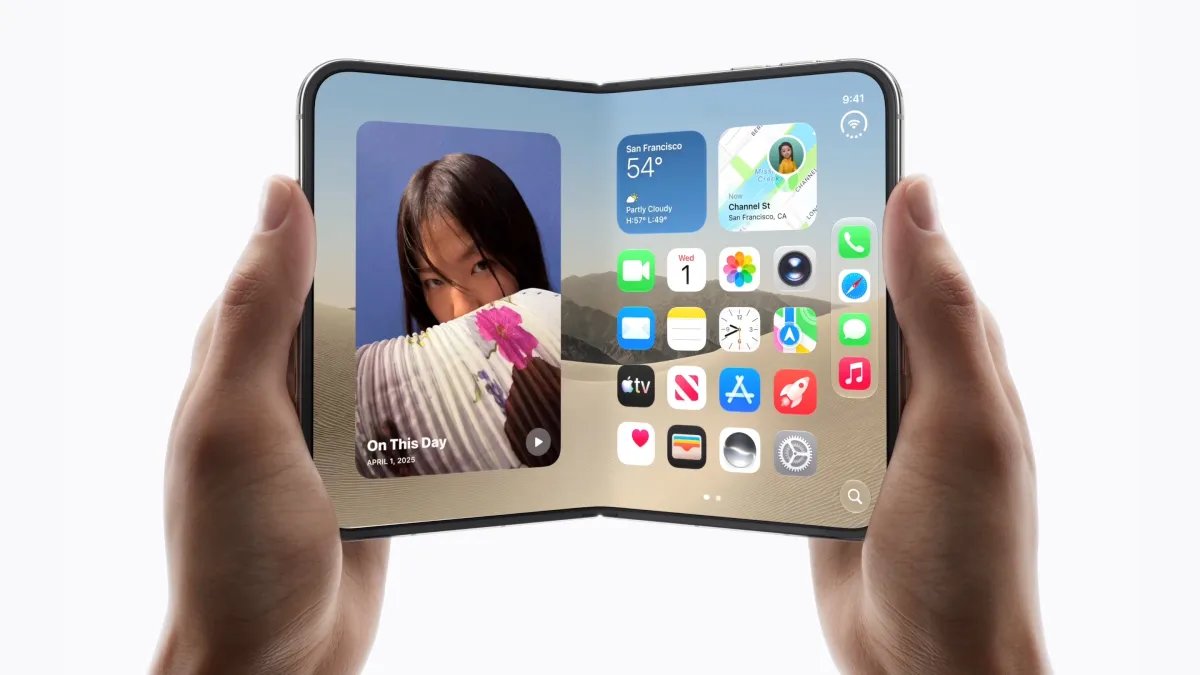
For years, the evolution of the iPhone felt dictated by minor iterative changes. While hardware became faster and camera arrays more complex, the fundamental form factor remained the static, rectangular glass-and-metal slab that defined the smartphone era. The arrival of the iPhone Duo breaks this trend, marking Apple’s official entry into the foldable device market. While early feedback notes the device is not without its imperfections—particularly regarding software scaling for non-optimized applications—it represents a distinct departure from the status quo. Starting at $2,000, the Duo is clearly positioned as a premium experiment for power users and early adopters.
The true value proposition of the device is becoming apparent through the lens of third-party software. Rather than treating the internal display as a simple tablet-sized canvas, developers are rethinking the relationship between hinge mechanics and user interaction. The emergence of specialized software that utilizes the folding screen as a tool for distinct, tactile tasks is what separates the Duo from previous, more mundane iterations of the smartphone.
Leveraging Form Factor for Media and Productivity
The most immediate benefit of the Duo’s architecture is its flexibility, quite literally. Major partners like Netflix have already updated their applications to exploit the dual-display nature of the hardware. Rather than a static experience, the interface adapts to the folding state: users can browse content on the exterior “cover” screen, then transition to the interior display for full-screen playback. This fluidity is the core promise of the foldable category.
Productivity apps are taking a similar approach. Applications such as Flighty have introduced specialized modes, like “En Route,” which allow the phone to stand in a tent configuration. This enables travelers to monitor flight telemetry on one half of the screen while keeping the other half available for secondary tasks. By separating the display estate based on the hinge’s orientation, these developers are turning the screen into a productivity hub that can shift between a compact phone and a mobile workstation.
The Rise of Haptic and Retro-Inspired Interaction
Perhaps the most surprising trend among early Duo-optimized apps is the move toward retro-inspired, tactile digital experiences. Applications like Deck-Man represent a shift away from the sterile, flat interfaces that have dominated iOS for a decade. By simulating the physical mechanics of a cassette Walkman, the app uses the device’s hinge to replicate the action of loading a tape and utilizing physical playback controls. The inclusion of high-fidelity audio triggers—clicks and mechanical hums—reintroduces a sense of intentionality to tech usage that has been missing in modern, always-on device interactions.
This design direction resonates with a wider cultural pivot toward digital minimalism. By creating software that mimics legacy hardware, developers are successfully gamifying the act of using a device. Whether it is the satisfying flip of a page in TypeDraw or the manual manipulation of a virtual vinyl record in MD Vinyl, these apps use the unique hardware of the Duo to transform the phone from a generic information processor into a specialized, singular tool.
Dynamic Interface Reconfiguration
One of the significant engineering hurdles for foldable hardware is maintaining usability across multiple states. Wakeout, a fitness-focused application, provides a masterclass in this, offering unique interfaces for the device when closed, fully opened, or positioned like a mini-laptop. By splitting navigation components into a column beside the camera sensor when the device is closed, the app ensures that the smaller exterior screen is never cluttered.
This reconfigurability is vital for the device’s success. As users switch between modes, the ability of an application to instantly reorganize its hierarchy ensures that the screen size is always being utilized effectively. This level of software responsiveness transforms the “fold” from a potential weakness into a functional interface element, allowing the operating system to respond to the user’s physical needs in real-time.
Educational and Creative Playfulness
Beyond utility and professional optimization, the Duo has become a playground for creative, niche experiences that push the boundaries of what a phone should do. Apps like Tiny Computers allow users to explore virtualized historical hardware—such as the Macintosh or the Commodore 64—using the device’s laptop orientation. This brings an interactive element to computing history that simply would not be as compelling on a standard, flat display.
Similarly, apps like Toastie demonstrate that the Duo’s high price tag does not preclude humor. By requiring the user to physically manipulate the device’s fold to “cook” a virtual piece of toast, it turns a mundane app interaction into a physical game. These types of apps define the early personality of the device. They are not essential for daily operation, but they fulfill the promise of a premium, versatile tool that invites user engagement in ways that a standard black-glass rectangle never could. As more developers gain access to the platform, the ecosystem is likely to see an increase in these experiential, hardware-specific applications that bridge the gap between abstract software and tangible interaction.
Disclaimer: This content is auto-generated for informational purposes only.
Source: Read Original News