







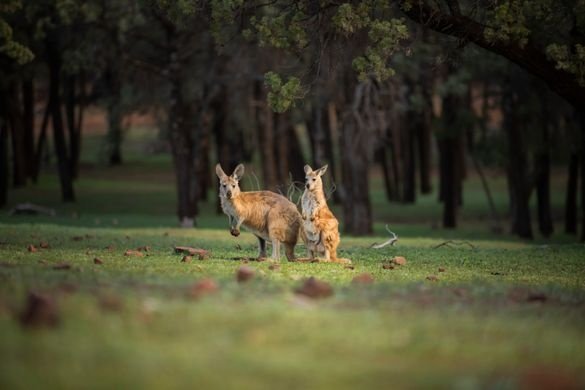
As the world turns its attention to Australia’s most iconic animal on World Kangaroo Day, October 24, a new initiative from Discover Aboriginal Experiences (DAE) is encouraging travelers to look beyond the animal’s global fame. While the kangaroo is synonymous with the Australian continent, experts are revealing that the true depth of the creature lies in its ancient, inseparable connection to First Nations culture, ecology, and heritage.
“The kangaroo is one of those animals that instantly makes people think of Australia, wherever they are in the world,” says Nicole Mitchell, Executive Officer of DAE. “There’s something pretty special about seeing one in the wild, but when you’re on Country with a First Nations guide, that encounter can become part of a much bigger story.”
The very name “kangaroo” is a testament to this deep-rooted history, derived from gangurru, the term used by the Guugu Yimithirr people of Far North Queensland for the eastern grey kangaroo. Across the country, these animals are far more than just wildlife; they are Totems, sources of sustenance, figures in sacred rock art, and guides that help navigate the landscape.
Travelers seeking a deeper understanding can join a variety of immersive tours across the country. In Tropical North Queensland, Kuku Yalanji guide Juan Walker of Walkabout Cultural Adventures teaches visitors how to read the landscape. By observing kangaroo tracks and behavior, guests learn what the land is offering—such as where to find water or when food is ready for harvest. “They’re our explorers,” Walker explains, “telling us what’s on that land and what we can learn from it.”
The cultural significance extends into the realm of art and history. At the Jarramali Rock Art Tours in Queensland’s Quinkan Country, visitors are led to ancient sandstone galleries. Here, images of kangaroos depicted alongside emus and barramundi serve as a “structure of society,” offering a rare window into the ancestral lives of the Kuku Yalanji people.
Further south, in the Bundaberg region, Taribelang Bunda Cultural Tours provides a poignant reminder of the land’s transformation. Guide Bec Domaille shares oral histories passed down by her Aunties, describing a landscape once teeming with booroo (kangaroos) in areas that have since been paved over by modern city infrastructure. In Western Australia, the connection is culinary, with Koomal Dreaming offering guests a chance to experience kangaroo as part of a traditional food culture that honors the animal through ceremony and sustainable practice.
Whether through the rhythmic, imitation-dance performances at the Pamagirri Aboriginal Experience or the quiet observation of mobs on Minjerribah (North Stradbroke Island), World Kangaroo Day serves as an invitation. It is a call for travelers to move past the superficial “icon” and engage with the rich, living stories that have defined the relationship between the kangaroo and Australia’s First Nations people for generations.
Disclaimer: This content is auto-generated for informational purposes only.
Source: Read Original News