







Aatmanirbharta is Key: Navy Chief Emphasizes Self-Sufficiency Amid Global Maritime Disruptions
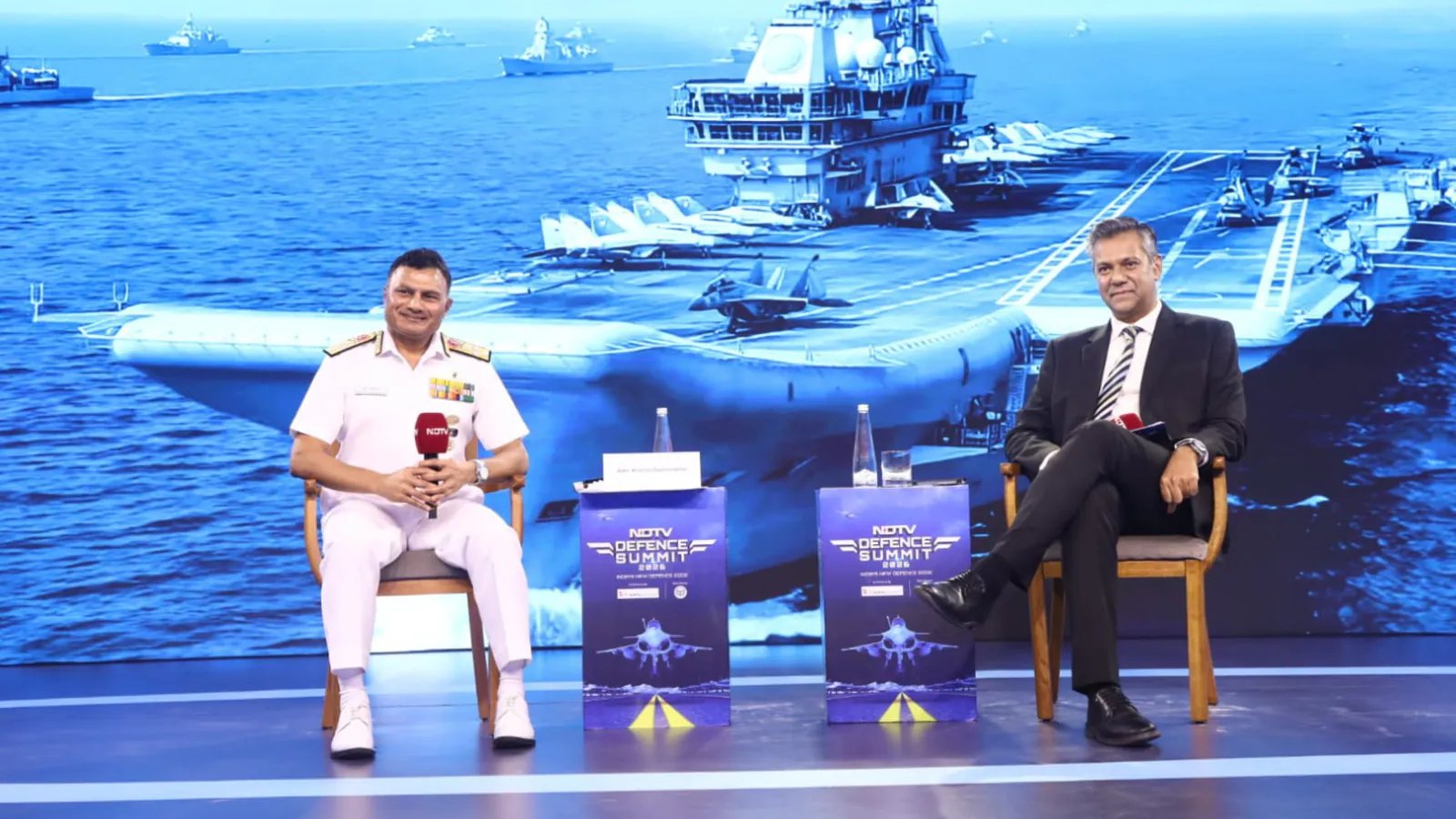
New Delhi: Addressing the evolving complexities of global maritime security, Chief of Naval Staff Admiral Krishna Swaminathan has underscored the critical necessity for India to achieve total self-reliance in its naval operations. Speaking at the NDTV Defence Summit 2026, the Admiral highlighted that recent disruptions in key international shipping chokepoints—specifically the Strait of Hormuz and the Bab el-Mandeb—have provided the Indian Navy with invaluable strategic and operational lessons.
Adapting to a Changing Threat Landscape
Admiral Swaminathan noted that the maritime security environment is in a constant state of flux, driven by rapid technological advancements, shifting geopolitical equations, and evolving adversary tactics. To counter these challenges, the Indian Navy is moving away from reactive measures toward a proactive posture that aligns its capability development with emerging global threats.
When questioned about the impact of the closures at vital shipping chokepoints, the Navy Chief emphasized that the government has proactively diversified India’s supply chains to mitigate the risk of energy insecurity. However, he maintained that the most profound takeaway from these recent global conflicts is the urgent mandate for “Aatmanirbharta” (self-reliance).
“The biggest lesson we have learnt as a Navy—and this is going to be a recurring theme in everything—is that we have got to be self-sufficient,” Admiral Swaminathan stated. He clarified that this drive for independence extends beyond just the procurement of high-end defence technology; it encompasses the holistic ability to build, maintain, and sustain India’s naval forces without reliance on external support.
The Maritime Backbone of India’s Economy
During his keynote address, Admiral Swaminathan articulated the profound importance of the seas to India’s national identity and economic future. He described India as a quintessentially maritime nation, where the blue economy is the engine of national growth.
Providing a stark visualization of India’s dependence on sea lanes, the Admiral shared that approximately 90% of the country’s trade by volume—and over 70% by value—is transported through maritime routes. The strategic importance is further heightened by the fact that over 60% of India’s GDP is generated in coastal states, with nearly one-fifth of the nation’s population residing within 50 kilometers of the coastline.
“India’s economy and national growth in this century will be crucially dependent on the seas,” he asserted. By emphasizing that maritime security is intrinsically linked to the country’s economic and civilizational well-being, the Admiral signaled that the Navy’s primary objective remains the absolute security of these essential sea lanes.
A Vision for the Future
The Navy Chief’s remarks reflect a broader national consensus on defense preparedness. As the “mood of the nation” shifts toward indigenous production, the Indian Navy is set to intensify its efforts in developing domestic solutions for defense hardware and naval logistics.
By prioritizing self-sufficiency, the Indian Navy aims to insulate itself from global supply chain shocks, ensuring that it remains a formidable force capable of safeguarding national interests regardless of the volatility in international maritime transit points. This strategic shift is expected to see a significant uptick in policy support and institutional focus in the coming months, marking a new chapter in India’s naval modernization journey.
Disclaimer: This content is auto-generated for informational purposes only.
Source: Read Original News