







For decades, Hollywood has operated under a specific, unspoken hierarchy of embarrassment. It is a world where public gaffes are curated, reputations are carefully manicured, and the occasional live-television train wreck is usually forgotten by the time the next season of prestige dramas hits the streaming queues. But there is one vault that never seems to lock: the annals of Oscars infamy. And for Rob Lowe, being the key-holder to that vault has been a lifelong, albeit darkly humorous, cross to bear.
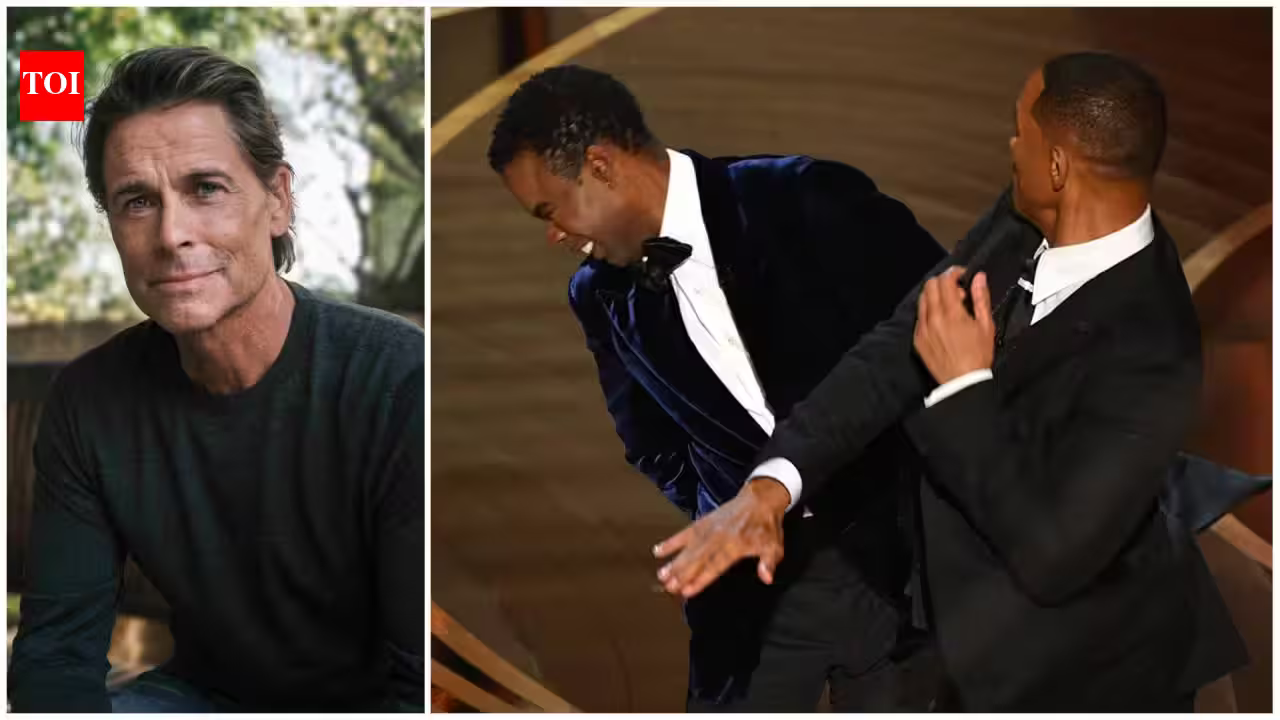
In a recent appearance on SiriusXM’s Andy Cohen Live, the 62-year-old actor offered a refreshingly candid take on the nature of public shaming. When the conversation turned to the infamous 2022 “slap heard ‘round the world,” where Will Smith struck Chris Rock on the Academy Awards stage, Lowe didn’t reach for a rehearsed PR statement. Instead, he reached for a sense of profound, personal relief.
“When Will Smith slapped Chris Rock, I was the only person happy,” Lowe confessed to Cohen. “Because I was like, ‘Oh, good. So now that’s the worst moment in Oscar history.’”
For most, the slap was a moment of genuine cultural shock. For Lowe, it was a potential exit ramp from a three-decade-long tenure as the reigning champion of award-show cringe. But as he quickly learned, the internet—and the collective memory of the entertainment industry—is a cruel master that refuses to grant pardons.
The Ghost of 1989: A Performance That Refused to Die
To understand why Lowe was so eager to pass the baton of notoriety, one must look back to the 61st Academy Awards in 1989. In what is now regarded as the gold standard of tone-deaf production, Lowe took the stage for a musical opening number that defied logic. Alongside actress Eileen Bowman—who was inexplicably dressed as a singing, dancing Snow White—Lowe waded through a surreal performance that felt less like a celebration of cinema and more like a fever dream.
The duo parodied popular songs, including a rendition of “Proud Mary” featuring the lyrical abortion: “rollin’, rollin’, keep the cameras rollin’.” It was kitschy, it was awkward, and it was devastatingly earnest. At the time, the performance wasn’t just panned; it was treated as a crime against the prestige of the institution. It didn’t just spark a bad review; it triggered a moral panic within the Academy.
The fallout was swift and severe. Industry titans, including former Academy President Gregory Peck, reportedly signed a formal letter of condemnation. Even the Walt Disney Company got involved, slapping producers with a lawsuit for the unauthorized use of the Snow White character. For the producer of the telecast, Allan Carr, the night was a career-ender from which he never truly recovered. For Lowe, it was the moment he became synonymous with “Oscar catastrophe.”
When the Spotlight Refuses to Shift
The irony, as Lowe noted during his chat with Cohen, is that the public’s obsession with his past has developed its own gravitational pull. Despite the seismic shift in televised chaos brought on by the Will Smith incident, the “Rob Lowe Moment” remains a touchstone for critics and nostalgic Twitter users alike.
“It turns out not really,” Lowe joked about his hopes of being dethroned. “Turns out I still am dragged, dragged every year.”
He recounted how, even during this year’s Emmy Awards, when segments didn’t land or production choices were questioned, the immediate reflex of the social media hive-mind was to compare the proceedings to the 1989 Oscars. The sentiment was effectively: It’s bad, but at least it wasn’t Rob. It is a backhanded compliment of the highest order—a legacy built on the durability of a failure that the actor himself has spent thirty-five years trying to outrun.
The Will Smith Factor: A Different Kind of Infamy
While Lowe’s 1989 blunder was a failure of taste and production, the 2022 slap represented something far more dangerous: a failure of decorum and physical safety. When Will Smith walked onto the stage to confront Chris Rock over a joke regarding Jada Pinkett Smith’s alopecia, the shift in the room was palpable. It wasn’t just “cringe”—it was an assault that fractured the polished veneer of the evening.
The repercussions for Smith were immediate and career-altering. A ten-year ban from Academy events and a public reputation reset left the industry reeling. Yet, even with the weight of such a historic incident, the sheer bizarre longevity of Lowe’s Snow White routine suggests that the public has a unique appetite for “cringe comedy” that outlasts more aggressive displays of volatility.
Lowe’s take on the matter reveals a fascinating insight into celebrity PR. While Smith’s moment was a tragedy of celebrity excess, Lowe’s moment has become a piece of shared American folklore. Perhaps the public finds it easier to laugh at a man singing “Proud Mary” with a Disney character than it does to reconcile with the darker, more violent impulses on display in modern award shows.
Is There a Statute of Limitations on Cringe?
The question Lowe poses—whether there should be a “statute of limitations” on public blunders—is one that resonates in the age of the permanent digital record. In 1989, a bad performance was recorded on VHS and kept in a closet. Today, it is uploaded to YouTube, sliced into GIFs, and recirculated as a “cringe compilation” every time a new award show host fails to land a joke.
Lowe, who has since gone on to have a storied career in film and television, clearly views his 1989 self with a mixture of amusement and exhaustion. He has spent decades proving his talent and range, yet he remains shackled to those few minutes on the stage with a fake princess.
His latest admission serves as a masterclass in celebrity self-deprecation. By leaning into the humor of the situation, Lowe maintains his control over the narrative. He isn’t being dragged against his will anymore; he’s now the one guiding the conversation. Even if the audience refuses to let the 1989 performance fade into obscurity, Rob Lowe has managed to turn his “worst moment in Oscar history” into a bit that keeps him relevant in a town that notoriously forgets everyone else.
As it turns out, there may not be a statute of limitations on these moments, but there is certainly a way to survive them: with a wink, a smile, and the acknowledgment that in Hollywood, even the most legendary failures are just another form of fame.
Disclaimer: This content is auto-generated for informational purposes only.
Source: Read Original News