







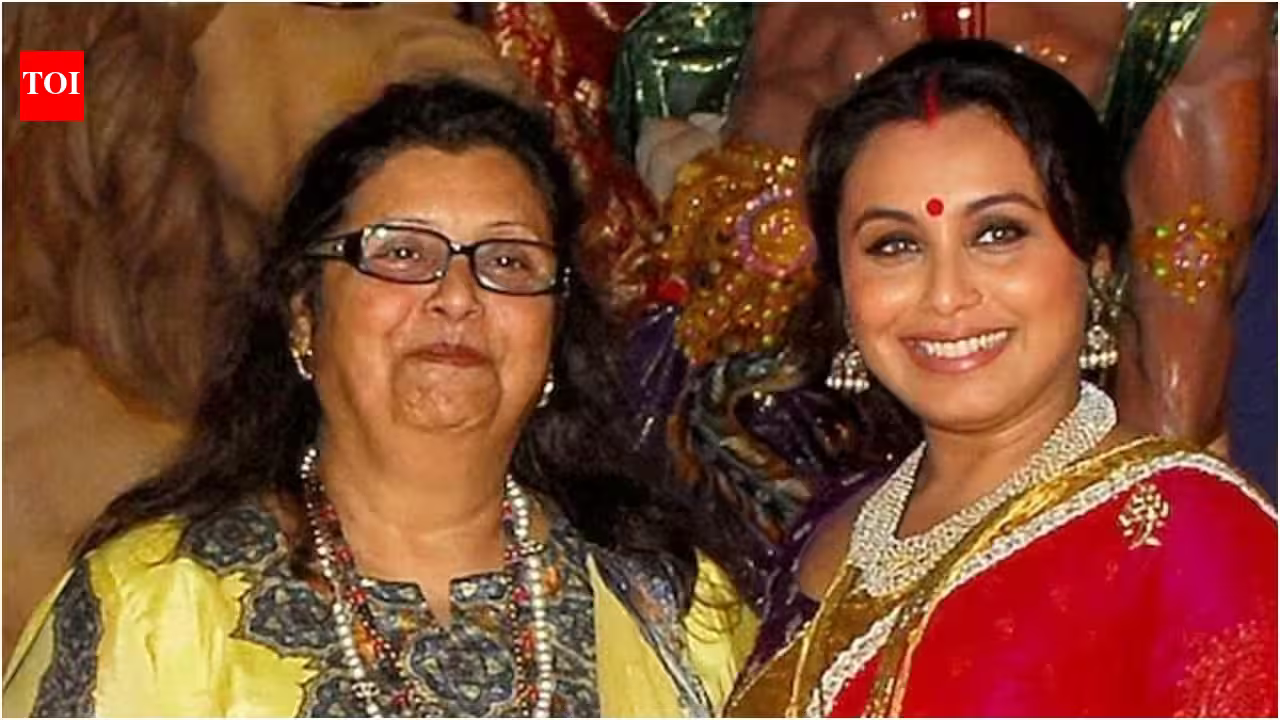
The corridors of the J.W. Marriott in Juhu, usually buzzing with the high-energy promotion of upcoming blockbusters, were cloaked in a heavy, somber silence this week. The city’s glitz took a back seat as the Mumbai film fraternity gathered for the Chautha ceremony of Krishna Mukerji, the mother of celebrated actress Rani Mukerji. Passing away at 75 following a brief illness, Krishna Mukerji’s departure has left a void in the tight-knit Mukerji clan, but the overwhelming show of support from her extended “Bollywood family” served as a poignant reminder of the matriarch’s enduring influence on the industry.
A Gathering of Icons: The Industry Stands Together
In an industry often criticized for its superficiality, the funeral and subsequent prayer meet served as a stark contrast. The turnout was a testament to the immense respect commanded by the Mukerji family. Shah Rukh Khan, whose professional and personal bond with Rani spans decades of cinematic magic, was seen arriving with a demeanor of quiet solemnity, signaling the deep-rooted friendship that exists behind the scenes of their glossy on-screen collaborations.
Similarly, Aamir Khan, a long-time collaborator and peer, arrived to pay his final respects. The presence of the Bachchans—Jaya and Shweta—brought a sense of grace to the proceedings, reflecting the long-standing familial ties shared between the Mukerji and Bachchan households. The guest list spanned generations, with stars like Arjun Kapoor, Aditya Roy Kapur, Sharvari Wagh, and Fardeen Khan standing in solidarity with Rani and her brother, Raja Mukerji. For the industry insiders in attendance, this was not a PR opportunity; it was a necessary moment to acknowledge the woman who had nurtured one of Indian cinema’s most formidable talents.
The Quiet Strength Behind a Star
While the public knows Rani Mukerji as the fierce, powerhouse performer—the woman who commanded the screen in Black and redefined the quintessential heroine in Kuch Kuch Hota Hai—she has always been the first to admit that her strength is inherited. Krishna Mukerji was never just “a star’s mother.” She was a fixture of dignity who accompanied her daughter through the highs and lows of stardom, keeping her grounded when the spotlight became too blinding.
Friends of the family often described Krishna as the silent anchor. She was the one who navigated the complexities of being a filmmaker’s wife and an actor’s mother with an understated elegance that shielded her family from the more intrusive elements of fame. Her absence is not just a personal loss for Rani; it marks the passing of an era for the Mukerji family, who have been an integral part of the Hindi film industry’s creative fabric since the days of Filmalaya Studios.
Legacy and Ties to the Silver Screen
Krishna Mukerji’s connection to cinema ran deeper than the fame of her children. A gifted playback singer in her own right, she possessed a musical soul that predated the stardom of the Mukerji household. Married to the late Ram Mukherjee—the visionary filmmaker and co-founder of the legendary Filmalaya Studios—Krishna was a pillar in a household that breathed movies.
Ram Mukherjee, who passed away in 2017, laid the foundation for the family’s creative journey. Krishna, by his side, ensured that the legacy remained intact. Her influence was subtle but profound. Those who knew her speak of a woman who balanced the demands of high-profile filmmaking with the warmth of a traditional Bengali household. Her musical background added a layer of artistic sensitivity to her parenting, which undoubtedly contributed to the nuance and emotional intelligence Rani brings to her characters on screen.
A Request for Solace in a Public Life
The official statement issued by Aditya Chopra’s production house on September 22—”The family is deeply grateful for your love, prayers, and support and respectfully requests privacy during this time of immense grief”—was a poignant reminder of the fragility of those who live in the public eye.
In an era where every move of a celebrity is documented, dissected, and debated on social media, the family’s request for space highlights the human reality behind the persona. The prayer meet at the J.W. Marriott was a tightly managed affair, allowing the family to mourn away from the prying lenses of the paparazzi. The outpouring of sympathy from fans across social media platforms has been equally significant, proving that even as a private figure, Krishna Mukerji’s role as the matriarch of a beloved star family touched the hearts of many who have followed Rani’s career journey over the last three decades.
Turning the Page
As the dust settles and the industry slowly returns to its frantic pace of filming schedules and promotional tours, the void left by Krishna Mukerji will undoubtedly be felt by those closest to her. For Rani, who has always been fiercely protective of her private life, this period of mourning is a transition. She steps back from her work not just as an artist, but as a daughter navigating the profound reality of life without the person who was her first teacher, her strongest critic, and her most ardent supporter.
The Chautha ceremony was more than a ritual; it was a gathering of those who have shared the journey of Indian cinema, coming together to honor a woman who was the silent architect of one of the industry’s most successful legacies. In the quiet halls of the hotel, far from the arc lights and the vanity, the industry did what it rarely has the chance to do: slow down, reflect, and share in the very human experience of saying goodbye. The curtains may close on a life, but the influence of a mother like Krishna Mukerji remains etched in the quiet resilience of the daughter she raised to take on the world.
Disclaimer: This content is auto-generated for informational purposes only.
Source: Read Original News