






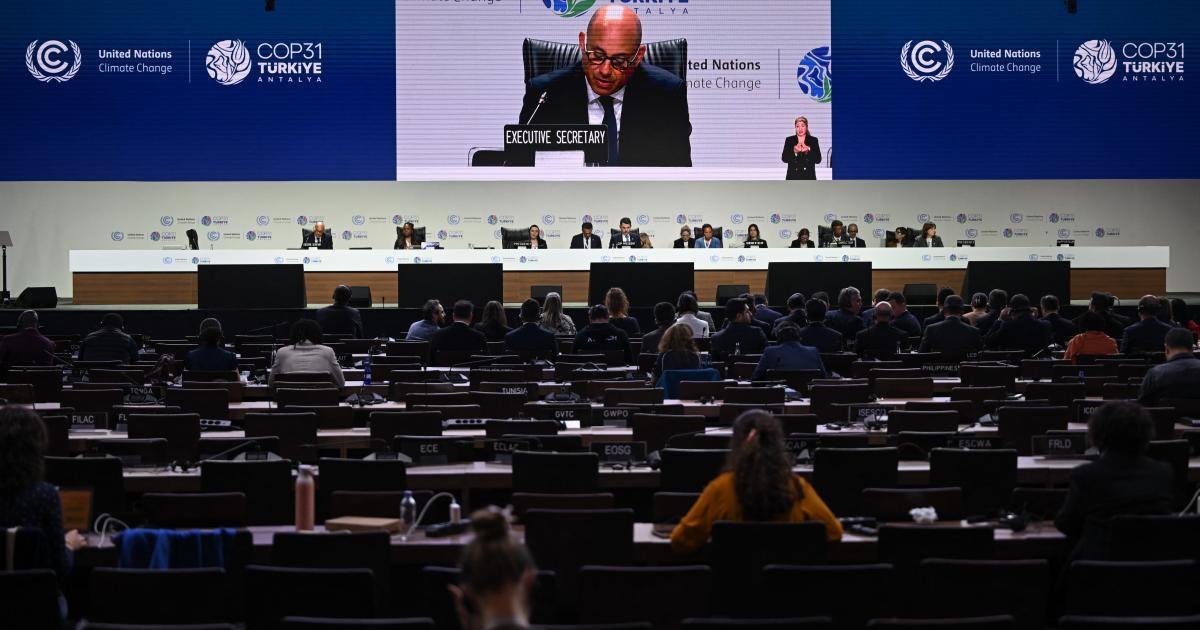
The United Nations Climate Change Conference (COP31) concluded in Antalya this Sunday with a sense of lingering frustration as negotiations stalled without a final agreement. After more than two weeks of intense dialogue, including an extended closing session, deep-seated disagreements regarding fossil fuel phase-outs and the structure of climate finance ultimately scuttled a grand global pact.
UN Secretary-General António Guterres expressed his disappointment at the lack of a unified resolution, a sentiment echoed by many international delegates. However, beneath the diplomatic gridlock, the summit fostered significant momentum in practical, sectoral climate solutions. Martin Krause, Director of the Climate Change Division at the United Nations Environment Programme (UNEP), emphasized that while the lack of a formal agreement is a setback, the event served as a catalyst for private-sector engagement. “Seeing businesses here in Antalya ready to invest in clean energy and nature-based solutions makes me especially hopeful,” Krause noted.
The proceedings were underpinned by a sobering reality: current data indicates the world is on the verge of overshooting the 1.5°C warming threshold established by the Paris Agreement. This urgency dominated the discourse, shifting the conversation from abstract temperature targets to the practical, immediate steps required to navigate a warmer future.
Key takeaways from the conference highlight where the international community is focusing its energy:
Bridging Science and Policy
Despite the collapse of the final deal, countries reaffirmed that climate policy must remain tethered to the best available scientific evidence. Tensions persisted regarding the alignment of the Intergovernmental Panel on Climate Change (IPCC) Seventh Assessment Report with the Global Stocktake, yet the commitment to science-based action remains a cornerstone of the international agenda.
The “Overshoot” Reality
COP31 was the first global summit to formally embrace the findings of UNEP’s Limiting Overshoot report, which concludes that exceeding the 1.5°C target is now effectively unavoidable. This has moved the dialogue toward how to minimize the extent and duration of this overshoot, focusing on the electrification of economies and systemic waste reduction.
Methane as the “Emergency Brake”
Reducing methane and other short-lived climate pollutants was identified as the most effective “fast win” for the decade. A landmark commitment of over US$480 million was announced to support methane mitigation, alongside a new pledge to curb emissions of sulphur hexafluoride, a potent greenhouse gas used in electrical infrastructure.
Resilience in a Heating World
With extreme heat becoming a defining climate risk, delegates backed the Global Heat Resilience and Sustainable Cooling Roadmap. Given that nearly 2 billion people currently lack access to adequate cooling, the initiative aims to bridge the gap between adaptation and mitigation, using energy-efficient technology and nature-based cooling solutions like urban forestry.
Sector-Specific Progress
Progress was notably made in traditionally overlooked sectors: buildings and waste. The COP31 Presidency’s “Zero Waste” initiative gained traction, highlighting how circular economy approaches and food waste reduction can lower emissions while simultaneously bolstering public health and resource conservation.
Finance: The Sticking Point
Despite these tactical advancements, climate finance remained the primary obstacle to a broader consensus. Developing nations pushed for significantly increased adaptation funding, citing the chasm between current financial flows and the hundreds of billions required annually by 2035. As Krause stated, “Helping vulnerable communities adapt to a changing climate is one of the defining challenges of our time and it should bring the world together.”
As the conference closed, the formal launch of the second Global Stocktake set the stage for the coming years. This process, coupled with the ongoing Periodic Review, will dictate how the international community assesses its trajectory, ensuring that future climate action is not just ambitious, but measurable and grounded in the realities of an evolving planet.
Disclaimer: This content is auto-generated for informational purposes only.
Source: Read Original News