






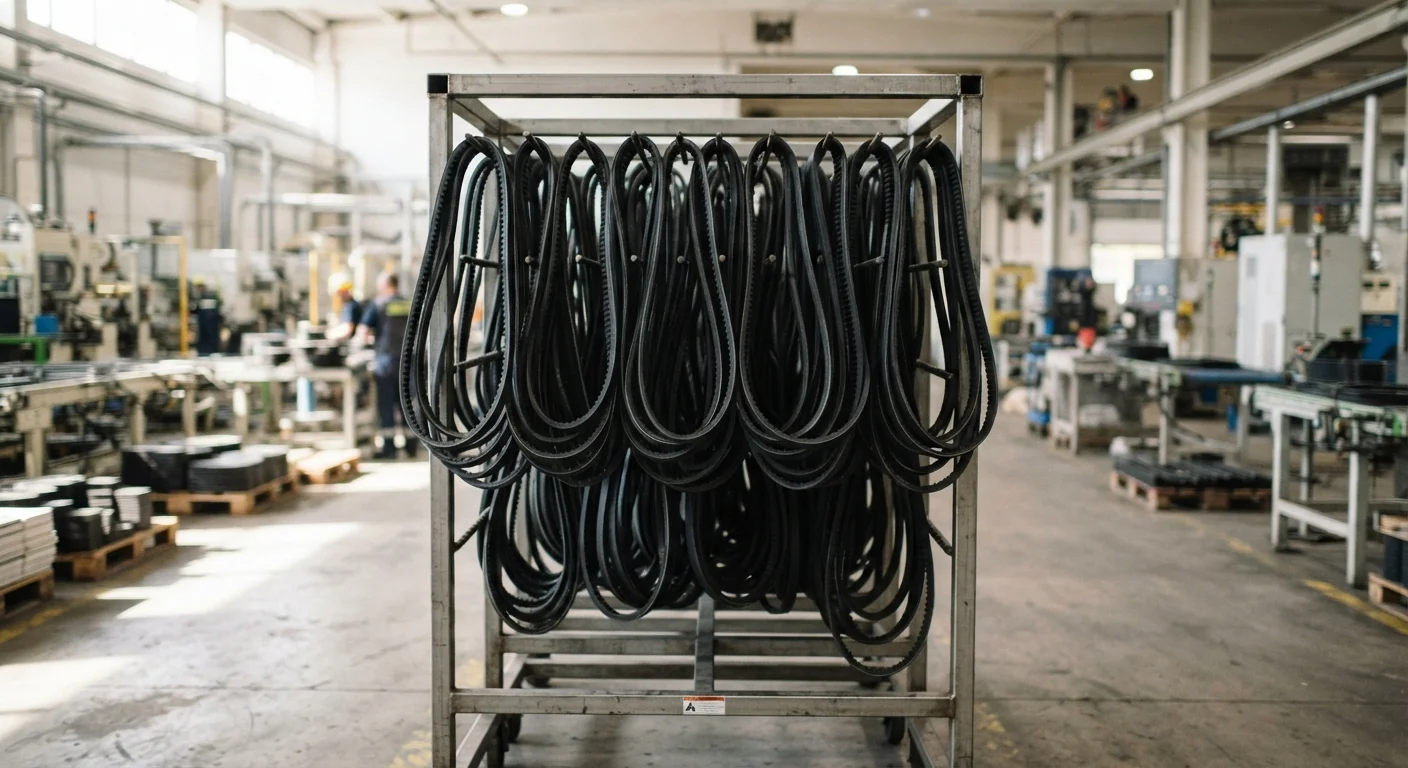
DENVER — Global fluid power and power transmission leader Gates Industrial Corporation has officially finalized its acquisition of the belts business segment from The Timken Company. This strategic move, which integrates specialized manufacturing facilities and an expanded portfolio of industrial and power sports relationships into the Gates ecosystem, marks a significant consolidation in the heavy-duty mechanical engineering sector.
While the financial particulars of the transaction remain confidential, the deal serves as a cornerstone for Gates as it navigates the increasingly digitized and automated landscape of industrial manufacturing. By absorbing these assets, Gates aims to optimize its supply chain and enhance its product offerings in the aftermarket, industrial, and power sports verticals.
Modernizing Industrial Manufacturing Through Tech Integration
The acquisition arrives at a critical juncture where traditional manufacturing is undergoing a profound transformation driven by the Industrial Internet of Things (IIoT) and advanced predictive analytics. Gates has increasingly turned toward “Smart” industrial products, which rely on embedded sensors and connectivity to monitor belt wear, tension, and heat levels in real-time.
By incorporating The Timken Company’s legacy belt infrastructure, Gates is expected to accelerate its integration of AI-driven maintenance platforms. These platforms utilize machine learning to predict mechanical failure before it occurs, drastically reducing downtime for facility managers and operators. The data gathered from these newly acquired manufacturing lines will likely be fed into Gates’ proprietary digital dashboards, which allow corporate clients to visualize the health of their mechanical assets across global production floors.
The Role of AI and Google Cloud in Operational Efficiency
As manufacturers face mounting pressure to hit sustainability targets and improve efficiency, Gates has been deepening its relationship with cloud service providers, including Google Cloud. The influx of new manufacturing assets from Timken will require robust data management to ensure that production capacity is balanced with demand-forecasting algorithms.
Gates is currently leveraging AI-powered analytics to streamline its inventory management and logistics, a task that becomes significantly more complex with the addition of new specialized production lines. By utilizing Google’s BigQuery and advanced vertex AI toolsets, the company can process high-velocity data streams from its manufacturing plants. This technical synergy allows Gates to simulate various production scenarios, ensuring that the integration of the Timken belt business does not disrupt existing aftermarket supply chains.
Future-Proofing the Industrial Aftermarket
The industrial aftermarket sector is rapidly shifting toward a “service-as-a-product” model, where the sale of a component is merely the beginning of a long-term data contract. With the consolidation of these new manufacturing capabilities, Gates is positioning itself to lead this transition. The company’s focus on high-performance materials and advanced power transmission belts is bolstered by a tech-first approach that prioritizes customer feedback loops and automated support systems.
Furthermore, as power sports and specialized industrial vehicles lean into electric propulsion, the demand for high-efficiency belt systems is changing. Gates’ investment in these assets indicates a commitment to remaining the primary supplier for both legacy mechanical systems and the next generation of automated, electric-driven industrial equipment. By harmonizing traditional manufacturing expertise with the agility of modern cloud computing and AI diagnostics, Gates is setting a new standard for how industrial titans operate in a globalized, tech-reliant economy.
As the industry watches the post-acquisition rollout, the emphasis will undoubtedly remain on whether Gates can leverage this increased scale to fuel further innovations in automation and predictive maintenance. For investors and industrial stakeholders, this deal represents more than just a transfer of physical assets; it is a calculated bet on the data-centric future of global industrial power transmission.
Disclaimer: This content is auto-generated for informational purposes only.
Source: Read Original News