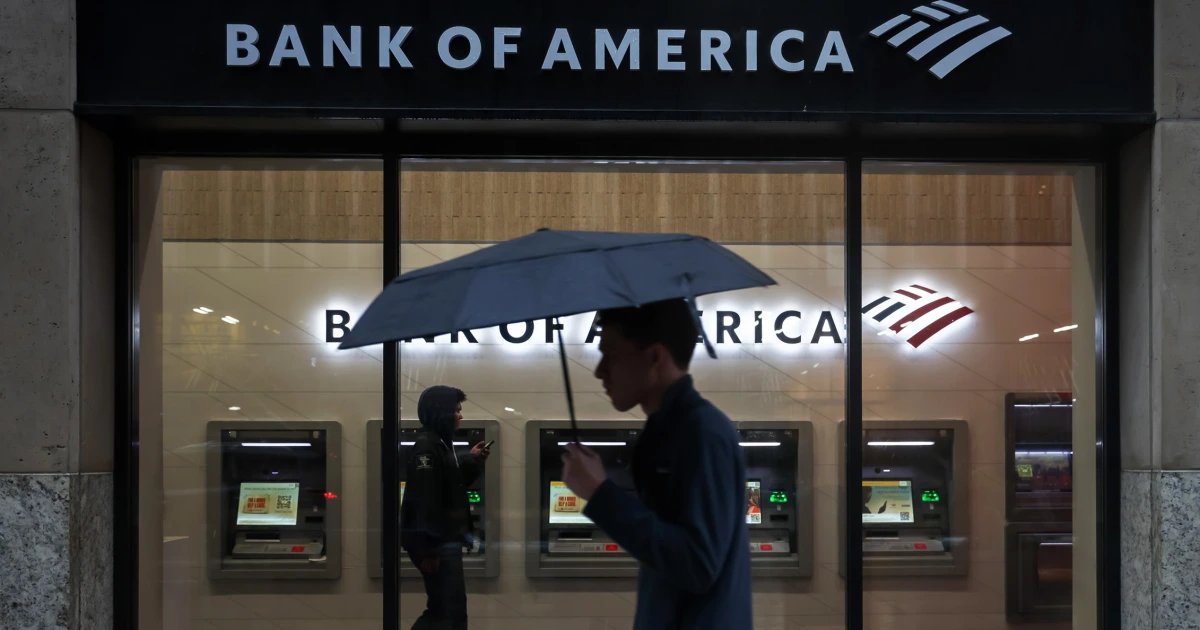










WASHINGTON — The U.S. Treasury Department announced a massive enforcement action against Bank of America on Tuesday, slapping the nation’s second-largest bank with $1.2 billion in penalties for systematic failures in its anti-money laundering and sanctions compliance programs. The move marks the third-largest fine of its kind in Treasury history, signaling a sharp escalation in federal efforts to safeguard the American financial system from illicit activity.
Treasury Secretary Scott Bessent issued a stern warning following the announcement, emphasizing that even the most powerful financial institutions are not exempt from legal obligations. “When a bank of this size fails to meet its anti-money laundering and sanctions obligations, the consequences extend far beyond its own walls, exposing the entire U.S. financial system to significant illicit finance risks,” Bessent stated.
## A Failure of Oversight and Compliance
The massive penalty stems from a collaborative investigation involving the Financial Crimes Enforcement Network (FinCEN) and the Office of the Comptroller of the Currency (OCC). According to regulators, the bank admitted to “willfully” violating the 1970 Bank Secrecy Act, a foundational law requiring financial institutions to serve as the front line in identifying and reporting suspicious transactions.
Regulators pointed to a specific pattern of neglect regarding national security priorities. Bank of America failed to properly monitor and report illicit finance networks linked to Chinese money laundering schemes and criminal activity along the U.S.-Mexico border. In addition to the FinCEN penalties, the bank reached an $11.6 million settlement with the Office of Foreign Assets Control (OFAC) regarding sanctions violations connected to Russia, Iran, global terrorism, and international narcotics trafficking. The $750 million portion of the fine directed to the OCC represents the largest penalty ever levied by the federal agency, setting a new benchmark for banking accountability.
## The Role of Advanced Technology and AI in Compliance
As Bank of America grapples with these regulatory failings, the industry is increasingly looking toward advanced technological solutions to prevent such lapses. The oversight breakdown highlights the growing challenge financial institutions face in tracking the velocity and complexity of global transactions.
Industry experts note that modern “Know Your Customer” (KYC) and Anti-Money Laundering (AML) protocols are shifting away from manual review toward AI-driven monitoring systems. By leveraging machine learning models, banks are beginning to deploy automated platforms capable of identifying sophisticated money laundering patterns—such as “layering” and “structuring”—that traditional software often misses. These AI systems can process massive datasets in real-time, flagging anomalies in transactional behavior that would otherwise require thousands of human hours to audit.
Bank of America noted in a press release that it has “invested billions of dollars in technology” to bolster its financial crime prevention. This investment underscores a broader industry trend where major banks are transitioning from legacy infrastructure to cloud-based, AI-enhanced compliance ecosystems. These technological overhauls are no longer just an operational preference but a regulatory necessity in an era where illicit actors are using increasingly sophisticated digital tools to bypass traditional banking safeguards.
## Setting a Precedent for the Financial Sector
This $1.2 billion penalty follows a string of record-breaking enforcement actions, including the multi-billion dollar settlements reached with Binance and TD Bank over the past two years. These actions form a consistent narrative under the current administration, which has prioritized closing loopholes that allow criminals to weaponize the global financial grid.
For Bank of America, the path forward involves a long-term commitment to technological integration and staff augmentation to fix its reporting processes. While the bank maintains that it is making significant progress toward meeting the requirements of its 2024 Consent Order, the sheer scale of the fine serves as a permanent mark of the risks inherent in failing to evolve compliance systems alongside the rapid digitization of global finance. As regulators continue to utilize data analytics to catch bad actors, banks will likely face mounting pressure to prove their internal algorithms can effectively neutralize threats before they reach the U.S. financial system.
Disclaimer: This content is auto-generated for informational purposes only.
Source: Read Original News