








From Campus Corridors to the Big Screen: Why Hindi Cinema Remains Obsessed with the Student Rebel
Long before political shifts manifest as national movements, they often find their genesis in the most organic of spaces: the quiet corners of college canteens, the echoing halls of hostel blocks, and the vibrant streets of university campuses. As recent nationwide protests have once again thrust the voices of the youth into the spotlight, they have revived one of Hindi cinema’s most enduring and compelling archetypes—the student who dares to question authority.
The Anatomy of Idealism
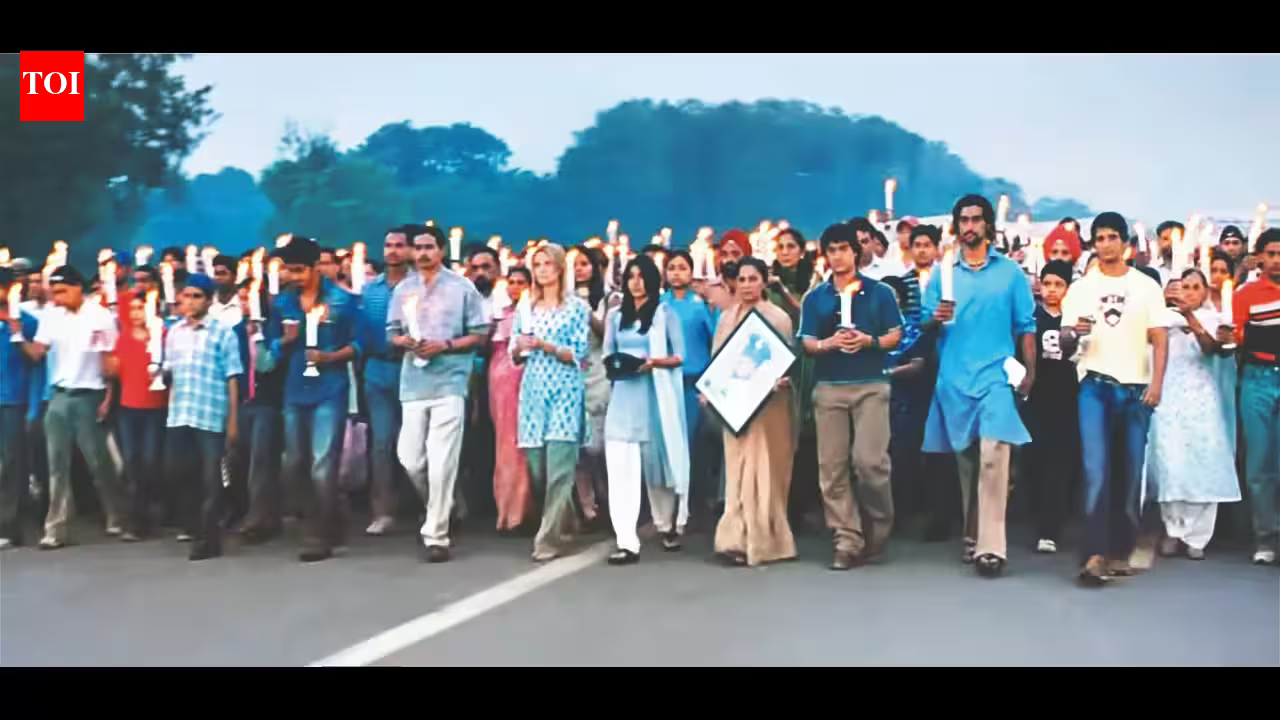
From the political churning in Mani Ratnam’s Yuva (2004) and the Naxalite-era echoes of Hazaaron Khwaishein Aisi (2005) to the transformative patriotism of Rang De Basanti (2006), filmmakers have consistently used the university experience as a backdrop for moral and political awakening.
But why does the “student” serve as such an effective vessel for these narratives? For acclaimed filmmaker Sudhir Mishra, who explored the idealism of the Emergency era in Hazaaron Khwaishein Aisi, the answer lies in the unique biology of youth. “At that age, there’s less responsibility and more idealism,” he explains. “Biologically, we are geared to take risks in our youth. It is a time defined by a lack of baggage and an abundance of conviction.”
The Cinematic Tropes vs. The Reality
The visual language of student activism on screen is unmistakable: hand-painted posters, graffiti-adorned walls, and impassioned protest marches. Professor Abhija Ghosh, a film historian at OP Jindal Global University, notes that these cinematic depictions draw heavily from the diverse, often chaotic, reality of India’s university system. “Campuses bring together people from different ideologies and backgrounds in a shared space,” she observes.
However, many creators argue that mainstream cinema often fails to capture the nuance of this environment. Filmmaker Anusha Rizvi suggests that the medium frequently simplifies the complexities of political life. “Cinema often reduces activism to a single charismatic leader, a fiery speech, or a dramatic confrontation with authority,” she says. “It rarely depicts the quieter, repetitive work that sustains real movements. It also assumes that student bodies are ideologically uniform, when in reality, they are spaces of constant disagreement, negotiation, and competing visions.”
Mishra echoes this sentiment, warning against the “party karenge” style of rebellion often portrayed in popular media. “Activism and the act of questioning society haven’t always been dealt with sensitively in Hindi cinema,” he notes. “There is a need to truly listen to young people; after all, the future belongs to them.”
The Evolution of the Rebel
The portrayal of student movements has shifted over the decades. In the 1970s, the focus was often on the struggle for survival. Films like Satyajit Ray’s Pratidwandi or the works of Mrinal Sen depicted students grappling not just with the weight of political movements, but with the crushing reality of unemployment and personal doubt.
Professor Ghosh highlights that students occupy a vital, liminal stage of life. “They are young enough to dream, yet old enough to challenge injustice,” she says. This duality was even reflected in the commercial cinema of the 70s; in the iconic film Deewar, Shashi Kapoor’s character represented the hope that education could lead to social change during a period of economic instability.
A Global Lens
The fascination with the student activist is hardly confined to Bollywood. From Lindsay Anderson’s If…. (1968), which examined institutional rebellion in a British boarding school, to the German film The Edukators (2004), which challenged the structures of capitalism, the “student rebel” remains a global cinematic icon.
As modern audiences engage with Bollywood’s favourite rebel, it becomes clear that these stories are not just about classrooms or campuses. They are reflections of a society in transition, captured through the eyes of those who have the most to lose—and the most to gain—from the future.