




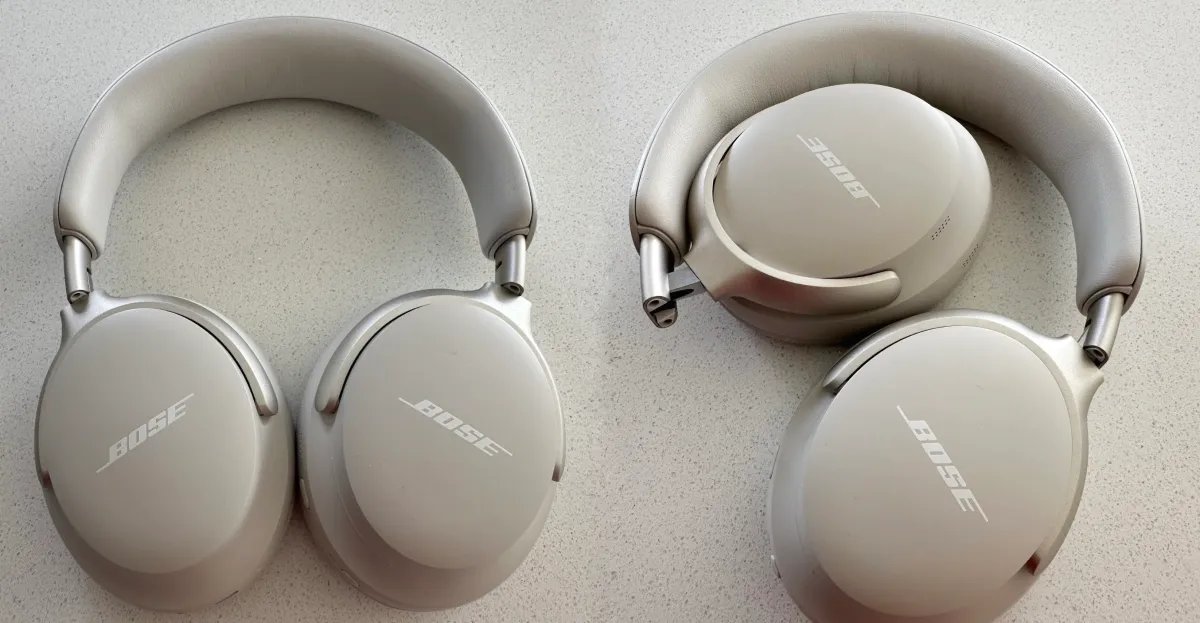
Bose QuietComfort Ultra Headphones Gen 2 Embrace Bluetooth LE Audio
Bose has officially entered the next generation of wireless connectivity by rolling out firmware update 10.12.12 for its flagship QuietComfort Ultra Headphones Gen 2. This update introduces support for Bluetooth LE (Low Energy) Audio and the Auracast broadcast standard as beta features. As the premium standard-bearer for Bose’s portable audio lineup, these headphones serve as the testing ground for the company’s adoption of these protocols. By integrating these technologies, Bose is signaling a shift toward more versatile and interconnected audio ecosystems.
While manufacturers such as Sony, Samsung, JBL, and Sennheiser have already begun integrating Auracast into their hardware, the entry of Bose—a brand synonymous with high-fidelity noise cancellation and widespread market adoption—marks a significant milestone for the technology. This firmware update effectively bridges the gap between current consumer audio hardware and a future where audio signals are not just point-to-point connections, but broadcast networks available to anyone with a compatible receiver.
Understanding the Mechanics of Auracast
Auracast is a feature built upon the foundation of Bluetooth LE Audio, designed to transform how we interact with sound in public and private environments. Unlike traditional Bluetooth, which typically establishes a one-to-one connection between a source device and a peripheral, Auracast functions as a one-to-many broadcast system.
From a technical standpoint, Auracast operates similarly to a local radio station. A source device, such as a television, a public address system, or a smartphone, transmits an audio signal that can be picked up by any number of receivers within range. Because it utilizes the efficiency of Bluetooth LE, it consumes significantly less power than legacy Bluetooth streaming, while simultaneously providing lower latency and higher fidelity. For users of the QuietComfort Ultra Gen 2, this means the headphones can “tune in” to a public broadcast as easily as connecting to a phone, provided the transmitting source is compatible with the standard.
Practical Use Cases for Broadcast Audio
The implementation of Auracast opens up a variety of utility-focused applications that move beyond personal music listening. One of the most frequently cited use cases is public information accessibility. In an airport, for example, travelers could connect their headphones directly to a gate announcement feed, allowing them to hear flight updates clearly without relying on ambient speakers that may be drowned out by crowd noise.
Beyond travel, the technology holds promise for education and accessibility. In a university setting, a lecturer could broadcast their voice directly to the headphones of students, ensuring clarity in large lecture halls. Similarly, in public venues like movie theaters or houses of worship, the system could provide a low-latency assistive listening feed. At home, the functionality allows users to connect multiple pairs of headphones to a single television, enabling private viewing without disturbing others or requiring complicated multi-point pairing setups. By incorporating this into the QuietComfort Ultra headphones, Bose is positioning its premium hardware to support these diverse environments natively.
Enhancements to Wired Audio and Conference Utility
While the inclusion of Auracast is the headline development for the 10.12.12 firmware update, Bose has also addressed the functional needs of professionals and gamers who rely on wired connections. The update includes refinements to audio performance when using a USB-C connection, which is a common requirement for high-end headphones used with computers.
The update introduces improved balance controls for gaming audio and integrated chat streams. Previously, users often found that balancing the volume between game sounds and communication software required third-party drivers or complicated system settings. With this update, the internal processing of the headphones handles the mix more effectively over a direct USB connection. Additionally, the firmware improves compatibility with various web conferencing applications. This ensures that when the headphones are used for professional calls on platforms like Microsoft Teams or Zoom, the microphones and audio output remain stable, minimizing the synchronization errors and connection drops that sometimes plague wireless-only setups.
The Future of Bose and Bluetooth Connectivity
The decision to label these new features as “beta” suggests that Bose is taking a measured approach to full implementation. As the company refines the stability of its LE Audio stack, it is likely that these capabilities will move from a secondary software addition to a core component of the QuietComfort product line. The infrastructure required to make Auracast truly ubiquitous involves not just headphones, but the widespread installation of compatible transmitters in public spaces.
Bose’s involvement serves as a catalyst for this broader infrastructure rollout. When major manufacturers commit to a standard, infrastructure providers are more incentivized to upgrade their audio systems to support it. As users begin to expect this level of connectivity, the demand for broadcast-ready hardware will increase. For now, owners of the QuietComfort Ultra Gen 2 have the advantage of early access, turning their existing hardware into a future-proof interface capable of navigating both the current landscape of private streaming and the emerging environment of open, public audio broadcasts. This update highlights a commitment to longevity, ensuring that a premium investment retains its relevance as wireless standards continue to evolve.
Disclaimer: This content is auto-generated for informational purposes only.
Source: Read Original News