









For decades, Native American communities have served as the silent engines of the American power grid. While coal mined from tribal lands helped illuminate cities across the western United States, many reservation residents lived only miles from these extraction sites without access to basic electricity.
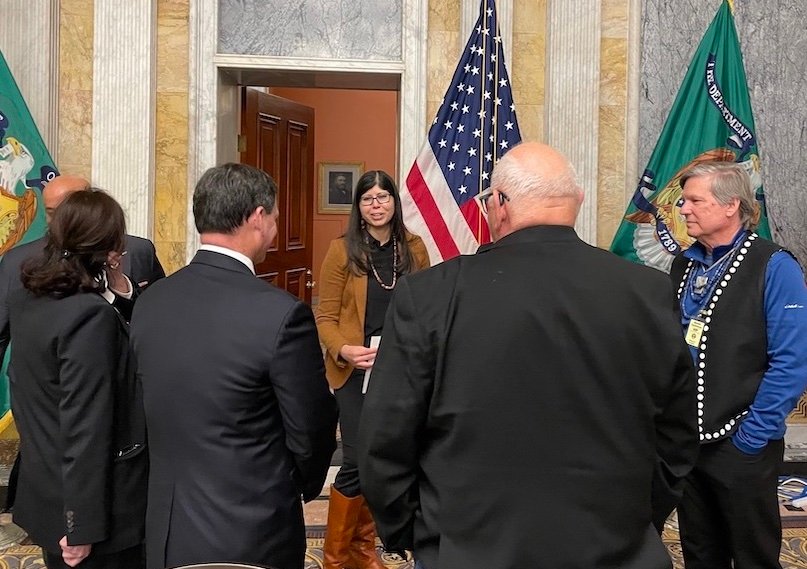
Wahleah Johns, a member of the Navajo Nation and former director of the U.S. Department of Energy’s Office of Indian Energy, remembers watching her neighbors haul water just “over the hill” from massive, industrial-scale coal mines. That stark disparity has defined her mission to pivot Indigenous energy policy toward tribal sovereignty and sustainable independence. Today, Johns is spearheading a new initiative: the Four Directions Fund, LLC.
## Bridging the Pre-Development Gap
The primary obstacle to tribal energy autonomy is not a lack of vision or available land, but a “catch-22” of financing. Most traditional clean energy investors require a project to have completed rigorous feasibility studies, environmental reviews, and grid connectivity applications before they commit capital.
These early-stage costs—collectively known as pre-development—can reach millions of dollars. For many tribes, these costs are prohibitive, effectively locking them out of the clean energy transition. The Four Directions Fund, currently in its early stages of development, aims to raise $100 million to bridge this specific divide. By covering the “soft costs” of engineering and legal groundwork, the fund aims to give tribes the leverage needed to negotiate better ownership stakes, royalty rates, or full-scale project management.
## A Global Model for Indigenous Sovereignty
While the fund is anchored in the United States, its ambitions are global. Johns notes that Indigenous communities worldwide share a unique, stewardship-based connection to the land that is often ignored by international energy conglomerates. By fostering an investment model where tribes—rather than outside corporations—drive the decision-making process, the Four Directions Fund seeks to change the narrative from “extractive industry” to “tribal wealth creation.”
This approach is critical as the domestic political landscape shifts. While the Biden administration poured significant federal funding into renewable infrastructure, current federal priorities have trended back toward traditional fossil fuel extraction. By building an independent capital pool, the Four Directions Fund ensures that tribal energy strategy remains resilient regardless of which administration sits in the White House.
## Leveraging Technology for Durability
As the global energy market accelerates its shift toward electrification, tech-driven solutions are becoming increasingly vital for remote tribal regions. Johns advocates for a strategic mix of solar power—ideal for the sunlight-rich American West—and modern microgrid technology.
These systems are not just about revenue; they are about energy durability. For communities prone to weather-related outages or isolated by geography, modern renewable microgrids offer a path to self-sufficiency and emergency backup power that coal-fired plants never provided.
As digital tools, remote sensor technology, and AI-driven load management become more accessible, Indigenous nations are better positioned than ever to manage their own energy portfolios. By securing early-stage funding, tribes are moving from the role of passive land providers to active, sophisticated players in the global energy transition. For Johns, the goal is simple but transformative: ensuring that when the lights turn on, they are powered by projects designed by—and for—the communities that host them.
Disclaimer: This content is auto-generated for informational purposes only.
Source: Read Original News