





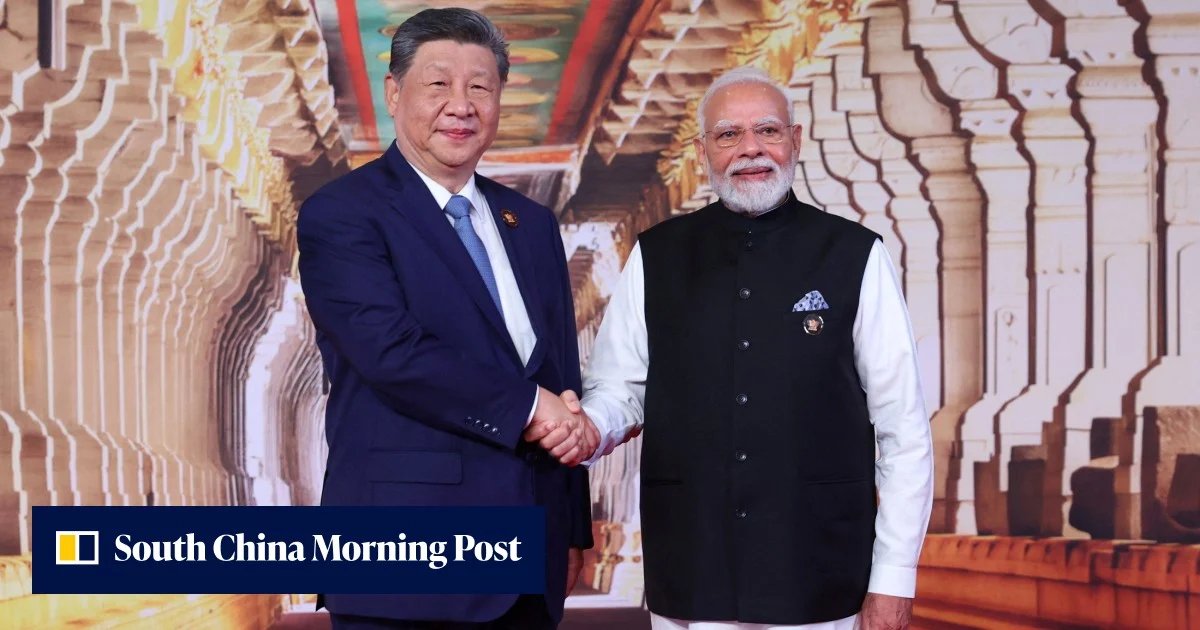
NEW DELHI – In a significant diplomatic overture on the sidelines of the BRICS summit, Chinese President Xi Jinping and Indian Prime Minister Narendra Modi held high-level talks on Saturday, signaling a potential shift in the strained relationship between the world’s two most populous nations.
Against the backdrop of an international landscape described by Xi as “fraught with turbulence and change,” the Chinese leader emphasized that Beijing and New Delhi share “significant responsibilities” as key leaders of the Global South. The meeting, which began at 5:45 p.m. local time, focused on navigating the complex path toward normalizing ties, addressing long-standing border disputes, and fostering deeper cooperation on trade and investment.
Despite the deep-seated friction that has characterized Sino-Indian relations in recent years, Xi struck a conciliatory tone. Addressing the Prime Minister, Xi remarked that while the two nations possess different national circumstances, “there is ample scope for us to learn from each other’s strengths, offer mutual support, achieve shared success and pursue common development.”
The Chinese leader underscored the importance of the expanded BRICS framework as a vehicle for stability. “We must keep the future of humanity and the well-being of our people at heart, join hands to drive high-quality cooperation… and inject greater positive energy into promoting global peace, stability, development, and prosperity,” Xi stated. His message framed the necessity of regional cooperation as a critical counterweight to broader economic uncertainty and the push for an “equal and orderly multipolar world.”
The summit meeting involved high-ranking delegations from both sides, highlighting the seriousness with which both capitals approached the encounter. President Xi was accompanied by Cai Qi, a close aide and China’s fifth-ranking official, alongside Foreign Minister Wang Yi. India’s delegation was led by National Security Adviser Ajit Doval, accompanied by Foreign Secretary Vikram Misri and Vikram Doraiswami, India’s Ambassador to China.
While the rhetoric from the Chinese side focused on unity and global stewardship, analysts are watching closely to see if these high-level discussions will translate into tangible progress on the ground, particularly regarding the long-running, militarized border dispute that has paralyzed bilateral relations for years.
The summit serves as a crucial barometer for the future of the BRICS bloc, which is seeking to exert greater influence on the global stage. By prioritizing dialogue, both Xi and Modi appear to be acknowledging that their respective domestic development goals—and their roles within the broader Global South—are inextricably linked to the stability of the relationship between their two nations. As the summit concludes, the international community remains attentive to whether this meeting marks the beginning of a genuine thaw or remains a strategic necessity for the two regional giants.
Disclaimer: This content is auto-generated for informational purposes only.
Source: Read Original News