







The Future of Warfare: How India’s Laser Weapon Program is Changing the Air Defence Landscape
The modern battlefield has been fundamentally altered by the advent of cheap, ubiquitous drones. What was once a high-stakes arena of sophisticated missiles and fighter jets has shifted into a game of attrition. Adversaries can now overwhelm traditional air defence systems by launching swarms of low-cost UAVs, forcing defenders to exhaust their expensive interceptor stockpiles on inexpensive targets. In response, India is accelerating its indigenous Directed-Energy Weapon (DEW) programme, pivoting from experimental demonstrations to potential industrial-scale manufacturing.
Decoding Directed-Energy Weapons
Unlike kinetic weapons that rely on physical projectiles, DEWs function by focusing concentrated electromagnetic energy onto a target. By targeting a drone’s critical vulnerabilities—such as its control electronics, battery modules, or airframe structural integrity—a laser can disable or destroy the craft through rapid heat generation. For less intensive tasks, such as disrupting a drone’s vision, these systems can simply dazzle its optical sensors, rendering it ineffective.
A functional laser system is far more than just a beam; it is a complex assembly of sensors, AI-driven tracking software, and high-precision optics designed to keep an aim-point fixed on a fast-moving target. Additionally, the system requires robust power generation and cooling hardware to sustain operation, as the energy required to “cook” a target can quickly cause internal components to overheat.
The Strategic Edge of Lasers
The primary allure of DEWs lies in their economic efficiency. While a surface-to-air missile can cost millions, a laser engagement costs only the price of the electricity used to power the beam, often estimated to be as little as a few dollars per shot. Furthermore, these systems provide “infinite magazine depth.” As long as the platform has a steady power supply and effective cooling, it can continue engaging targets without needing to reload, a critical advantage during mass-drone saturation attacks.
India’s Path Toward Deployment
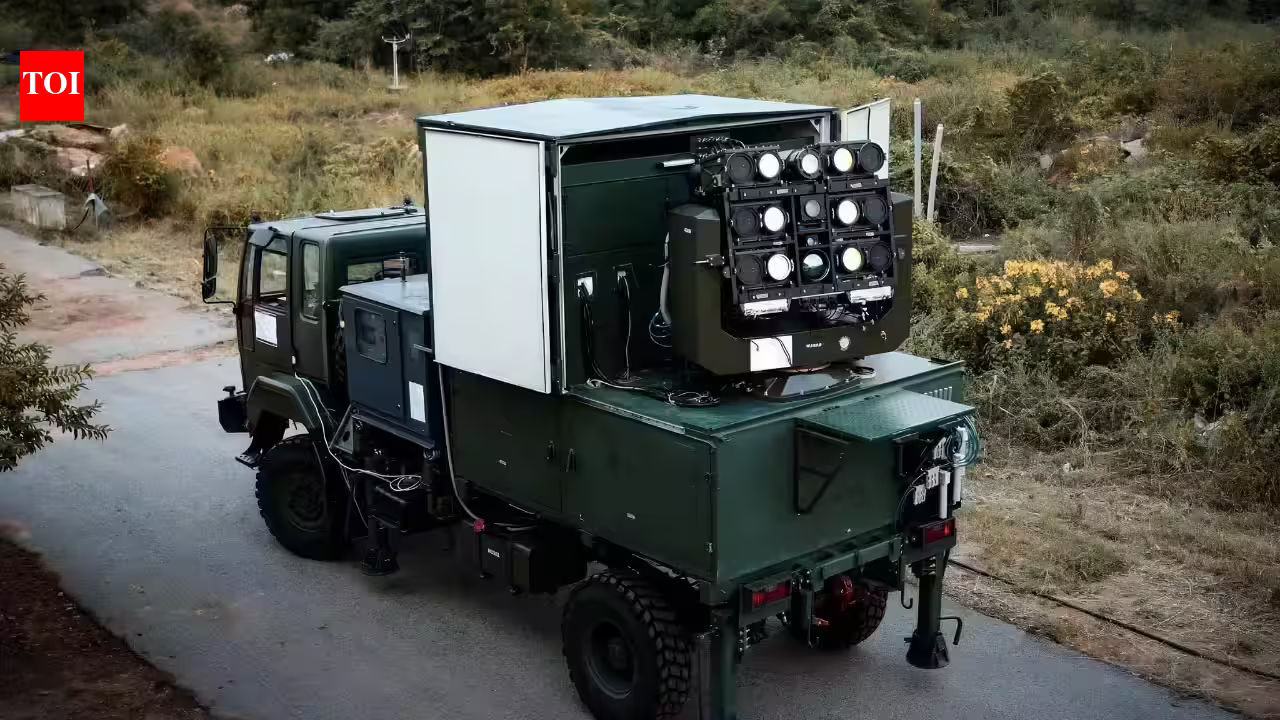
The Defence Research and Development Organisation (DRDO) has made significant strides in this arena. In 2025, the organization successfully showcased the MK-II(A) laser system in Andhra Pradesh, proving its ability to track and neutralize fixed-wing UAVs and multi-drone swarms. Having completed rigorous trials, the DRDO is now initiating the transition to industrial production, seeking private partners to bring the technology to the field.
Current projects span a spectrum of capabilities. While low-power variants are already seeing limited adoption, higher-capacity projects like the 30kW MK-II(A) and the ambitious 300kW “Surya” program demonstrate the country’s long-term vision. Notably, recent trials have seen these lasers integrated into wider air defence networks, working alongside traditional missile systems to create a layered defensive shell.
The Hurdles Ahead
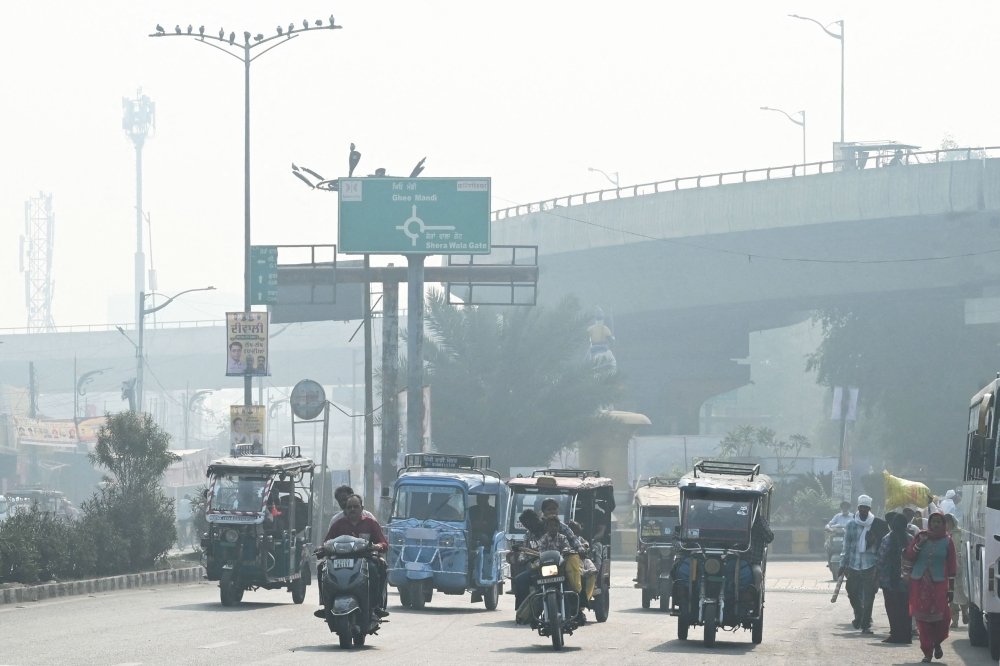
Despite the promise, experts remain cautious about the technology’s maturity. Atmospheric conditions—such as heavy rain, dense fog, or sandstorms—can scatter laser beams, significantly reducing their effective range and lethality. Furthermore, the physics of target engagement is demanding; even a slight delay in tracking or “dwell time” on a target can allow a drone to escape or continue its mission.
For the Indian Armed Forces, the immediate priority will be the protection of static, high-value assets like ammunition depots, radar stations, and forward operating bases. While lasers will not replace traditional interceptors, they are set to become a vital, cost-effective layer of India’s integrated air defence grid. The final, and perhaps most difficult, test remains: moving these weapons from controlled testing environments into the rugged, unpredictable reality of frontline service.
Disclaimer: This content is auto-generated for informational purposes only.
Source: Read Original News