









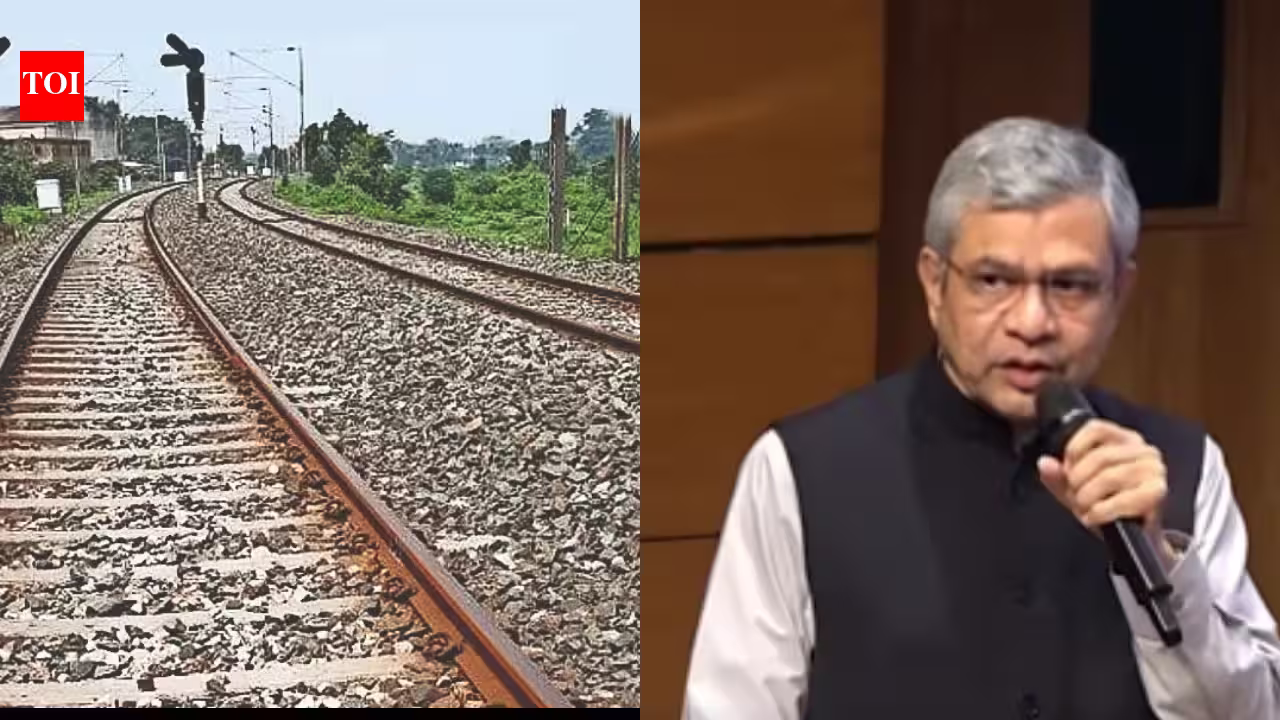
Union Cabinet Greenlights Rs 13,041 Crore Infrastructure Boost, Bolstering Rail and Road Networks
NEW DELHI – In a significant move to enhance India’s infrastructure, the Union Cabinet, under the chairmanship of Prime Minister Narendra Modi, on Tuesday approved five major projects totaling an investment of Rs 13,041 crore. This substantial outlay includes four crucial railway multitracking initiatives valued at Rs 9,450 crore and a vital highway upgrade project in Bihar costing Rs 3,590.73 crore.
These decisions are poised to dramatically improve logistics efficiency, strengthen regional connectivity, and facilitate the smoother movement of both goods and passengers across several states.
Railway Expansion: Unlocking Capacity on Key Corridors
The four railway projects, with an estimated cost of Rs 9,450 crore, are set to add approximately 410 kilometers to the existing Indian Railways network. Spanning eight districts across West Bengal, Odisha, Andhra Pradesh, and Tamil Nadu, these projects are slated for completion by 2030-31. Their primary objectives are to alleviate congestion, streamline passenger and freight traffic, and enhance connectivity to nearly 6,448 villages, impacting an estimated 60 lakh residents.
Union Cabinet Minister Ashwini Vaishnaw highlighted the strategic importance of these railway upgrades, particularly focusing on the critical Howrah-Chennai route. "If we understand the importance of the first set of projects, the Howrah-Chennai route is a very important mainline," Vaishnaw stated during the Cabinet briefing. He emphasized that Projects 1, 2, and 3 are integral to this corridor, while Project 4 addresses the Paradip-Cuttack section. "So, from Howrah to Chennai, we will ultimately have a complete quadrupled, four-line route. This will allow us to operate many more trains. It will also facilitate the movement of cargo and make maintenance easier," he added.
The approved railway projects are:
- Kharagpur-Bhadrak (Ranital) 4th line: A 173 km stretch across West Bengal and Odisha, costing approximately Rs 3,352 crore.
- Bhadrak-Haridaspur 4th line: A 75 km section in Odisha, with an estimated cost of Rs 1,583 crore.
- Gummidipundi-Gudur 3rd and 4th lines: Covering 90 km across Andhra Pradesh and Tamil Nadu, at an estimated cost of Rs 2,229 crore.
- Cuttack-Paradeep (Badabandha) 3rd and 4th lines: A 72 km project in Odisha, costing around Rs 2,286 crore.
These expansions are projected to handle an additional 76 million tonnes of freight traffic annually, crucial for the transportation of vital commodities such as coal, iron ore, cement, steel, containers, automobiles, and foodgrains. Beyond economic benefits, the increased rail capacity is expected to reduce oil imports by approximately 13 crore liters and significantly lower CO2 emissions by around 65 crore kg.
Furthermore, these rail projects are anticipated to bolster connectivity to various tourist destinations, including Bhitarkanika National Park, Kuldiha Wildlife Sanctuary, Chandipur Beach, Pulicat Lake, Nelapattu Bird Sanctuary, and Lalitgiri.
Bihar Highway Project: Strengthening Connectivity to Nepal Border
In parallel to the railway advancements, the Cabinet also sanctioned the four-laning of an 82.6-km section of NH-22 in Bihar, from Muzaffarpur to Sitamarhi-Sonbarsa. This crucial highway upgrade will be developed under the Hybrid Annuity Mode (HAM) at a capital cost of Rs 3,590.73 crore.
The upgraded NH-22 will serve as a vital feeder corridor, connecting the India-Nepal border at Sonbarsa with Muzaffarpur and NH-27, which forms a part of the East-West Corridor. This project is expected to significantly reduce congestion in densely populated areas like Muzaffarpur, Muksudpur, Runni Saidpur, Thumma, Dumra, Bhutahi, and Sonbarsa.
Designed for a maximum speed of 100 kmph and an average speed of 80 kmph, the highway will feature no at-grade median openings to ensure safer and faster movement. Key infrastructural components include seven major bridges, notably a 340-meter bridge over the perennial Bagmati River, three railway overbridges, and two flyovers measuring 1,170 meters and 270 meters respectively.
The improved corridor will enhance access to five PM Gati-Shakti economic nodes, comprising four industrial estates and a Mega Food Park, along with railway stations at Muzaffarpur and Sitamarhi. It will also strengthen cross-border passenger and cargo movement through the nearby Bhithamore Land Port and improve connectivity to cultural and religious destinations such as the Buddhist Circuit and Punaura Dham in Sitamarhi.
The government projects that this highway initiative will reduce travel time, improve road safety and fuel efficiency, lower vehicle operating costs, and bolster agricultural supply chains and regional economic growth.
These comprehensive infrastructure approvals underscore the government’s commitment to driving economic development and improving the quality of life for citizens across the nation.