








British Boarding Schools Adapt to India’s Educational Landscape
Bhopal, India – British independent schools, long a destination for affluent Indian families, are now establishing campuses in India, seeking to adapt their centuries-old educational philosophies to a new and competitive market. Institutions like Harrow, Wellington, and Shrewsbury are drawn by India’s rising household incomes, demand for globally recognized qualifications, and ongoing education reforms.
However, exporting a school involves more than simply offering Cambridge or International Baccalaureate qualifications. These schools aim to transplant a comprehensive approach encompassing boarding, pastoral care, sport, arts, and character development, all within a distinct educational landscape. India already boasts a rich boarding school tradition with institutions such as The Doon School and Mayo College, alongside a growing number of international schools, meaning heritage alone will likely not suffice for new entrants.
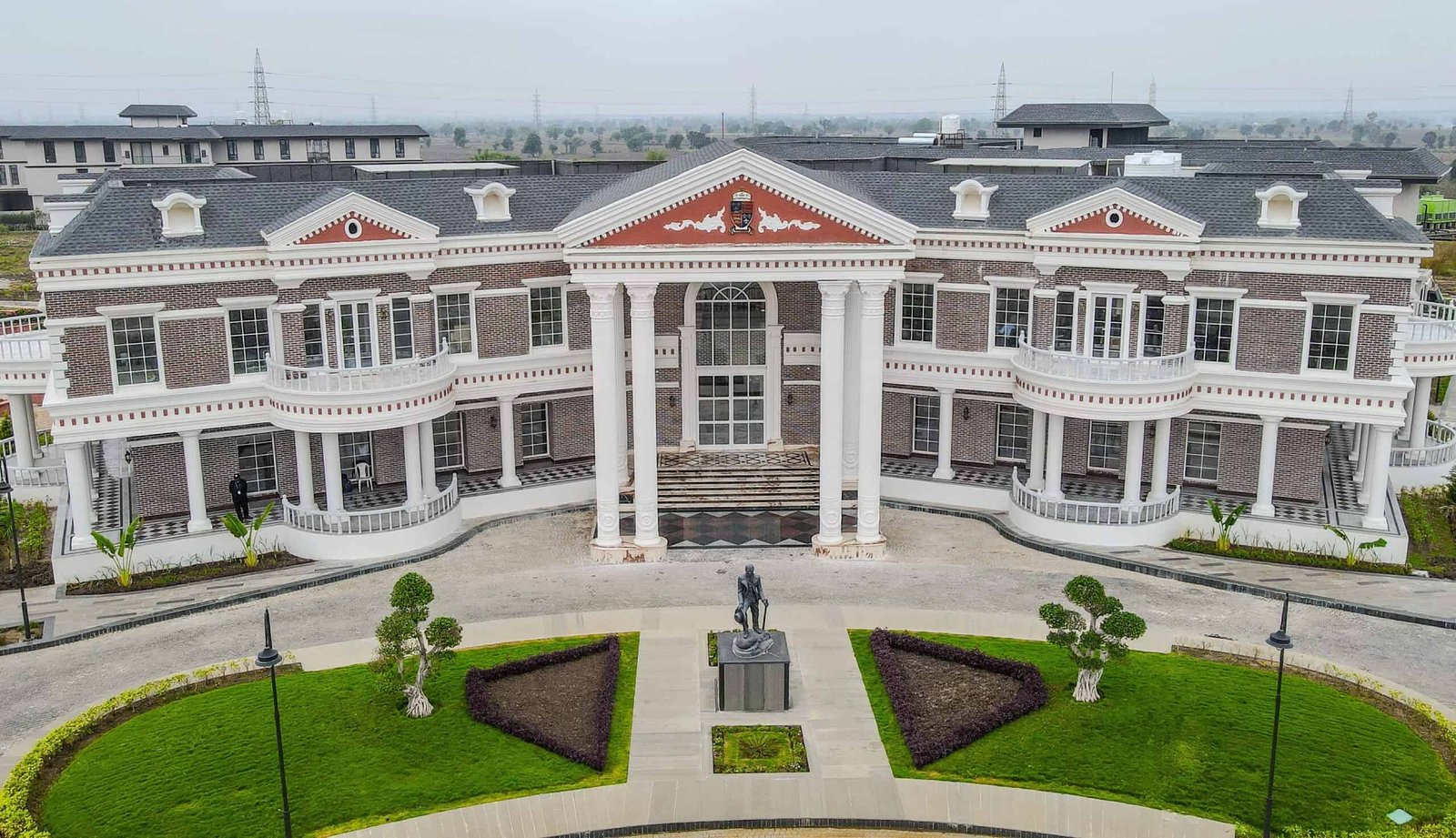
Shrewsbury International School India, which welcomed its first pupils in Bhopal last year, exemplifies this adaptive approach. Founding headmaster Dominic Tomalin emphasizes a philosophy of adaptation rather than mere recreation of its 474-year-old English parent school. "It has to feel Indian," Tomalin stated, a sentiment echoed in discussions about classrooms, boarding houses, and theater productions. He further clarified, "We’re not trying to recreate England in India. The philosophy remains the philosophy, but how it is expressed has to reflect the community we’re serving."
This highlights a core challenge for Britain’s new international campuses: replicating buildings, uniforms, and curricula is achievable, but a school’s intrinsic identity is far more difficult to transplant. Abhishek Mohan Gupta, founder and president of the board of management, explained that Bhopal was chosen over larger cities to allow the creation of a fully residential campus from the ground up, fostering a specific type of community. Both Gupta and Tomalin underscore that educational change is a slow process, with schools developing their character over many years. Oliver Russell, deputy headmaster for strategy and school development, added that while buildings are often discussed first, schools are ultimately defined by relationships, traditions, and culture, elements that develop over time rather than being instantly built.
This long-term perspective contrasts with a premium education market often focused on immediate outcomes like university destinations and facilities. Shrewsbury argues that these indicators should emerge from a school’s foundations, not define them. The classroom is where this proposition is first tested. Shrewsbury’s distinctive approaches—enquiry-led learning, broad subject choice, and an emphasis on independent thinking—are familiar in British independent education. However, introducing these in India means navigating a system where examination performance and university admissions heavily influence parental expectations.
Stephanie Oldridge, deputy head academic, noted that a major challenge is convincing parents that different learning methods can be academically ambitious. "Parents naturally compare it with the education they experienced. That’s completely understandable. But we are preparing children for a world that is changing rapidly," she said. Lessons at Shrewsbury encourage questioning, debate, and independent conclusions. "It’s less about standing at the front and giving students the answers. Our role is helping them develop the confidence to find those answers themselves," Oldridge explained, adding, "We’re absolutely ambitious academically. The difference is that we believe students perform better when they genuinely understand what they’re learning rather than simply memorizing it."
Deepti Kumar, Head of English and girls’ housemistress, highlighted the emergence of artificial intelligence as another reason for educational re-evaluation. "AI is here, and education has to engage with it thoughtfully. Our responsibility is to help pupils understand how to use these tools critically, ethically and responsibly." Kumar also stressed the importance of cultural identity within an international education, advocating for deep engagement with Indian literature and history alongside global perspectives.
This balance between global outlook and local relevance reinforces Tomalin’s insistence that the school must "feel Indian" and raises a broader question for British schools expanding overseas: how much can they change while retaining the recognizable identity of their parent institutions?
Beyond academics, this tension extends to pastoral care. Peter Willett, deputy head pastoral, views boarding as an extension of education, not merely accommodation. "Living with other people, learning responsibility, resolving disagreements, looking after younger students – those are all part of growing up," he noted. Given India’s own traditions of residential education, Shrewsbury is entering an established landscape. Willett emphasizes, "We’re creating something new. We’re drawing on the heritage and philosophy of Shrewsbury School while allowing the school here to develop its own identity in India."
Early signs from pupils suggest a successful blend. Students describe Design and Technology as a favorite subject for its encouragement of experimentation, and restrictions on social media as fostering stronger friendships. When asked if the school feels British or Indian, one pupil responded, "It’s a blend. Both cultures have adapted."
Shrewsbury’s campus also offers a wide array of over 20 sports, including cricket, football, swimming, fencing, indoor rowing, horse riding, golf, and scuba diving. Director of Sport Ashutosh Bisht sees sport as another form of education, emphasizing life lessons over pure performance. Gavin Oldridge, teacher of physical education and assistant housemaster, echoed this, stating, "If young people never experience setbacks, they don’t get the opportunity to learn how to deal with them."
The Sidney Centre for the Performing Arts, a dedicated facility for music, drama, and fine arts, opened in June 2026. Tansy Troy, director of performing arts, believes the school’s culture should integrate with its surroundings, becoming "part of what students experience."
Across staff conversations, the consistent theme is adapting longstanding educational principles to a local context. Ultimately, families will decide the success of this approach, with technology adding another layer to expectations. Tomalin concluded, "If knowledge is available instantly, schools have to ask themselves what students genuinely need from us," citing judgment, curiosity, creativity, relationships, and character as key. The question for Shrewsbury, and other British independent schools in India, is whether they can uniquely bring these elements together in an already sophisticated market.
With its first cohort still small and the next intake scheduled for September 2026, it is premature for a definitive verdict. Traditions are only just beginning to form, and the culture, rituals, and reputation that define a boarding school cannot be instantly manufactured. As British independent schools expand their presence in India, the more pertinent question is whether they can build institutions that are genuinely their own while authentically belonging to the communities they now serve, rather than simply recreating their original identities.