







The corridors of Indian cinema are built on the bedrock of legend, but few tales have quite the bite—or the brilliance—of the ones surrounding Nana Patekar. As the industry continues to process the loss of one of its most idiosyncratic and electric performers, who passed away recently at the age of 75, the anecdotes filtering out from his contemporaries serve as a poignant reminder of his sheer audacity. Among the many tributes, the story shared by Drishyam actor Kamlesh Sawant regarding Nana’s unique approach to his professional standing has captured the imagination of cinephiles everywhere.
The Power Play: One Rupee More Than The Legend
In the hierarchy of Bollywood, Amitabh Bachchan has long sat at the undisputed apex, a towering figure whose influence on the economy of stardom is immeasurable. Yet, Nana Patekar, with his brooding intensity and unconventional path, was the only actor capable of challenging that aura of supremacy without ever truly competing for the same space.
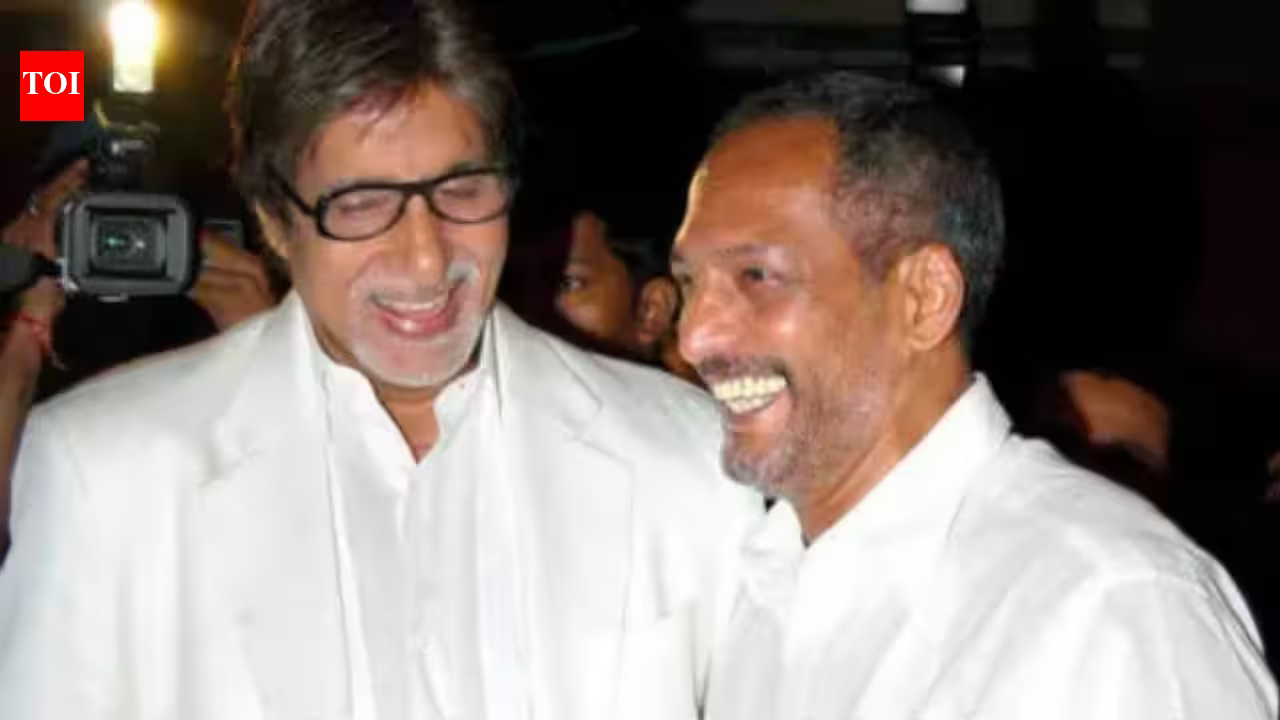
Kamlesh Sawant recently shared a story that sounds almost like urban folklore, yet possesses the kind of “Nana-esque” flair that makes it entirely believable. The anecdote suggests that when the two titans were set to work together, Nana made a singular, daring demand: he wanted exactly one rupee more than Amitabh Bachchan’s fee. Whether it was a calculated power move, a professional quirk, or a mischievous nod to his own self-worth, the reported arrangement—where Nana allegedly accepted a fee of one rupee over the Big B’s paycheck—speaks volumes about the quiet, often unpredictable rivalry that existed between the two. While Sawant admitted the veracity of the tale is hard to verify, it underscores a fundamental truth about Patekar: he was an actor who operated by a different set of rules.
Reshaping the Soundscape of Cinema
Beyond the negotiation room, Patekar’s contribution to the evolution of the Hindi film industry was structural. Before the mid-to-late 80s and 90s, the Hindi cinematic experience was often defined by the “masala” rhythm—a reliance on musical interludes and high-octane choreography to carry the narrative load. Nana changed the frequency of that conversation.
Sawant, who has spent years dissecting the mechanics of screen acting, points out that Nana was the architect of a new era. “That era was started by him,” Sawant noted, referring to the shift where the audience stopped waiting for the song-and-dance numbers to clap and began reacting to the weight of a spoken word. Nana’s delivery was visceral; he didn’t just speak lines, he weaponized them. He turned the dialogue into an event. In an age dominated by spectacle, Nana Patekar proved that a man standing still, speaking with controlled, simmering rage or quiet wisdom, could command more attention than any grand production sequence.
The Silence of the Single-Screen
To understand the true reach of Nana Patekar, one must look at the single-screen theatres of the 90s—the Ganesh Talkies and Jai Hind Talkies of the world. These were rowdy environments, where the audience was as much a part of the performance as the actors on the screen. Yet, as Sawant recalls, there were only two men who could silence such a crowd: Amitabh Bachchan and Nana Patekar.
There is a rare, almost sacred quality to that kind of authority. Audiences didn’t just watch his films; they memorized the cadence of his delivery. They knew the pauses, they anticipated the crescendo, and they sat in hushed silence because they didn’t want to miss a single syllable of his performance. This wasn’t just stardom; it was a profound connection with the working-class audience, people who saw their own struggles, frustrations, and fire reflected in Nana’s eyes. He became the voice of the common man, not through grand speeches, but through the deliberate, sharp, and often haunting way he articulated the human condition.
More Than an Actor: The Social Architect
While the public remembers the firebrand onscreen, those who knew him emphasize the depth of his character off-camera. Nana’s transition from a performer to a social force was not a performative act of charity; it was a gritty, boots-on-the-ground commitment. His work through the NAAM Foundation, particularly in addressing the crippling water crises in Maharashtra’s villages, was a testament to his belief that if you have the platform to make a change, you have the moral obligation to use it.
Kamlesh Sawant’s personal experience, growing up in Koloshi Varchivadi, brings this into sharp relief. For many in his village, the water shortage was a life-altering hardship—one that bureaucrats often ignored but which Nana chose to confront directly. He didn’t just write checks from an ivory tower; he showed up. He stood in the mud, spoke to the farmers, and ensured that the infrastructure for survival was built. It is this duality—the volatile, genius actor and the quiet, diligent humanitarian—that makes his recent passing feel so hollow for the industry.
An Unfillable Void
Reflecting on the sudden nature of his departure, Sawant’s words echo the sentiment of an entire generation of actors who looked toward Nana as a North Star. He was not just an artist; he was a standard-bearer for integrity in performance. The fact that he hadn’t been ailing made his exit feel like a sudden drop in the atmospheric pressure of Bollywood.
The industry will continue to produce stars, and the box office will continue to churn out hits, but the specific “Nana Patekar brand”—that jagged, unvarnished, and deeply intellectual approach to the craft—is now a closed chapter. As the film world reflects on his 1999 collaboration with Bachchan in Kohram and the decades of work that followed, the takeaway is clear: Nana Patekar was a man who knew his own value, understood the power of his voice, and used both to leave the world just a little bit better than he found it. He demanded that extra rupee, sure, but he gave back so much more in return.
Disclaimer: This content is auto-generated for informational purposes only.
Source: Read Original News