







India-Venezuela Wildlife Pact: Reliance-Backed Vantara to Revamp Venezuelan Zoos
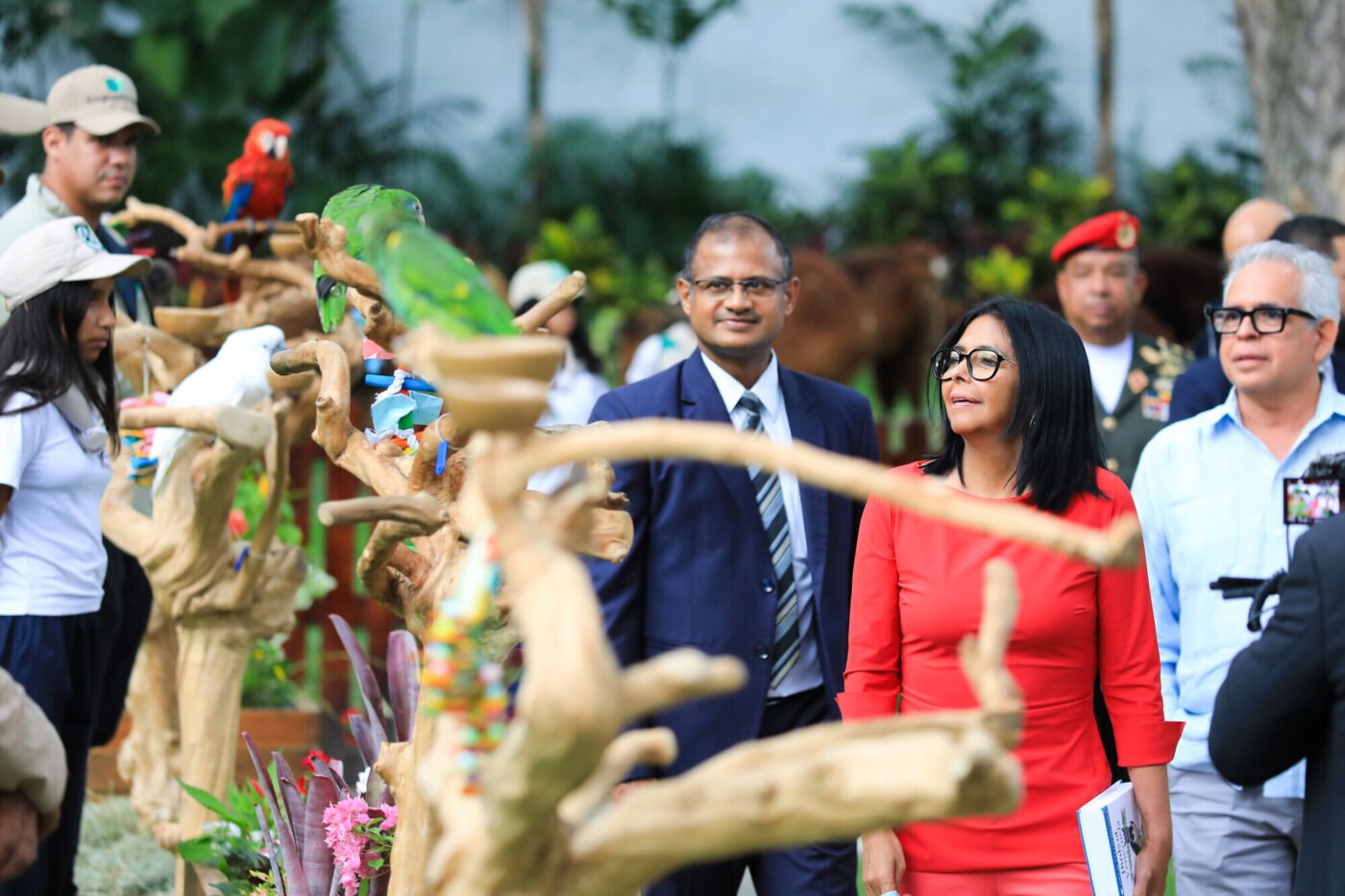
In a strategic expansion of bilateral cooperation, Venezuelan Acting President Delcy Rodríguez has formalized a partnership with India’s Greens Zoological Rescue and Rehabilitation Centre (GZRRC) to overhaul the South American nation’s wildlife conservation infrastructure. The memorandum of understanding, signed in early September 2026, marks a significant shift in Venezuela’s environmental policy, aligning its national biological management with Indian expertise and private-sector support.
Modernizing Conservation Through Vantara
The collaboration involves GZRRC—the operating arm of the Vantara project based in Gujarat—providing technical training, specialized technology, and management expertise to upgrade Venezuela’s network of 16 zoos and aquariums, alongside various breeding and rescue centers.
Acting President Rodríguez emphasized that this initiative is particularly crucial for the post-disaster recovery of La Guaira State, which was severely impacted by earthquakes in June 2026. The master plan for the region now includes the integration of a state-of-the-art wildlife hospital, a dedicated veterinary center, and a new aquarium, all guided by the Vantara framework. Venezuelan professionals are expected to travel to India for specialized training, fostering a cross-continental exchange of biological and veterinary knowledge.
The Big Cat Alliance and Strategic Ties
This agreement follows Venezuela’s recent enactment of the Law Approving the Framework Agreement for the International Big Cat Alliance (IBCA). Originally proposed by Prime Minister Narendra Modi in 2023, the IBCA seeks to safeguard seven of the world’s most vulnerable feline species. Given that Venezuela hosts 14 percent of global feline biodiversity, the move positions the country as a key partner in India’s international conservation agenda.
During the signing event, Rodríguez expressed deep gratitude toward the Indian government, Ambassador P.K. Ashok Babu, and the Ambani family, whose Reliance Industries serves as the primary backer of the Vantara project. This move is part of a broader diplomatic push by Caracas to court Indian investment. Earlier this year, Rodríguez conducted a four-day visit to India, seeking to solidify trade relations with industrial giants like the Tata Group, Amul, and Reliance, the latter of which has been a primary buyer of Venezuelan crude.
Controversy and Scrutiny
While the partnership is being hailed as a milestone for Venezuelan conservation, it has not escaped criticism. Vantara, led by Anant Ambani, has faced scrutiny from environmental watchdogs regarding its operations within the Jamnagar refinery complex. Critics have questioned the efficacy and ethics of maintaining a large-scale wildlife sanctuary in an industrial zone, with some international groups labeling the facility a “private zoo” rather than a conservation site.
Investigations have also raised questions about the movement of wildlife. Media reports, including a joint probe by Süddeutsche Zeitung and Armando.info, alleged that thousands of animals—including endangered species like the Orinoco crocodile and harpy eagle—had been transferred from Venezuela to Indian facilities. While Indian authorities, including a Supreme Court-appointed panel, have previously investigated and dismissed complaints regarding Vantara’s acquisition of animals, the controversy remains a point of contention for international animal rights advocates.
Despite these concerns, the Venezuela-India partnership is proceeding with a five-year timeline, signaling a deepening of the relationship between Caracas and New Delhi that transcends energy, reaching directly into the management of biodiversity and ecological diplomacy.
Disclaimer: This content is auto-generated for informational purposes only.
Source: Read Original News