








Diplomatic Balancing Act: PM Modi to Hold Bilateral Talks with Iranian President Amid West Asia Tensions
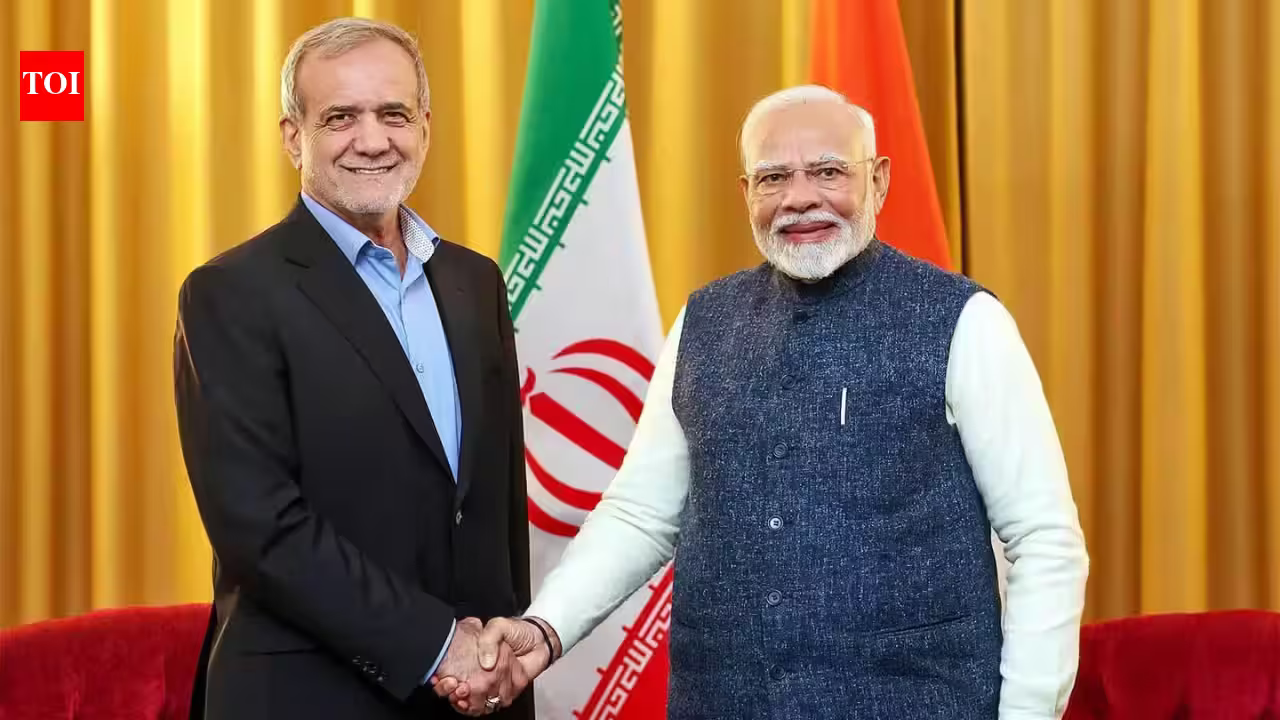
NEW DELHI: In a significant diplomatic development, Iranian President Masoud Pezeshkian is set to arrive in New Delhi on Friday to participate in the 18th BRICS summit. This visit marks the first time an Iranian head of state has visited India since Hassan Rouhani’s 2018 trip, signaling a renewed focus on bilateral ties at a time when the West Asia region is gripped by escalating volatility.
The President’s itinerary includes participation in the BRICS Business Forum, where he is scheduled to share the stage with Prime Minister Narendra Modi and Russian President Vladimir Putin. Following the multilateral proceedings, the two leaders are expected to hold a high-stakes bilateral meeting.
Navigating Regional Geopolitics
The timing of this visit is particularly delicate. With tensions simmering across the Middle East, Iran has been looking to its strategic partners to acknowledge its security concerns. It is widely anticipated that President Pezeshkian will urge Prime Minister Modi to use India’s diplomatic leverage to help de-escalate the ongoing conflict. Tehran is reportedly seeking a strong condemnation of what it describes as “illegal aggression” against its interests to be included in the final BRICS declaration.
For India, the task of maintaining neutrality while fostering deeper ties within the BRICS framework is complex. The grouping now includes regional rivals, most notably the United Arab Emirates and Saudi Arabia. While Saudi Arabia will be represented by Foreign Minister Faisal bin Farhan Al Saud and the UAE by Crown Prince Sheikh Khaled bin Mohamed bin Zayed Al Nahyan, the presence of these nations complicates the creation of a unified stance on the Iran-related conflicts.
Seeking Consensus in a Divided Bloc
Prime Minister Modi faces the challenge of steering the summit toward a cohesive joint declaration. Sources indicate that he will emphasize the necessity for all member nations—particularly newer additions—to adhere to consensus-based decision-making.
The task is complicated by the differing interests of the participants. While India successfully navigated the SCO Bishkek Declaration, which condemned attacks on Iran without explicitly naming Israel or the United States, observers note that replicating this balance within BRICS will be more difficult. The UAE, a formal member of the bloc, is unlikely to accept language that targets Iran without a simultaneous, reciprocal condemnation of Iranian-led actions in the region.
India’s Strategic Priority: Diplomacy and Economic Stability
As the current BRICS chair, India remains focused on maintaining the integrity of the grouping. Should the current deadlock over the geopolitical language persist, New Delhi is prepared to pivot toward a more pragmatic approach. The government intends to prioritize the core tenets of the UN Charter, specifically focusing on dialogue, diplomacy, the protection of civilians, and the preservation of freedom of navigation.
To ensure that the summit remains productive, the Indian delegation is exploring ways to insulate economic and trade agreements from the ongoing regional discord. This includes the possibility of acknowledging individual national positions within the declaration rather than forcing a singular, contested statement on the Middle East, thereby allowing the bloc to move forward on critical economic cooperation.
Disclaimer: This content is auto-generated for informational purposes only.
Source: Read Original News