









Indian Exports Defy Geopolitical Headwinds, Register Record Growth Amidst Rising Freight Costs
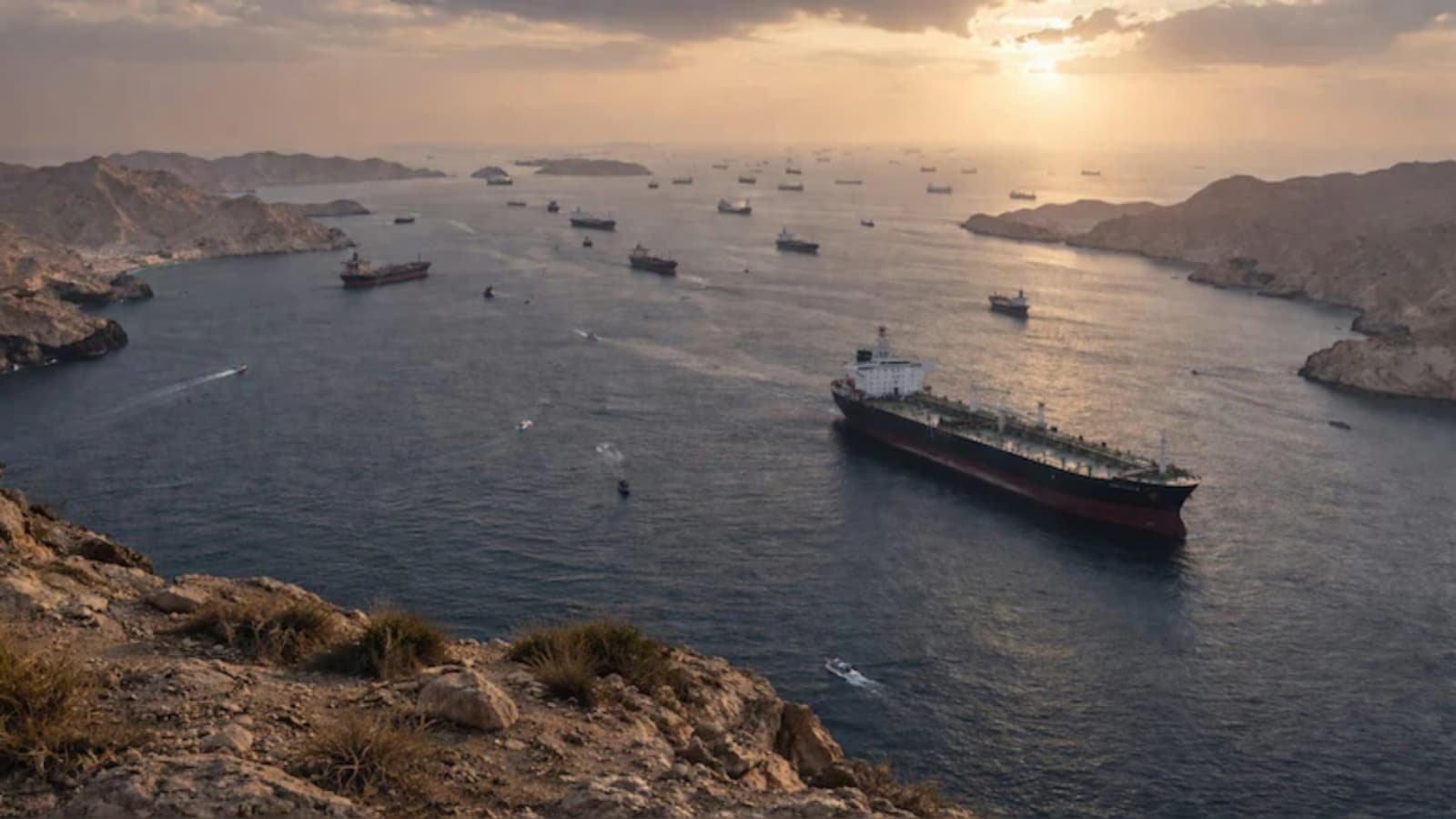
New Delhi, India – In a remarkable display of resilience, Indian merchandise exports surged to a record $44.24 billion in July, marking a substantial 19.6% increase year-on-year. This impressive growth comes despite a volatile global landscape characterized by the ongoing US-Iran deadlock, which has kept the vital Strait of Hormuz on edge, leading to rerouted ships, escalating freight rates, and a pronounced shortage of shipping containers.
The geopolitical tensions have significantly impacted global supply chains. Exporters are grappling with sharply rising freight costs on key routes, particularly those connecting South Asia with the US and Europe. Rates to the Middle East remain elevated due to regional instability, soaring fuel prices, and a persistent scarcity of vessel capacity. Furthermore, securing containers has become increasingly challenging, leading to shipment delays and unpredictable vessel schedules – factors that rapidly erode profit margins for exporters of diverse goods such as rice, textiles, pharmaceuticals, and engineering products.
Despite these significant obstacles, India’s export performance paints a surprisingly robust picture. The granular data reveals even more compelling trends:
- Engineering goods exports climbed 17.7% to $12.24 billion.
- Electronics exports witnessed a remarkable 57.4% jump, reaching approximately $5.9 billion.
- Exports to the Middle East, despite regional disruptions, also saw an 8.6% rise, totaling $5.7 billion.
This paradoxical growth can be attributed to several strategic shifts and inherent strengths within the Indian export sector.
Diversification of Markets: A Key to Resilience
A primary factor underpinning India’s export resilience is its expanding global footprint. Commerce Secretary Rajesh Agrawal highlighted that India’s export growth is no longer solely reliant on a handful of traditional destinations. Instead, the country is witnessing accelerated growth in non-traditional markets across ASEAN, Africa, South Asia, and North-East Asia.
The July figures strongly corroborate this diversification:
- Exports to China skyrocketed by 64.57% year-on-year to $2.2 billion.
- Shipments to Singapore increased by an impressive 83.7% to $1.6 billion.
- Exports to the US also grew by 12.85% to $9.02 billion.
This geographical spread provides Indian companies with crucial flexibility. When one shipping route becomes risky or prohibitively expensive, exporters have alternative markets to turn to, mitigating the impact of regional disruptions.
Moving Up the Value Chain: Prioritizing Value Over Volume
India is increasingly focusing on exporting higher-value products, a strategy proving vital in absorbing elevated shipping costs. Unlike low-value commodities that have limited margin to accommodate freight spikes, specialized industrial products, precision components, and sophisticated manufactured goods can better absorb these additional expenses.
This strategic shift is evident in the export data:
- Engineering goods exports, which include a wide array of industrial machinery and components, saw a 17.71% increase to $12.24 billion in July.
- Electronics exports, comprising more complex and higher-value items, surged by 57.4% to $5.92 billion.
This momentum was already visible in June, with engineering exports rising 21% to $11.48 billion, and shipments to China alone climbing 74%.
Company-Level Success Stories
The trend of resilience and adaptation is also mirrored at the individual company level. Gujarat-based Mangalam Worldwide Ltd (MWL) reported a staggering 278% increase in its export turnover, reaching a record Rs 21.79 crore in July 2026, up from Rs 5.76 crore in July last year. The company successfully shipped 874 metric tons across 35 containers to over 15 countries.
Chandragupt Prakash Mangal, Managing Director of Mangalam Worldwide, emphasized the real-time reassessment of global supply chains. "For Indian manufacturers, the opportunity is to establish themselves as reliable and technically capable partners across multiple markets rather than depend on a single geography," Mangal stated. He added that in times of disruption, buyers prioritize consistent delivery alongside competitive pricing. "Consistent quality and delivery can become as important as price," he noted.
Vipin Prakash Mangal, Executive Chairman of Mangalam Global Enterprise Limited (MGEL), which reported Rs 205.44 crore in revenue from foreign operations in FY26, views the current challenges as an impetus for necessary change. "Higher freight costs and geopolitical disruptions are testing exporters, but they are also accelerating a necessary shift – from competing on price alone to building diversified markets and delivering greater value. That is where India’s next export opportunity lies," he explained.
This pivot towards diversification, higher value, and enhanced reliability has been a long-term goal for India. The current global turmoil, while challenging, appears to be accelerating this crucial transition, positioning Indian exports for sustained growth in an uncertain world.