






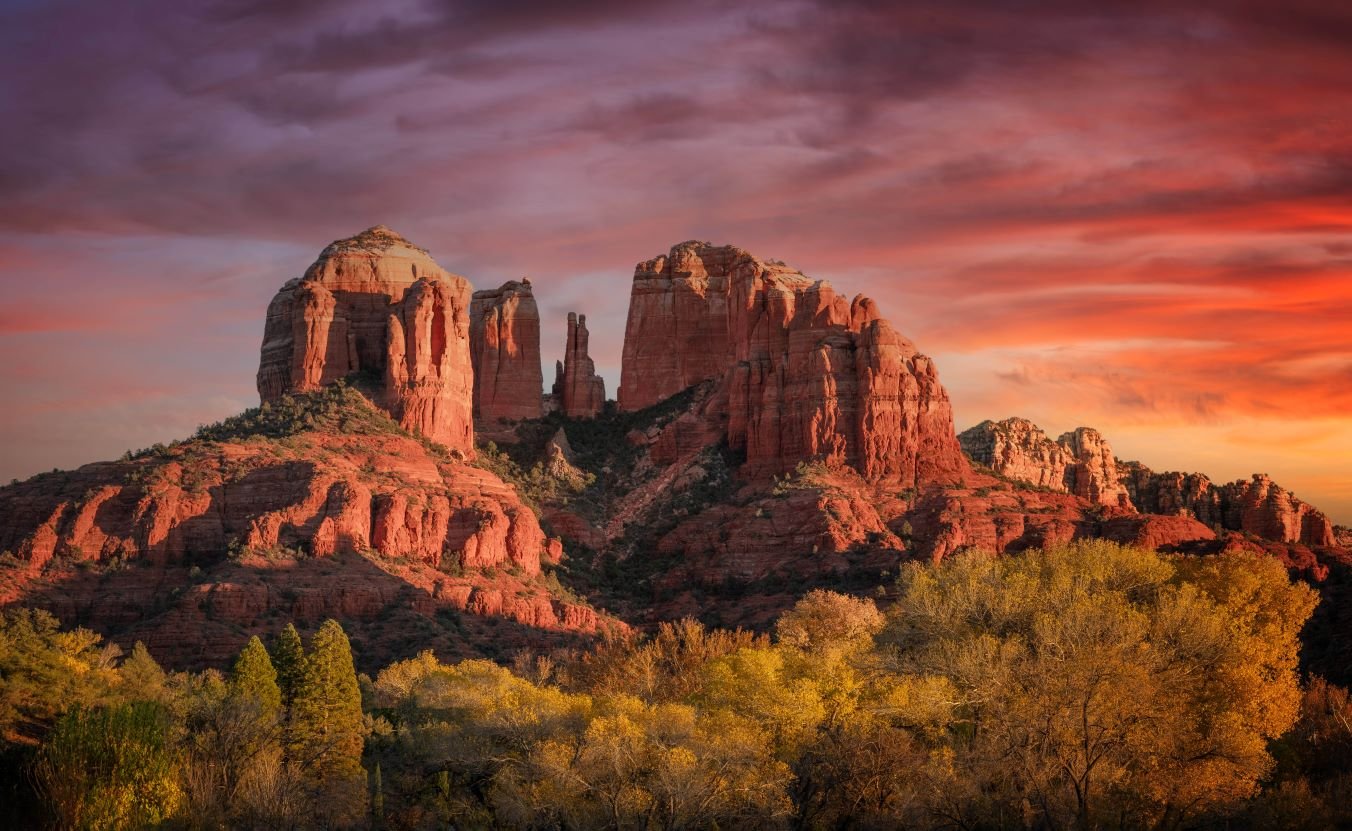
Cathedral Rock in Sedona has officially been named the most serene and spiritually significant destination in Arizona, according to a recent, extensive national study. The research, conducted by mental health treatment network A Mission for Michael (AMFM) in collaboration with analytics firm Cherry Data Signal, surveyed over 3,000 individuals to identify the geographical locations where people feel the most grounded, tranquil, and connected to a greater sense of purpose.
While the data focused on emotional well-being and natural landscapes, the study also highlights how modern technology, such as advanced geolocation services and AI-driven predictive modeling, is changing how we document and preserve these “spiritual homes.”
## The Science of Seeking Stillness
The study, which polled thousands across the country, aimed to pinpoint why certain locations resonate so deeply with the human psyche. For Arizonans, the answer was overwhelmingly clear: the iconic, towering spires of Cathedral Rock. Known for its distinct red rock formations, the site is frequently described by visitors as a powerful “vortex” of energy.
Beyond its spiritual reputation, the site represents a growing trend in digital preservation. As travelers share their experiences via social media and location-based mobile platforms, the data footprint of these sites grows. Tech companies like Google are increasingly integrating high-fidelity satellite imagery and AI-enhanced 3D mapping into Google Earth, allowing users to experience the “vortex” virtually. This digital accessibility serves as a double-edged sword, providing a window to those who cannot travel while simultaneously increasing the pressure to protect these physical locations from over-tourism and environmental degradation.
## Tech-Driven Advocacy and Preservation
The survey revealed a fascinating intersection between sentiment and economics: Arizonans indicated they would be willing to pay an average of $1,267.88 out-of-pocket to protect their chosen spiritual sanctuary from destruction. This metric suggests that deep emotional ties to nature are now being quantified in ways that conservation groups and policymakers are utilizing to make a case for land management.
In the tech industry, developers are creating specialized apps and digital tools that help environmental agencies monitor land usage. Through machine learning, researchers can now analyze trends in foot traffic, social media engagement, and weather patterns at sites like Cathedral Rock or the South Rim of the Grand Canyon to ensure that these areas do not suffer from the very popularity that makes them so beloved. By using AI to forecast environmental stress, local authorities can better manage the balance between public access and habitat preservation.
## A New Era for Natural Landscapes
Beyond Cathedral Rock, the survey highlighted several other iconic Arizona locales, including the South Rim of the Grand Canyon, the Mittens in Monument Valley, Havasu Falls, and Signal Hill in Saguaro National Park. Each of these sites is undergoing a transformation in how it is perceived by the public, fueled by high-definition digital sharing and AI-curated travel itineraries.
As these locations continue to gain prominence, the role of digital archives becomes increasingly important. Google’s ongoing efforts to update Street View, map remote hiking trails, and provide real-time updates on park accessibility help maintain a bridge between the physical world and the digital sphere. However, as residents place such a high financial value on protecting these spaces, the focus is shifting toward “sustainable digital tourism.” This involves using data to encourage visitors to explore lesser-known areas, thereby reducing the physical strain on high-traffic sites like Cathedral Rock.
In an age where artificial intelligence can synthesize vast amounts of human emotion into meaningful data, the findings from AMFM demonstrate that no matter how advanced our technology becomes, the human need for the quiet, red-rock stillness of a place like Sedona remains a constant, driving force in our lives.
Disclaimer: This content is auto-generated for informational purposes only.
Source: Read Original News