







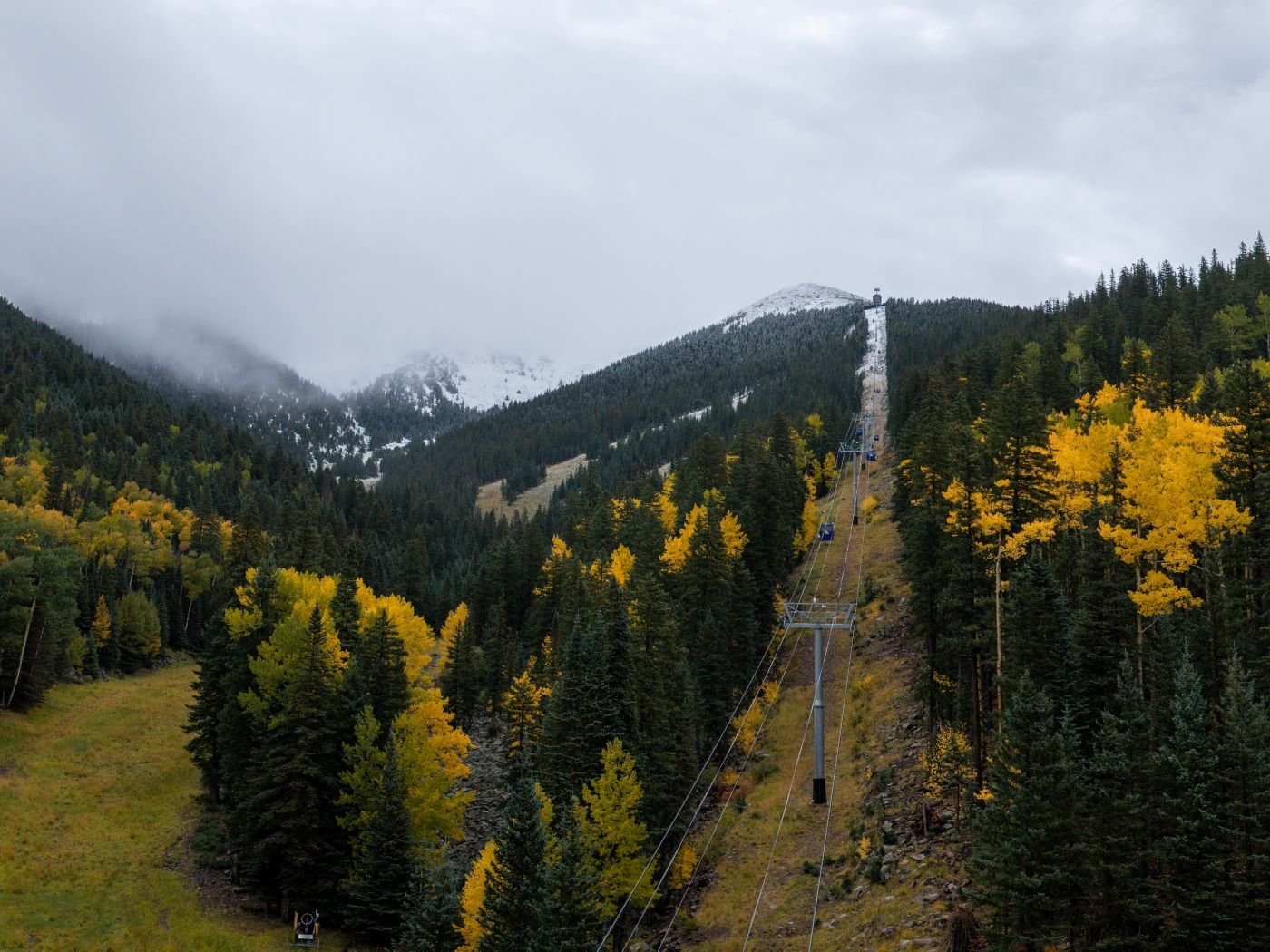
The crisp air of the San Francisco Peaks serves as a poignant reminder that while the digital world moves at the speed of light, the physical world adheres to its own seasonal rhythm. As the Arizona Snowbowl recently experienced its first snowfall of the season, the juxtaposition of golden aspen leaves buried under a fresh dusting of powder highlights a unique intersection between climate patterns and mountain recreation. For residents and tech-savvy visitors alike, this change in weather serves as a catalyst for renewed interest in how data, artificial intelligence, and predictive modeling help manage the transition from the golden hues of autumn to the winter sports season.
## The Intersection of Climate Data and Mountain Operations
While the sudden snowfall on September 28 was a picturesque delight for photographers, the operational response at Arizona Snowbowl is grounded in heavy data analytics. Snowbowl officials are currently leveraging historical weather patterns—specifically the influence of the strengthening El Niño cycle—to forecast the upcoming season’s viability.
In an era where precision is paramount, local businesses and resort operators are increasingly relying on sophisticated climate modeling. By analyzing historical benchmarks, such as the fact that El Niño years historically bring nearly double the snowfall to Northern Arizona compared to La Niña cycles, resorts can optimize their snowmaking infrastructure. This data-driven approach is a classic example of how predictive analytics are being utilized to navigate the unpredictable nature of climate change, ensuring that resources like water and energy are used efficiently as crews begin their intensive snowmaking efforts to hit their targeted November 20 opening date.
## How AI and Smart Tech are Changing Tourism
The transition from a mountain retreat for “leaf peepers” to a high-traffic ski destination requires more than just cold temperatures; it requires seamless logistics. Visitors heading to Flagstaff are increasingly utilizing AI-integrated platforms—such as Google Maps’ real-time congestion alerts and predictive traffic modeling—to navigate the unique challenges of mountain driving.
Google’s ongoing advancements in AI-powered search and navigation are particularly crucial for remote, high-altitude locations. During the transition season, when road conditions can shift from clear to icy in minutes, tourists are leaning on smart technology to receive live updates. As these tourists plan their winter excursions, they are also engaging with AI-enhanced visual search tools to preview current mountain conditions. The digital footprint of a mountain resort now extends far beyond a simple website; it involves high-resolution, AI-indexed weather imagery that allows visitors to gauge everything from slope visibility to lift-line wait times before they even leave their homes.
## Preparing for a Digital Winter
As the ski industry embraces the digital transformation, the integration of smart sensors and environmental monitoring technology is becoming the gold standard. For the Snowbowl, the goal is to bridge the gap between human experience and environmental reality. Whether it is through automated snowmaking machines that respond to real-time ambient temperature and humidity data, or mobile applications that offer users personalized grooming reports, the guest experience is being fundamentally reshaped by tech.
Looking ahead, the success of the upcoming ski season will depend on the synergy between these technological advancements and Mother Nature. As the resort gears up for its November 20 launch, the focus remains on leveraging these modern tools to handle the increased load of visitors, manage safety protocols through data-backed communication, and maintain the delicate balance of a thriving high-desert ecosystem. For the tech-forward traveler, the message is clear: while the first snow of the season is a natural phenomenon, the experience of navigating that winter wonderland is more connected, precise, and tech-driven than ever before.
Disclaimer: This content is auto-generated for informational purposes only.
Source: Read Original News