








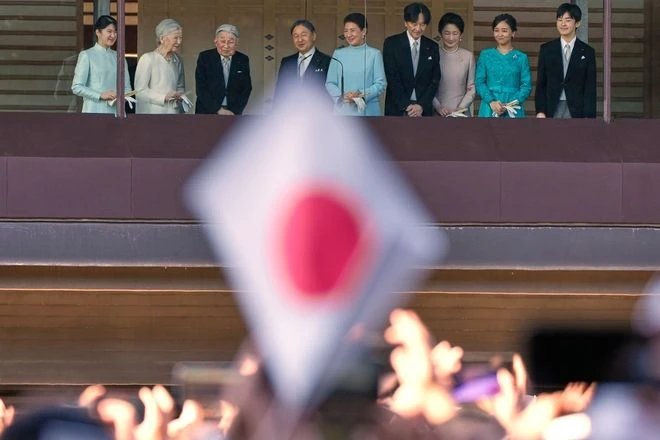
TOKYO — Japan’s 1,500-year-old monarchy entered a contentious new era on October 24 as controversial revisions to the Imperial House Law officially took effect. While the government maintains the changes are necessary to preserve the imperial lineage, the legislation has sparked widespread public outcry and intense debate over the future of the Chrysanthemum Throne.
The revised law reinforces the strict male-only succession rule while introducing radical changes to how the royal family is structured. Under the new framework, unmarried male descendants of distant imperial relatives—who have lived as commoners since their families renounced royal status in 1947—can now be adopted into a branch of the royal family to father future heirs. Simultaneously, the law permits princesses to retain their royal status after marrying commoners.
However, these concessions come with significant caveats. Most notably, the law continues to bar Emperor Naruhito’s daughter, the 24-year-old Princess Aiko, from the line of succession. Her future children will also be denied royal status, effectively silencing the growing public movement that favors her ascension.
Critics argue the revisions are fundamentally discriminatory. “We will find all kinds of issues that are incoherent,” noted Hideya Kawanishi, a professor at Nagoya University and expert on the monarchy. By barring husbands and children of princesses from gaining royal status, the law effectively creates a “half-royal” category, which experts fear will lead to administrative chaos regarding the rights and roles of spouses and potential offspring.
The move to integrate distant male relatives—some removed by 36 generations—has drawn skepticism even from conservative quarters. The candidates, drawn from four remaining families that split from the imperial line six centuries ago, have shown little interest, and experts have raised concerns regarding the lack of transparency in how these individuals would be selected.
Public dissatisfaction is at an all-time high. Recent surveys indicate that a clear majority of the Japanese public favors allowing female monarchs or maternal-line succession. In the weeks leading up to the law’s enactment, hundreds of demonstrators marched through downtown Tokyo, chanting, “Aiko-sama for crown prince!” Influential figures, including cartoonist Yoshinori Kobayashi, have labeled the law unconstitutional and are preparing to challenge the government in court.
For now, the succession remains locked in a traditional path: the line will pass from Emperor Naruhito to his brother, Crown Prince Fumihito, and then to his nephew, Prince Hisahito.
As the Imperial Household Agency begins the arduous process of implementing these measures, the monarchy faces a paradoxical future. While the law is intended to prevent the “decline” of the imperial line, it has instead deepened a divide between the government’s traditionalist agenda and a public increasingly eager for a modern, inclusive monarchy.
Disclaimer: This content is auto-generated for informational purposes only.
Source: Read Original News