





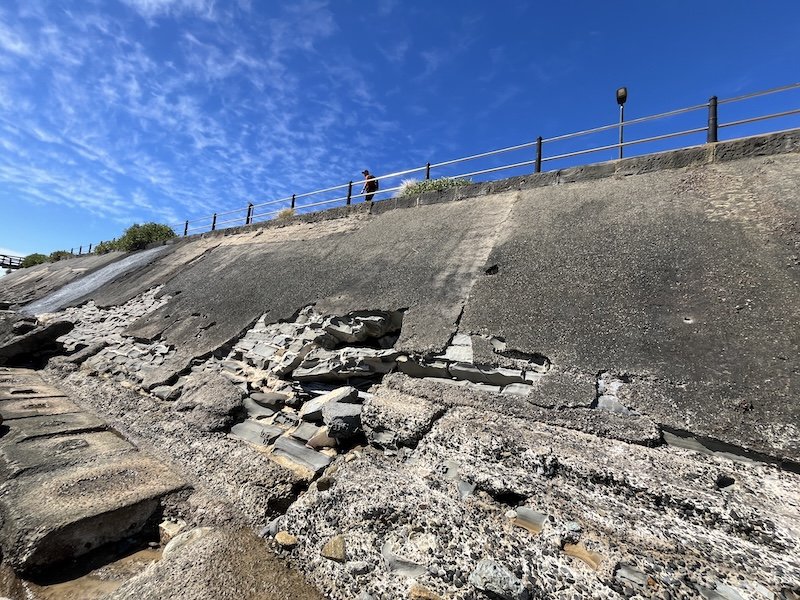
Critical repairs have officially concluded on the storm-battered sections of Macquarie Pier and the Nobbys Head rock shelf, marking a significant milestone in the preservation of one of Australia’s most vital maritime gateways. The restoration project, spearheaded by the Port Authority of NSW, ensures that these essential infrastructure assets continue to safeguard harbor operations and public access in Newcastle.
The project highlights the increasing intersection of traditional civil engineering and modern asset management. As the shipping industry faces growing pressure to optimize port efficiency, the integration of advanced monitoring technology—often powered by AI-driven predictive analytics—is becoming a cornerstone of maritime safety. While these repairs focused on physical stonemasonry, ports globally are increasingly turning to digital twin technology and sensors to monitor the structural integrity of aging infrastructure in real-time, predicting failure points before they occur.
## Balancing Heritage with Modern Engineering
The restoration at Macquarie Pier, a State Heritage-listed site dating back to 1818, required a delicate balance between historical preservation and structural reinforcement. The pier serves as a critical breakwater, neutralizing the immense energy of ocean swells to ensure the safe passage of vessels.
To complete the work, the Port Authority collaborated with heritage specialists and expert stonemasons. The project involved the stabilization of four distinct seawall sections. Rather than opting for modern synthetic materials, the team utilized a combination of reclaimed sandstone blocks recovered from the site and newly quarried stone. Approximately 98 individual blocks were hand-fitted to maintain the structural and aesthetic integrity of the original design. This meticulous approach serves as a reminder that even in an era of rapid technological disruption and AI-enhanced supply chains, the physical foundation of global trade remains tied to centuries-old engineering principles.
## Ensuring Safety at a Bustling Port
The work at Nobbys Headland was equally critical, focusing on the stability of the rock shelf that supports public pathways and nearby infrastructure. By replacing deteriorated sandstone and reinforcing the shelf, engineers have significantly mitigated the risk of rockfalls, which pose a persistent threat in such an exposed coastal environment.
Captain Vikas Bangia, Newcastle Harbour Master, emphasized that the infrastructure is far from a static landmark. “Since 1818, Macquarie Pier has made it safer for vessels to move through the harbour entrance by absorbing and deflecting wave energy,” he noted. “They are located in a very exposed area and over time that environment has led to the deterioration of parts of the seawall and rock shelf, making these repairs essential.”
## The Future of Port Infrastructure
As global trade volumes continue to rise, the pressure on port infrastructure has never been higher. Port authorities worldwide are now utilizing sophisticated software suites, including geospatial mapping tools and Google’s suite of data analytics products, to track the environmental impact on port assets.
In the case of Newcastle, these repairs provide a baseline for future digital monitoring. By ensuring the physical structure is sound, the Port Authority creates a stable platform for the next generation of maritime technology. The project serves as a prime example of how physical maintenance remains the bedrock of operational success. Whether it is through traditional masonry or the implementation of autonomous vessel guidance systems and real-time port AI, the goal remains the same: ensuring that the flow of goods is never interrupted by the volatile forces of the Pacific Ocean.
The successful completion of these works not only protects the heritage of Newcastle Harbour but reinforces its position as a resilient and future-ready node in the global maritime network.
Disclaimer: This content is auto-generated for informational purposes only.
Source: Read Original News