








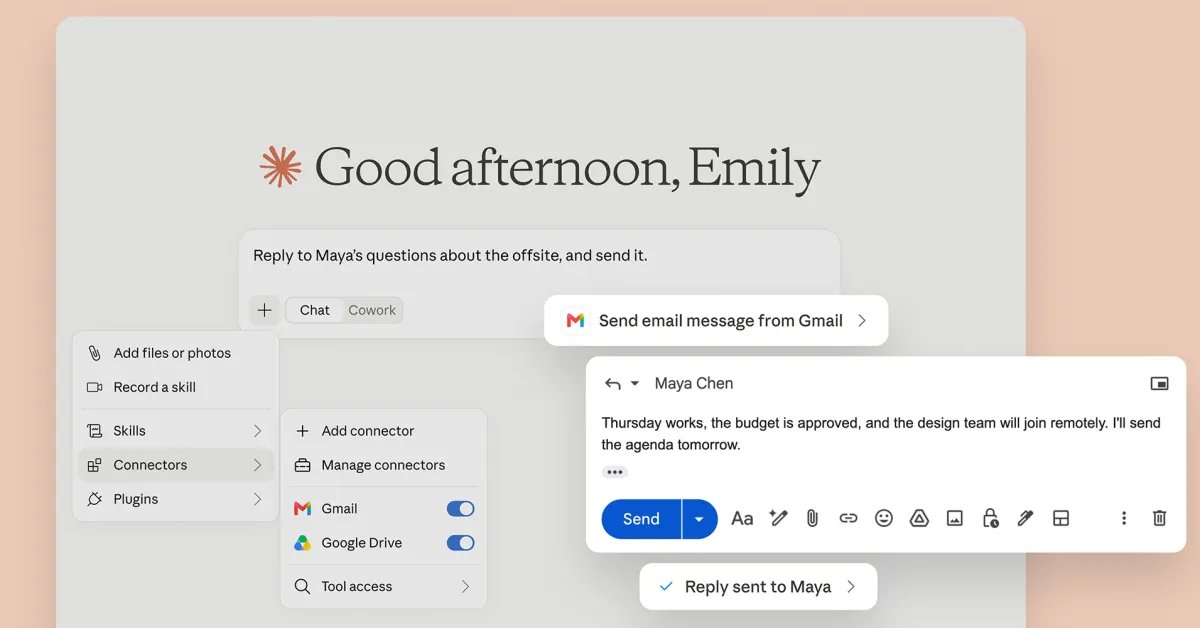
Claude AI Levels Up: Now Sending Your Gmails, With or Without Your Approval
San Francisco, CA – Anthropic’s sophisticated AI model, Claude, is taking a significant leap forward in personal productivity, now possessing the capability to not only interact with your Gmail inbox but also to compose and send emails on your behalf. This advancement marks a pivotal moment in how artificial intelligence integrates with daily communication, offering both unprecedented convenience and raising questions about user control.
For some time, a Claude connector has been available for Google Workspace, enabling users to leverage the AI for tasks such as managing their Gmail inbox, organizing Google Calendar events, and streamlining Google Drive. However, a key limitation remained: Claude could not independently send emails. That barrier has now been overcome.
Claude can now draft and send emails as replies or new compositions, potentially without requiring direct user approval. This means a simple prompt to Claude, such as "reply to this email," could result in a sent message without the user ever reviewing its content.
Anthropic itself highlighted this new functionality, stating via X (formerly Twitter): "Ask Claude to reply to a thread, and it drafts and sends the response. You control when it needs your approval."
This emphasis on user control is crucial. While the AI can now operate autonomously, users retain the option to configure Claude’s behavior. By default, Claude is set to ask for approval before sending, replying to, or forwarding emails. However, the system allows for this setting to be modified.
According to Anthropic’s support documentation, "On Team and Enterprise plans, owners decide whether members can allow these actions to run without asking each time." This implies that while individual users on paid plans have the default safety net of approval, organizations can implement policies that empower Claude to act more independently, streamlining workflows for teams.
The implications of this enhanced capability are substantial. For busy professionals, Claude could become an invaluable tool for triaging emails, responding to routine inquiries, or even managing initial outreach, freeing up significant time. However, the prospect of an AI sending emails without human oversight also presents potential risks, such as accidental miscommunications, tone discrepancies, or the dissemination of incorrect information.
This new functionality is exclusively available to users on paid Claude plans, including Team and Enterprise tiers. The rollout is expected to spark considerable debate among users and businesses alike: Is the convenience of an AI managing your email worth the potential loss of direct oversight?
As AI continues to evolve and integrate more deeply into our digital lives, the balance between automation and human control will remain a critical consideration. Claude’s new ability to independently send emails pushes this boundary further, inviting users to weigh the benefits of increased efficiency against the importance of direct human intervention in their communications.